60 Inches Of Legroom: Inside This Transpacific Airline's Record-Breaking Business Class
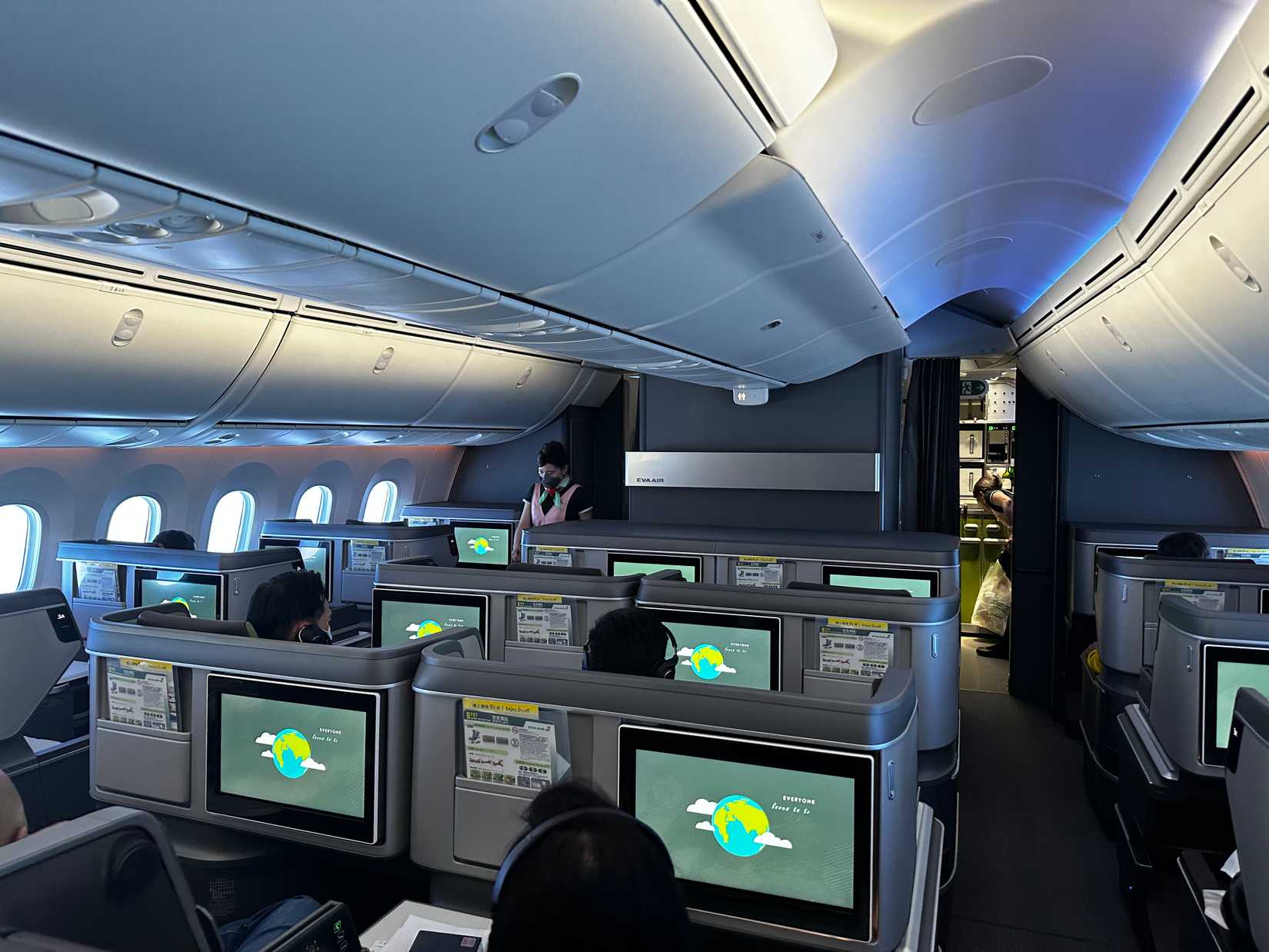
EVA Air's Royal Laurel Class business cabin has emerged as a standout example of how far premium long-haul seating has evolved on transpacific routes, with a 60-inch seat pitch that ranks among the most generous in the industry. Deployed on the carrier's Boeing 777-300ER and 787-9 aircraft in a 1-2-1 configuration, the product guarantees direct aisle access for every passenger while creating enough real estate for substantial side consoles, storage, and a bed that extends to roughly 78 inches when fully flat. For an airline built on a 1989 founding by shipping magnate Dr. Chang Yung-Fa and now a Star Alliance member since 2013, this level of hard-product investment reflects a broader strategy of using cabin innovation—EVA was also first to introduce premium economy on 747s—as a competitive differentiator against larger rivals like Singapore Airlines, Cathay Pacific, and ANA on the lucrative North America-Asia corridor.
For working pilots, particularly those flying long-haul international operations at legacy carriers or eyeing lateral moves to Asian carriers, this kind of cabin benchmarking is a useful signal of where the premium end of the market is heading and what crews may increasingly be expected to support in terms of service complexity and cabin management on ultra-long-range sectors. Flights exceeding 12 hours across the Pacific place real demands on crew rest planning, and airlines investing this heavily in passenger rest quality are typically also investing in augmented crew complements, improved crew rest compartments, and fatigue risk management systems, since the operational philosophy of maximizing passenger comfort on long sectors tends to correlate with parallel attention to flight deck ergonomics and crew scheduling practices. Pilots evaluating international carriers, especially those weighing widebody type ratings on the 777 or 787, should note that product-focused airlines like EVA often maintain younger, well-maintained fleets and invest in training standards that match their premium branding, which can be relevant factors in career decisions involving furlough recalls, expat contracts, or lateral transitions to Asia-Pacific operators.
More broadly, the 60-inch pitch and reverse-herringbone-style 1-2-1 layout illustrate a maturing trend across long-haul business class: the shift away from dense 2-2-2 or 2-3-2 configurations toward suite-like privacy and guaranteed aisle access, a design philosophy pioneered by Cathay Pacific, Delta, and American but now being pushed further by carriers competing aggressively for premium transpacific revenue. This matters to aviation operators and airline planners because premium cabin real estate is increasingly the primary profit driver on long-haul widebody routes, influencing everything from aircraft configuration decisions to route economics and fleet renewal timing. As carriers compete on rest quality and personal space rather than simply frequency or price, expect continued pressure across the industry—including at U.S. and European legacy carriers—to match these benchmarks, which will shape future widebody cabin retrofits, seat density decisions, and ultimately the passenger demand that supports long-haul route viability on aircraft types pilots are training for today.




 Read original article