Bird strike suspected in Ryanair engine blade-out accident
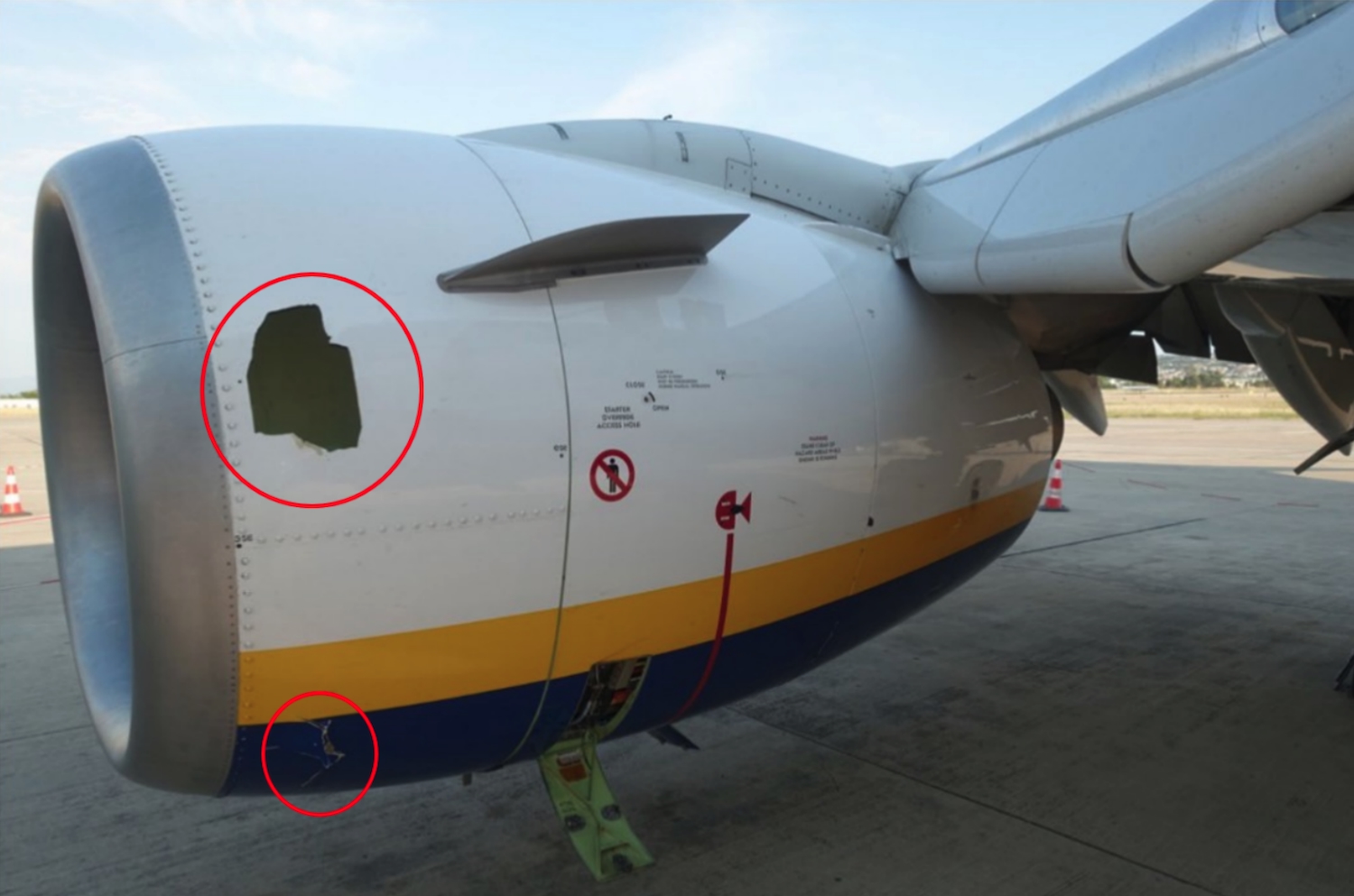
The NTSB's preliminary report on the July 10 Ryanair 737-800 accident at Thessaloniki International Airport reveals a complex failure chain that began with a suspected bird strike and culminated in an uncontained-style fan blade separation and cabin depressurization. Investigators recovered bird remains—feathers and tissue—from multiple locations within the number two CFM56-7B26 engine, including the IDG oil cooler, a thrust reverser blocker door drag link, and the lower fan case near the thrust reverser split flange. Those remains have been sent to the Smithsonian's Feather Identification Lab for species analysis, a step that will help determine whether wildlife mitigation, engine certification standards, or both are implicated. Notably, the operating crew had reported four suspected bird strikes to this same engine in the preceding 12 months, raising questions about cumulative damage that may not have been fully assessed during routine inspections, including one as recent as May 24. Investigators are also examining fatigue fracturing on the failed blade and damage to a shim structure in the blade attachment area—details suggesting the investigation may extend beyond a simple bird-ingestion narrative into questions of maintenance inspection adequacy and blade attachment design tolerances.
For working pilots, particularly those flying the 737NG family, the accident is a stark reminder that fan blade containment failures remain a live operational risk despite decades of engine reliability improvements. One fan blade fractured below the platform and separated, while two additional blades lost outer tips and the remainder showed impact deformation—a failure signature broadly consistent with the 2016 and 2018 Southwest Airlines blade-out events that originated the FAA's fan cowl and inlet reinforcement Airworthiness Directives. Critically, the accident aircraft had not yet been retrofitted with those reinforcements, which carry a compliance deadline of July 2028. This detail will likely intensify scrutiny of the multi-year compliance timeline the FAA granted operators, especially as regulators and airlines weigh the tradeoff between fleet-wide retrofit costs and the demonstrated consequence of delay: engine fragments penetrating the fuselage, a blown-out window, and a passenger partially ejected before being pulled back in by fellow travelers. That the outcome wasn't fatal owes much to circumstance rather than the containment system performing as designed, since the report notes extensive damage to the Kevlar debris-containment barrier meant to prevent exactly this kind of fuselage penetration.
The public friction between Ryanair CEO Michael O'Leary and NTSB Chair Jennifer Homendy adds an operational governance dimension pilots and flight departments should note. O'Leary's July 20 comments attributing the event to a foreign object strike came before the NTSB's formal findings were released, prompting Homendy to publicly warn that such statements risked violating ICAO Annex 13 protocols governing the release of investigation information. This underscores a persistent tension in high-profile accidents: commercial and reputational pressure on airlines to control the narrative quickly, versus the structured, multi-party investigative process designed to protect data integrity and international cooperation. For flight crews and safety departments, it's a reminder that premature causal statements—even from leadership—can complicate investigations and erode the just-culture reporting environment that depends on measured, evidence-based communication.
More broadly, this accident sits at the intersection of several trends reshaping engine and airframe risk management: aging CFM56-powered narrowbody fleets still comprising the backbone of global short-haul operations, wildlife strike rates that continue to challenge airport and flight operations departments worldwide, and a regulatory environment increasingly reliant on phased AD compliance timelines that leave operators flying with known vulnerabilities for years. With the 737NG fleet numbering in the thousands and the retrofit deadline still two years out, operators, dispatchers, and maintenance planners will be watching closely for interim guidance—particularly if the Smithsonian's bird identification results or the shim/fatigue findings suggest this wasn't a straightforward bird-strike event but rather a case where existing inspection protocols failed to catch developing blade fatigue exacerbated by repeated foreign object encounters.