Waypoint: Business Aviation Recruitment Gets Fresh Approach From ACA Internship Model
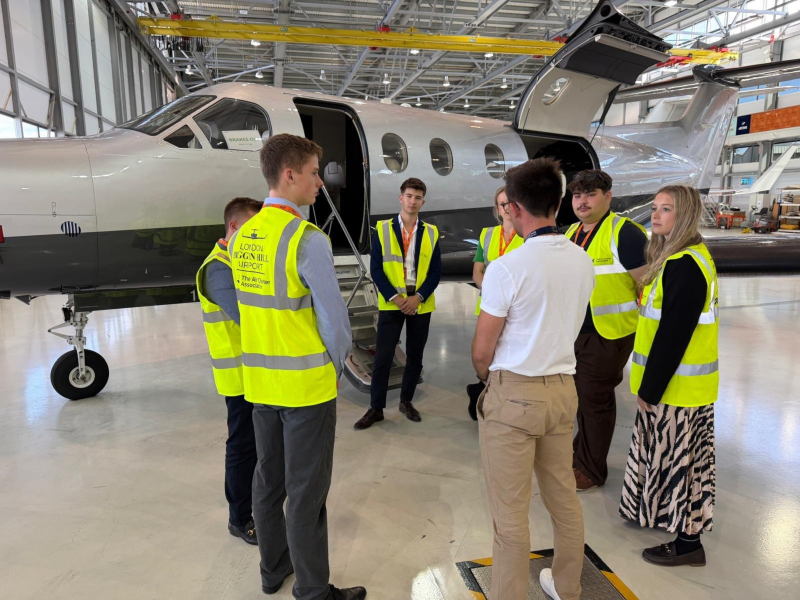
The Air Charter Association's newly launched internship program signals a deliberate shift in how business aviation approaches its persistent workforce challenges. Rather than relying on traditional recruitment channels or waiting for candidates to discover the industry organically, the ACA has built a structured, three-part program bringing 15 students through immersive training experiences, including site visits to operators like Oriens Aviation at London Biggin Hill Airport. The program began with a week of hands-on training in early summer, exposing participants directly to charter operations, aircraft management, and the broader ecosystem that supports business aviation flying. This kind of proactive, curated exposure stands in contrast to an industry that Aviation Week's Lee Ann Shay notes has historically been reluctant to promote itself to the public—a cultural tendency that has arguably contributed to the talent pipeline gaps now affecting operators, MROs, and charter brokers alike.
For working pilots and aviation employers, this development matters because it addresses a structural problem that has been building for years: business aviation struggles to compete for talent against airlines, which offer more visible career paths, established union protections, and predictable seniority-based advancement. Charter operations, fractional programs, and Part 91/135 flight departments often lack the brand recognition of major carriers, making it harder to attract young people who don't already have a personal connection to the industry. By targeting students early and giving them tangible, on-site exposure to companies like Oriens Aviation, the ACA is essentially trying to manufacture the kind of informal industry connections that have traditionally driven recruitment—mentorship from a family friend, a chance encounter with a charter pilot, a ramp tour that sparked a career. Formalizing that pathway through an internship model is a recognition that passive recruitment strategies are no longer sufficient in a tight labor market.
The timing also reflects broader dynamics reshaping crew and technical staffing across the industry. Business aviation has faced acute shortages not just in the cockpit but across maintenance, dispatch, and ground operations, compounded by post-pandemic demand growth in private and charter flying that outpaced the industry's ability to train and certify new personnel. Airlines have run mainline-fed pathway programs, ab initio cadet schemes, and university partnerships for years; business aviation associations and operators are increasingly borrowing from that playbook, but tailoring it to the fragmented, often smaller-scale nature of charter and fractional operators. The ACA's willingness to open its member companies' doors to students—rather than treating recruitment as a competitive, zero-sum exercise between individual operators—suggests an industry-wide recognition that collaborative talent development benefits everyone, since a rising pool of qualified candidates helps all operators rather than just one.
More broadly, this initiative fits into a wider trend across commercial, business, and general aviation of associations and manufacturers taking direct ownership of pipeline development rather than assuming schools, the military, or airlines will supply adequately trained personnel. NBAA, EAA, and various regional aviation groups have similarly ramped up youth outreach, mentorship, and internship offerings in recent years, all aimed at demystifying aviation careers for a generation with more competing options than previous cohorts. For flight departments, charter operators, and MRO providers watching their workforce age out, programs like the ACA's internship model represent not just a recruitment tactic but a bet on long-term industry sustainability—one that will be worth tracking as these students potentially convert into full-time hires and, eventually, into the operators and executives shaping business aviation's next generation.









 Read original article