Pivotal Completes First Live 911 Missions
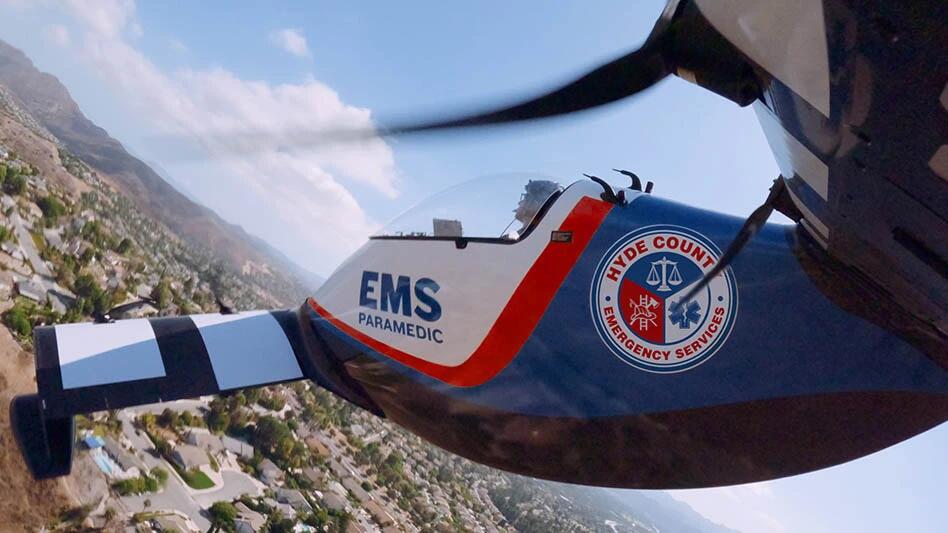
Pivotal, the California-based eVTOL manufacturer formerly known as Opener, has notched a notable operational first: paramedics with Hyde County EMS in rural eastern North Carolina flew the company's single-seat BlackFly aircraft on live 911 emergency response missions, delivering advanced medical care directly to patients. While details remain limited given the subscription-gated nature of the report, the milestone represents one of the first documented instances of an eVTOL aircraft being used in an actual emergency medical dispatch rather than a demonstration, trial flight, or controlled test environment. The pilot program in Hyde County — a sparsely populated, geographically challenging area with limited road infrastructure and long transport times to definitive care — appears designed to showcase the aircraft's potential to compress response times in exactly the kind of underserved rural settings where traditional ground ambulances and even helicopter EMS (HEMS) face economic or logistical constraints.
For working pilots and aviation operators, this development is significant on several fronts. BlackFly is a single-seat, ultralight-category aircraft that does not require a traditional pilot certificate to operate under Part 103, which has always made it an outlier in the broader eVTOL and advanced air mobility (AAM) conversation dominated by multi-seat, type-certificated designs from Joby, Archer, Beta, and others. Its use in a 911 response context suggests a possible new mission profile for personal eVTOL aircraft: rapid first-responder transport for a single medic or clinician to reach a patient ahead of a slower ground unit, rather than full patient evacuation. This distinguishes Pivotal's approach from the HEMS model, where rotorcraft transport both crew and patient, and instead positions BlackFly closer to a "flying medic" concept — useful for stabilizing patients or delivering critical interventions before ground transport arrives. Business aviation and helicopter EMS operators should watch closely, as any regulatory or public-safety validation of eVTOL aircraft in life-safety missions could accelerate certification pathways, insurance frameworks, and community acceptance for the wider AAM sector.
More broadly, this news fits into a pattern the AAM industry has pursued for several years: proving real-world utility beyond passenger air taxi service, which remains hamstrung by infrastructure, certification timelines (Joby and Archer are still working toward FAA type certification), and vertiport buildout. Cargo delivery, agricultural applications, and now emergency medical response are emerging as near-term revenue and credibility pathways for eVTOL manufacturers while passenger-carrying urban air mobility awaits full FAA Part 21/23 or powered-lift certification. For rural and regional EMS providers — many of which operate on thin margins and struggle to justify the cost of traditional helicopter EMS contracts — a lower-cost, single-occupant eVTOL platform could represent a genuinely disruptive tool, provided reliability, weather limitations, and airspace integration issues can be resolved.
Pilots and flight departments tracking AAM integration should note the regulatory implications as well. Emergency responder use of eVTOL aircraft will likely draw scrutiny from the FAA regarding operational authority, particularly around Part 103 ultralight rules versus the kind of operational rigor expected for public-safety missions, as well as questions about training standards for paramedics acting as pilots. As eVTOL platforms increasingly intersect with first-responder and public-safety missions, expect closer alignment — and potential friction — between AAM manufacturers, state EMS licensing bodies, and federal aviation regulators over how these aircraft are integrated into the National Airspace System for time-critical, low-altitude operations.









 Read original article