Robinson Marks 5,000th R44 Raven II Delivery
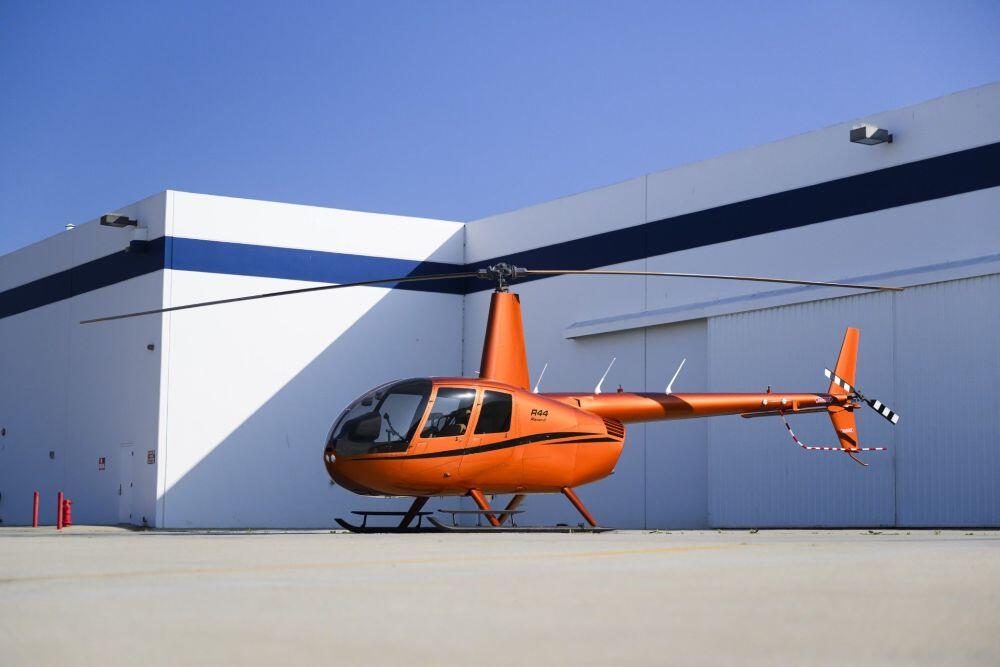
Robinson Helicopter's delivery of the 5,000th R44 Raven II represents a significant durability milestone for a light piston single that has anchored the company's product line for more than three decades. First delivered in 1993 as a derivative of the baseline Raven I—which itself flew in 1990—the Lycoming IO-540-powered R44 has spawned a broad family of variants including the Clipper I and II, the Cadet trainer, and the Raven II itself. The fact that this milestone unit went to a dealer in Ecuador underscores the R44's enduring global appeal, particularly in Latin America, where the type is widely used for utility, agricultural, and training missions in addition to its long-standing role in the U.S. flight training and personal/business transport markets. For an airframe this mature to still be moving in volume speaks to Robinson's disciplined incremental improvement strategy rather than wholesale redesign—a approach that has kept acquisition and operating costs predictable for owner-operators, flight schools, and utility operators alike.
For working pilots, particularly those flying light helicopters in training, tour, utility, or corporate roles, the R44's continued production relevance matters because it remains one of the most common platforms on which rotary-wing pilots build flight time and transition into turbine equipment. The new Utility Interior unveiled at Verticon, featuring more ruggedized materials for tough mission profiles, signals that Robinson is still actively listening to operators running the aircraft in agricultural, utility, and off-airport environments where cabin durability is a real operational concern. This kind of incremental product investment—rather than chasing a clean-sheet replacement—reflects a broader reality in the light helicopter segment: certification costs and market size make wholesale redesigns rare, so manufacturers instead layer capability and durability improvements onto proven, well-understood airframes that operators and maintainers already trust.
More consequential for the industry's medium-term trajectory is Robinson's parallel investment in autonomous and alternative-propulsion variants built on the R44/R550 airframe. The partnership with Rotor Technologies to develop autonomous cargo and crop-spraying retrofits—the Air Truck and Spray Hawk—positions the R44 as a testbed for uncrewed rotorcraft operations in applications where removing the pilot reduces risk exposure (aerial application) or cost (cargo). This mirrors a broader trend across general and business aviation in which legacy, well-certified airframes are being repurposed as autonomy development platforms precisely because their flight characteristics and structural margins are already well documented, lowering the certification burden compared to a clean-sheet autonomous design. Similarly, the hydrogen-electric R44 flight test program underway with United Therapeutics for organ delivery missions—evolving from earlier 2016-2018 battery-electric experiments with Unither Bioelectronics—demonstrates how urgent-mission use cases like organ transport are serving as early adopters and proving grounds for alternative propulsion in vertical lift, ahead of broader market adoption.
Taken together, these developments illustrate a pattern operators and pilots should watch closely: incumbent manufacturers with large installed fleets are leveraging that fleet as the foundation for next-generation capability rather than ceding the advanced air mobility and hybrid-electric space entirely to well-funded startups. If Robinson's hydrogen-electric R44 pathfinder successfully informs a hybrid R66 variant, it would extend this strategy into the turbine single segment, potentially giving corporate and utility operators a lower-emissions option without abandoning a familiar type rating and support infrastructure. For flight schools and utility operators currently running R44 fleets, the message is that the platform's long-term relevance is being actively reinforced through both traditional hardware upgrades and next-generation propulsion/autonomy work—reducing the risk that today's training and mission investment in the type becomes obsolete as the industry pushes toward autonomous and hybrid-electric rotorcraft.






 Read original article