Bjorn's Corner: Blended Wing Body Airliners. Part 9 - Leeham News and Analysis
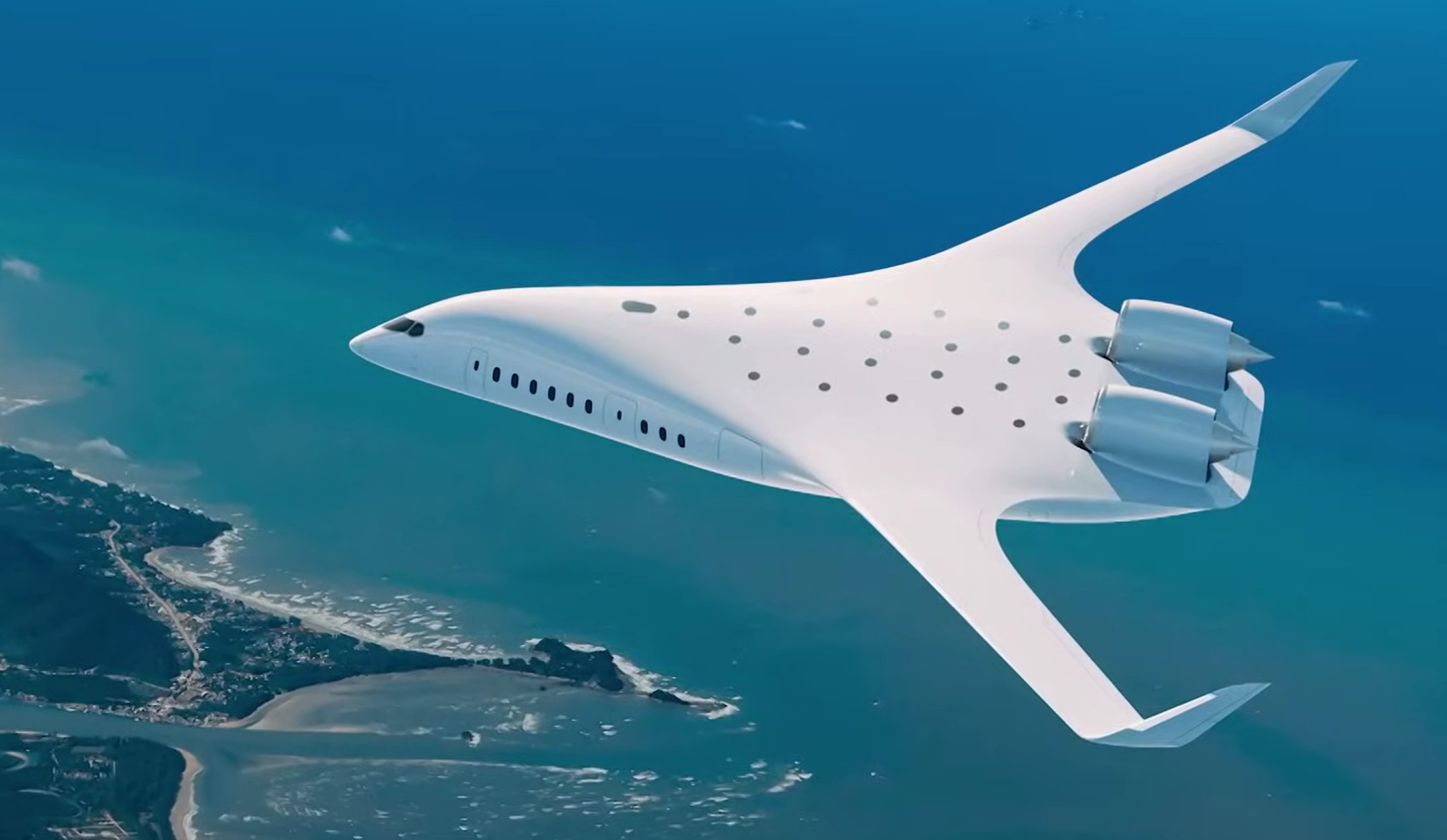
Bjorn Fehrm's nine-part Leeham News series on Blended Wing Body airliners concludes with a technically rigorous synthesis of the JetZero Z4's engineering realities, arriving at a more measured verdict than the technology's advocates typically offer. The series establishes that the BWB's efficiency case rests primarily on drag reduction rather than any lift advantage — the Z4's 16 to 24 percent lower wetted area compared to the Boeing 767-200 and -300 variants translates directly into lower friction drag, which dominates fuel burn during cruise. The Z4's 55-meter effective wingspan, nine percent wider than the 767's, further reduces drag through improved span loading and enables cruise altitudes approaching 50,000 feet in step-cruise profiles. However, Fehrm's Aircraft Performance and Cost Model undercuts a central marketing claim: when the Z4 is compared against a modern clean-sheet aircraft such as a 250-seat Boeing NMA rather than a 45-year-old 767, the drag advantage largely disappears. The hypothetical NMA's narrower fuselage, smaller wetted area, and folding wingtips sufficient to fit single-aisle gates effectively neutralize what the BWB gains from its wider span, raising serious questions about the Z4's competitiveness in any realistic commercial deployment scenario.
The propulsion challenge Fehrm identifies is perhaps the most operationally significant finding for aviation professionals to internalize. The Z4's high cruise altitudes demand engines with lower bypass ratios — below BPR 10 — to maintain adequate thrust at altitude, a requirement that runs directly counter to six decades of turbofan development philosophy. The industry has progressed from BPR 5 in the 1990s to BPR 10 around 2010, with projections of BPR 15 engines entering service in the 2030s; each step has traded specific thrust for propulsive efficiency, yielding the fuel burn improvements that underpin modern aircraft economics. The Z4 currently specifies the Pratt & Whitney PW2040, a 40-year-old engine at BPR 5.5, and JetZero has not produced a credible path to a modern, lower-fuel-burn powerplant that simultaneously delivers the specific thrust needed for high-altitude operations. For operators accustomed to evaluating aircraft on seat-mile costs, this unresolved propulsion question represents a fundamental gap in the Z4's business case, not merely an engineering detail.
The structural problem Fehrm outlines deserves particular attention from pilots who understand pressurization systems and airframe certification standards. Conventional tube-and-wing aircraft handle pressurization through a cylindrical fuselage shell, which converts pressure loads into hoop stresses aligned with the material's strongest axis — an elegant and thoroughly understood solution accumulated over decades of certification experience. The Z4's box-like central cabin must contain the same 8 to 10 PSI differential pressure without the geometric advantage of a pressure cylinder, while simultaneously functioning as the structural core of the wing and bearing aerodynamic bending and gust loads. These two load cases, which conventional aircraft handle through separate and independently optimized structures, must be reconciled in a single integrated assembly that has never been certified at transport category scale. FAA Part 25 certification of this configuration will require novel structural demonstration methods and almost certainly new regulatory guidance, extending the development timeline and cost envelope beyond what startup-funded programs typically sustain.
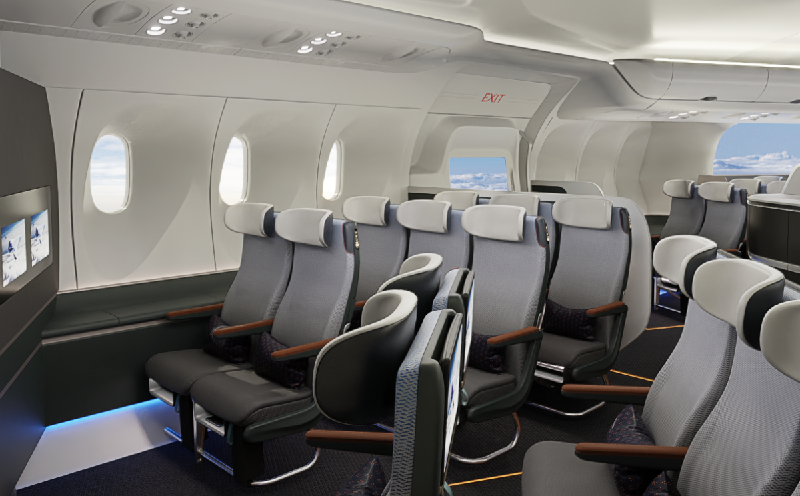
From an operator and fleet planning perspective, the Z4's widebody gate requirement introduces a significant infrastructure constraint that limits the aircraft's addressable route network from day one. A 250-seat aircraft that must use widebody gates competes directly against the 787-8 and A330neo rather than the single-aisle-plus category it might otherwise target, yet Fehrm's analysis shows it holds no aerodynamic advantage over a modern narrow-body-derived design configured with folding wingtips. Passenger experience in the main cabin — where sidewall windows are replaced by screens fed by external cameras and natural light arrives through roof skylights — remains an open question for customer acceptance research, though Fehrm notes that center-section passengers in widebody aircraft already have minimal exterior views. Water ditching evacuation geometry poses a solvable but unresolved certification problem, as the aircraft's flat profile may submerge conventional floor-level exits before passengers can egress, requiring roof emergency exits integrated with the skylight structures.
The broader implication of Fehrm's series for aviation industry observers is that the BWB concept remains physically sound in principle but commercially unproven in the specific configuration JetZero is pursuing. Flying-wing aerodynamics have attracted serious research investment for nearly a century, from the Horten Ho 229 through the NASA X-48B subscale demonstrator program of 2007 to 2012, and each generation has validated the drag savings while encountering the same downstream complications in structural integration, propulsion matching, and certification novelty. The Z4's subscale demonstration program planned for 2026 will begin to answer some aerodynamic questions at low cost, but the gap between subscale validation and a pressurized, certificated, 250-seat transport remains immense. For airlines, lessors, and corporate flight departments monitoring next-generation airliner development, the honest assessment from Fehrm's analysis is that the tube-and-wing configuration's dominance reflects not a failure of imagination but rather the accumulated engineering intelligence embedded in a form that has been continuously optimized for exactly the pressure, weight, and performance requirements that make passenger aviation commercially viable.







 Read original article