Why Do Planes Fly Over The Arctic But Not The Antarctic?
The disparity between Arctic and Antarctic commercial air traffic reflects a convergence of geometry, demographics, and regulatory infrastructure that has quietly shaped one of the most consequential route networks in long-haul aviation. Great circle routing—the shortest path between two points on a sphere—naturally bends toward high latitudes for many of the world's densest city pairs, including JFK-HKG, LHR-HND, and ORD-PEK. Because North America, Europe, and Asia sit clustered in the upper Northern Hemisphere and account for the overwhelming majority of global passenger and cargo volume, transarctic routings deliver genuine, repeatable savings in distance, fuel burn, and block time. Southern Hemisphere city pairs like Sydney-Johannesburg or Santiago-Auckland simply lack the geographic clustering that would push great circle paths deep enough south to make an Antarctic crossing worthwhile—the math doesn't produce the same shortcut.
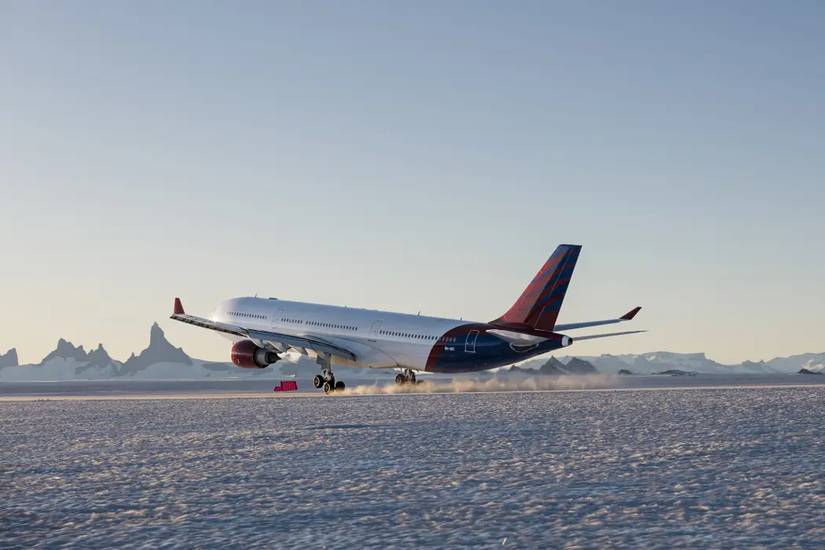
For working pilots, the more operationally significant factor is ETOPS diversion architecture, which is really the crux of why one polar region is flyable and the other isn't. Twin-engine long-haul aircraft—787s, A350s, 777s—operating under 180, 240, or 330-minute ETOPS certification depend on a chain of viable, certified diversion airports along the route. The Arctic has that chain: Anchorage, Fairbanks, Iqaluit, Keflavík, Svalbard, and other high-latitude fields are maintained, certified, and used routinely by commercial carriers, even if conditions there are often marginal. Antarctica offers nothing comparable—its handful of airstrips are seasonal, ice-based, uncertified for airline operations, and entirely dependent on weather windows that can close without notice. For dispatchers and flight planners, this isn't a minor administrative gap; it's a hard regulatory wall that makes Antarctic routing a non-starter regardless of fuel savings that might theoretically exist on paper.
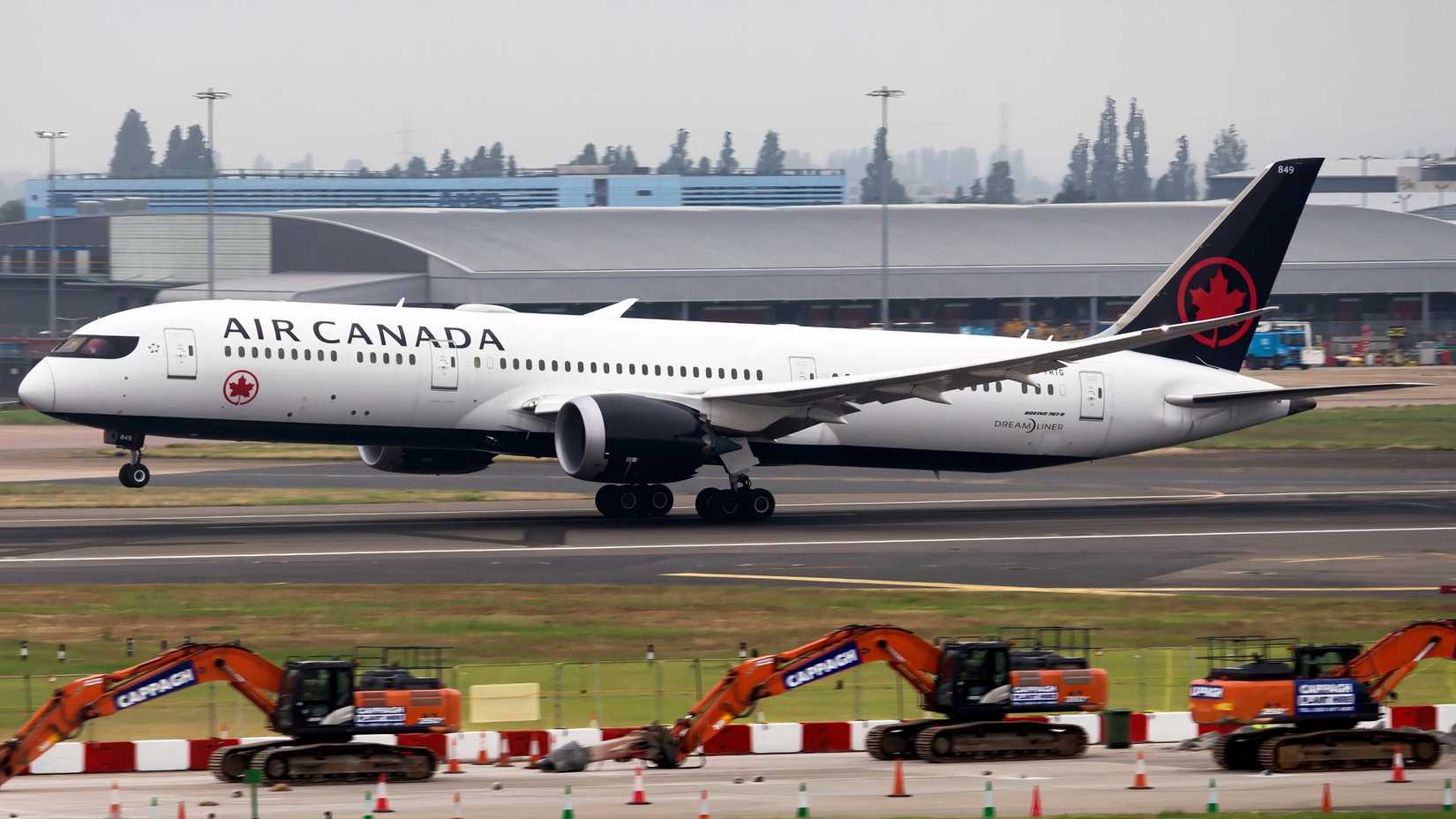
This matters to airline and business aviation operators beyond mere trivia because it underscores how deeply infrastructure—not just aircraft capability—dictates where modern jets can go. The same principles governing transarctic corridors (ETOPS diversion planning, cold-weather operations, communications and navigation coverage at extreme latitudes, crew training for polar operations) are directly relevant to dispatch and flight-planning departments at carriers like Cathay Pacific, ANA, Korean Air, United, Air Canada, and Lufthansa, all of which rely on polar tracks to stay schedule- and cost-competitive against rivals routing further south. Business jet operators flying ultra-long-range aircraft, particularly on Asia-North America or Asia-Europe legs, face similar polar routing calculus, along with additional considerations around HF communications, magnetic compass unreliability near the poles, and space weather/radiation exposure at high latitudes—issues FAA and ICAO have addressed through specific polar operations guidance.
More broadly, this piece illustrates a recurring theme in commercial aviation: route networks are never purely about geometry or aircraft range—they're the product of where demand exists, where regulators have built certification frameworks, and where infrastructure investment has followed. Antarctica's absence from scheduled airline maps isn't a failure of aircraft technology; modern twins could technically make the distances involved. It's an absence of paying passengers, host-nation infrastructure, and a diversion network that regulators would ever certify for ETOPS. As carriers continue pushing ultra-long-range operations into new corridors—India-North America, deep Pacific tracks, and other stretch missions—the Arctic/Antarctic contrast serves as a useful case study in how demand economics and safety regulation, not just great circle math, ultimately draw the lines on the world's flight-planning charts.













 Read original article