Airspeed Management Cited In Grand Caravan Crash
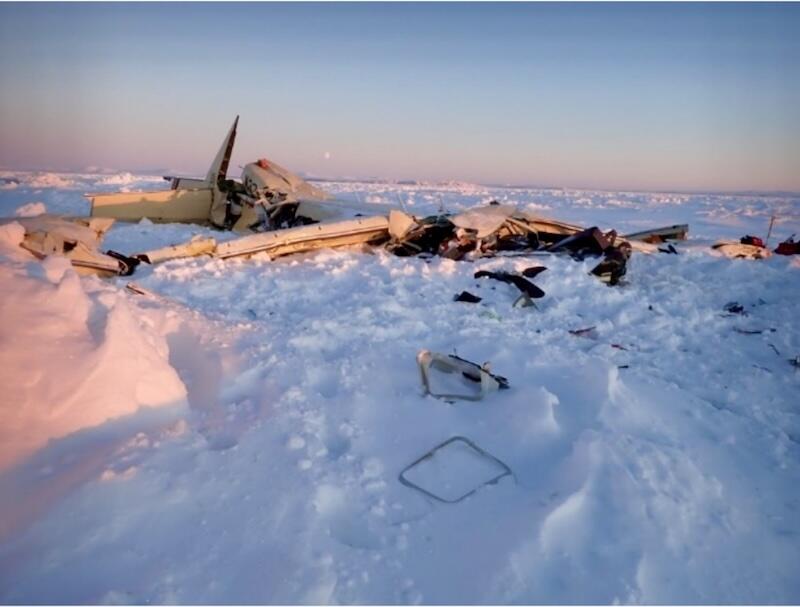
The NTSB's final report on the February 2025 crash of Bering Air Flight 445 identifies a chain of interlocking failures rather than a single causal factor, a pattern increasingly familiar in Part 135 accident investigations. The Cessna 208B Grand Caravan, operating the final leg of a three-segment scheduled commuter run to Nome, Alaska, encountered severe icing including supercooled large droplet (SLD) conditions that exceeded the certification envelope of its TKS ice-protection system. Critically, the system functioned as designed—this was not an equipment failure. Instead, the pilot's workload managing the deicing process and approach sequence appears to have degraded his situational awareness to the point where airspeed decayed to roughly 99 kt, triggering the low-speed awareness system and autopilot disconnect before the aircraft stalled. The NTSB's finding that the pilot "likely did not recognize the low airspeed or the high angle of attack in enough time to prevent the stall" places this accident squarely within the loss-of-control-in-flight category that has dominated the agency's Most Wanted List for years.
What elevates this case beyond a standard icing-and-LOC narrative is the weight issue, which compounded the aerodynamic margins available to the pilot. The aircraft's supplemental type certificate raised MGTOW to 9,062 lb, but the icing-flight limitation in the POH supplement rolled that back to the original 8,807-lb limit—a nuance easily lost in day-to-day operations. NTSB's reconstructed weight-and-balance calculation put the airplane at approximately 9,798 lb at takeoff, nearly 1,000 lb over even the higher limit and closer to 1,000 lb over the icing-specific limit. This wasn't an isolated lapse: investigators found a pattern of underreported weights across Bering Air's load manifests and determined that the carrier's flight risk assessment and operational control processes routinely failed to catch overweight operations. For working pilots and dispatchers, this is the more troubling revelation—it points to a systemic gap in how single-pilot Part 135 operators verify actual weight against paperwork, particularly on multi-leg cargo-and-passenger routes where load composition changes at each stop.
For professional pilots flying turboprop singles or light twins in icing-prone environments—Alaska bush operators, Part 135 commuter carriers, and even Part 91/91K operators flying similar equipment into marginal weather—this accident reinforces several operational lessons that go beyond stick-and-rudder skill. First, icing certification limits are not universal "known icing" clearances; SLD conditions can exceed even TKS or boot-equipped aircraft capability, and recognizing the exit strategy (altitude change, diversion) before ice accretion overwhelms the airframe is essential. Second, weight-and-balance limitations tied to specific flight conditions (icing vs. non-icing) require deliberate cross-checking, not just a single MGTOW number pulled from memory or a generic manifest. Third, the erosion of stall margin from combined icing contamination and excess weight means that low-speed awareness systems and autopilot disconnects should be treated as urgent triggers for immediate, practiced manual recovery—not just aural alerts to be managed alongside other cockpit tasks.
The NTSB's resulting recommendations—loss-of-control recovery training for charter, air taxi, and fractional operators; certificated dispatchers for most 135 carriers; expanded flight data monitoring; broader load manifest requirements; and crash-resistant flight recorders—echo long-standing safety board priorities that have struggled to gain full FAA traction, particularly for single-pilot and small-fleet operators where dispatch support and FDM infrastructure are cost-prohibitive. This accident is likely to intensify pressure on FAA rulemaking around Part 135 oversight, especially in Alaska where aviation serves as essential infrastructure for isolated communities and where icing, weight, and runway-limited operations converge daily. Operators and chief pilots reviewing this report should treat it as a prompt to audit their own weight-verification procedures, icing-specific operating limitations, and LOC-I recurrent training, since the breakdowns cited here—normalization of overweight operations, workload-induced loss of airspeed awareness, and gaps in operational control—are not unique to Bering Air and could exist unnoticed in any commuter or charter operation running tight schedules through hostile weather.








 Read original article