Books - Leeham News and Analysis
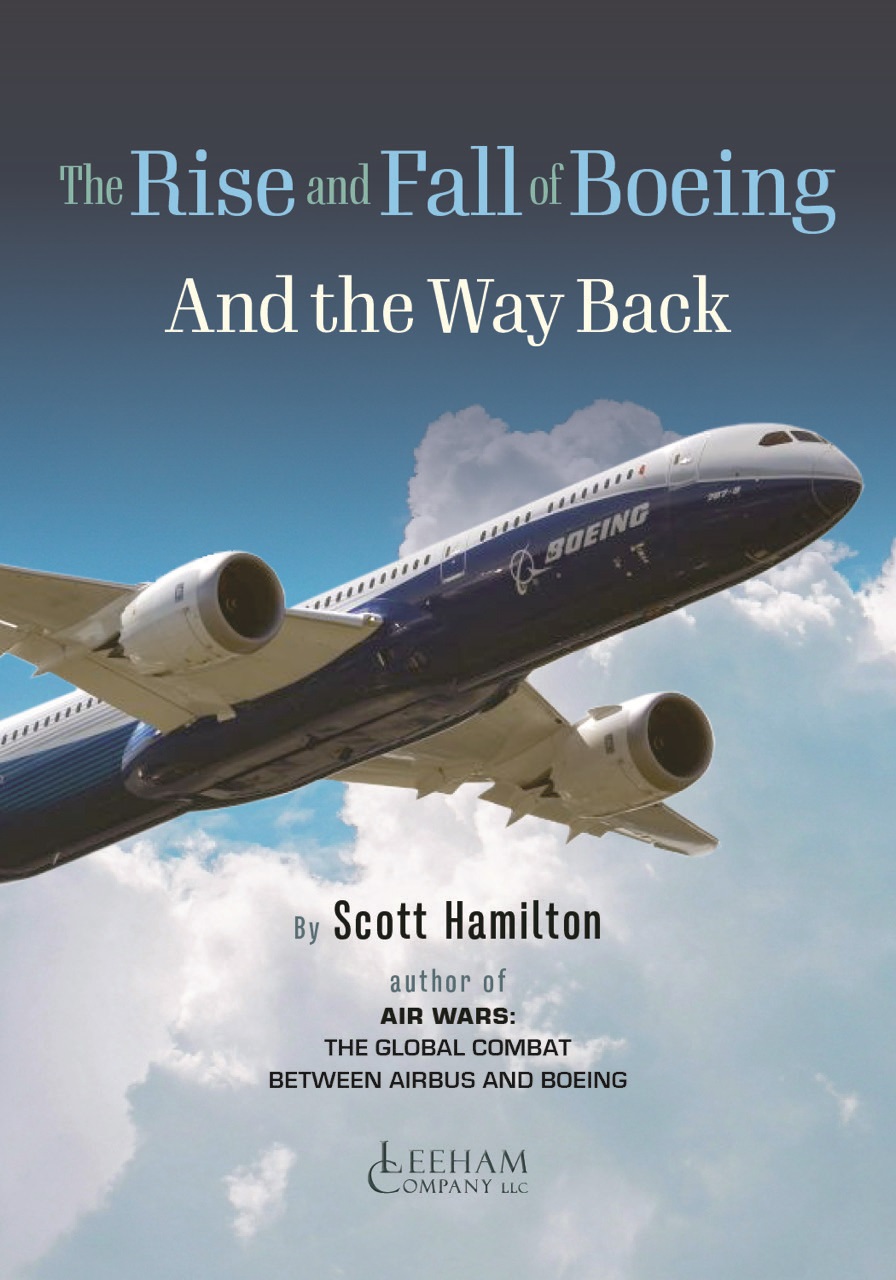
Scott Hamilton's *The Rise and Fall of Boeing, And the Way Back* arrives as the most comprehensive account yet of how a foundational American aerospace institution transformed itself from an engineering-driven innovator into a shareholder-value-focused manufacturer — and paid a catastrophic price for the shift. Four years in the making, the book traces Boeing's trajectory from its 1916 founding through the competitive missteps of the Model 247 era, the post-WWII recovery built around the 707 family, the defeat of Lockheed's L-1011 TriStar, and the underestimation of Airbus beginning in 1974. Hamilton challenges the widespread assumption that Boeing's decline began with the 1997 McDonnell Douglas merger, arguing instead that the financialization of the company's decision-making predated that transaction. The original 777 program stands in the book as legacy Boeing's final engineering triumph before the cultural erosion became irreversible — a claim that carries significant weight given the subsequent 737 MAX crisis, which resulted in the deaths of 346 people across Lion Air Flight 610 and Ethiopian Airlines Flight 302, and the Alaska Airlines Flight 1282 door plug blowout in January 2024.
For working pilots and aviation operators, Hamilton's analysis is not merely historical — it is directly operational in its implications. The leadership eras he examines, spanning Phil Condit, Harry Stonecipher, Jim McNerney, Dennis Muilenburg, David Calhoun, and the incoming Kelly Ortberg, each produced regulatory, certification, and fleet-reliability consequences that pilots have encountered firsthand. The 737 MAX grounding from March 2019 through November 2020 disrupted airline scheduling globally, forced fleet reconfigurations at Part 121 carriers, and elevated scrutiny of aircraft certification processes at the FAA and internationally. Corporate flight departments operating Boeing Business Jets and Part 135 operators relying on Boeing-derivative platforms have navigated a prolonged period of parts availability strain, delivery delays, and reputational uncertainty around airworthiness oversight — all of which Hamilton's account helps contextualize through the internal decision structures that produced them.
Hamilton's earlier work, *Air Wars: The Global Combat Between Airbus and Boeing* (2021), provides the necessary competitive backdrop for understanding how Boeing's internal decline played out against an increasingly dominant Airbus. The rivalry Hamilton documents — including Airbus's John Leahy executing decades of aggressive fleet sales while Boeing grew complacent — explains why Airbus now holds the position of the world's largest commercial aircraft manufacturer, a reversal that directly shapes what narrowbody and widebody metal airlines and charter operators are acquiring today. The A320neo family's market dominance, the A220's penetration into regional markets, and Airbus's relative production stability during the post-pandemic demand surge all trace back to strategic decisions made during the period Air Wars covers. For aviation operators making fleet planning decisions or evaluating OEM relationships, the competitive dynamics Hamilton documents are not background reading — they are current market conditions.
The broader significance of Hamilton's body of work is that it provides professional aviation stakeholders with documented institutional history at a moment when Boeing's recovery trajectory remains genuinely uncertain. Ortberg's tenure, referenced in *Rise and Fall*, represents an attempt to reestablish engineering credibility through operational discipline — a reset whose success or failure will be measured partly in whether Boeing can restore delivery rates on the 737 MAX, stabilize the 787 Dreamliner production line in Charleston, and advance the 777X toward certification. Pilots flying these aircraft, dispatchers planning around their availability, and operators deciding between Boeing and Airbus platforms are navigating an environment shaped precisely by the forces Hamilton spent four years researching. That *Rise and Fall* was recognized as a top aviation title by the Royal Aeronautical Society for Christmas 2025 reflects the book's reception not just among enthusiasts, but among industry professionals for whom the questions it raises remain unresolved.


 Read original article