Whisper Aero Sees JetFoil Concept As Next Step For Regional Flight
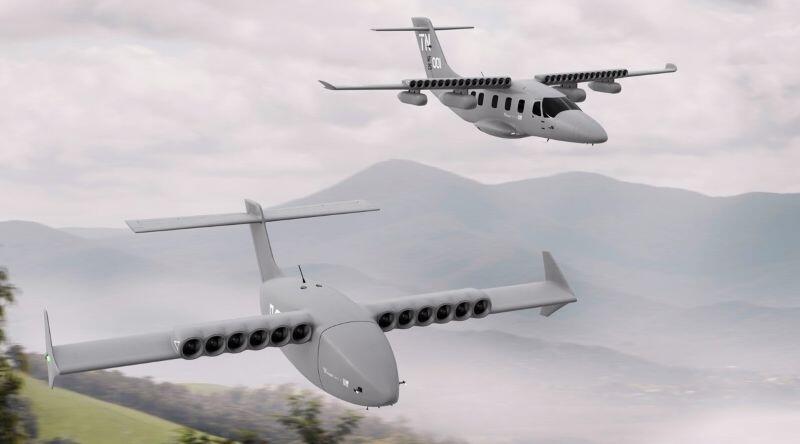
Whisper Aero's presentation at the Electric Aircraft Symposium in Oshkosh signals a notable evolution in the company's ambitions, moving beyond its original focus on quiet propulsion technology for small aircraft toward a full aircraft architecture aimed at regional air mobility. Founder and CEO Mark Moore, whose background includes leading NASA's foundational research into distributed electric propulsion—work that helped seed the broader eVTOL and electric aviation industry over the past decade—used the venue to outline how Whisper's ducted propulsor technology could underpin a new class of regional aircraft, tentatively dubbed the "JetFoil" concept. Whisper's core innovation, a shrouded fan with a high blade count and blade tips joined by a continuous outer ring, differs meaningfully from conventional propellers or even typical ducted fans by reducing tip losses and acoustic signature while improving efficiency. This propulsor has already been marketed for hybrid-electric retrofit and ISR/cargo drone applications; extending it toward a purpose-built regional passenger platform represents a significant scaling of the company's ambitions.
For working pilots and operators, particularly those in regional airline, charter, and business aviation segments, this development is worth tracking because it reflects the continuing search for an economically viable middle ground between traditional turboprop regional aircraft and the still-unproven eVTOL air taxi category. Regional air mobility—flights typically in the 50-500 mile range connecting underserved airports—has struggled to find a propulsion and airframe combination that beats the economics of legacy turboprops like the ATR 72 or Dash 8, while also delivering the noise and emissions benefits regulators and communities increasingly demand. If Whisper's shrouded fan technology can be packaged into a fixed-wing or hybrid architecture that meaningfully cuts community noise near airports, it could ease one of the persistent obstacles to expanding regional service into noise-sensitive markets, a factor that has repeatedly stalled AAM and regional turboprop growth alike. Quieter operations also carry operational value for pilots and airports themselves, potentially reducing curfews, noise abatement procedures, and community pushback that currently constrain schedules at smaller fields.
Moore's NASA pedigree lends credibility to Whisper's technical claims, but the JetFoil concept remains firmly in the conceptual and symposium-presentation stage rather than a certified or even flying prototype. Pilots and fleet planners should view this as an early signal rather than a near-term procurement consideration—much like the broader eVTOL sector, which has seen ambitious timelines from Joby, Archer, Beta, and others repeatedly slip against certification realities with the FAA and EASA. The regional air mobility space is crowded with competing propulsion philosophies, including full-electric, hybrid-electric, and hydrogen approaches, and Whisper's entry with a novel ducted-fan architecture adds another variable to an already fragmented technology landscape that operators must monitor before committing to any single platform.
More broadly, this announcement fits into a pattern seen throughout 2025-2026 of AAM and urban air mobility companies pivoting or expanding from narrow propulsion or component suppliers into full airframe integrators, as they seek to capture more value chain and demonstrate a complete vision to investors and potential launch customers. For corporate flight departments and regional carriers evaluating future fleet diversification, Whisper's JetFoil concept underscores that the regional aviation propulsion race is far from settled, and that noise reduction—not just electrification or range—is emerging as a critical differentiator. Pilots should expect continued incremental disclosures from Whisper and similar entrants at industry gatherings like Oshkosh, with certification pathways, powerplant choices, and infrastructure requirements remaining the key unknowns that will determine whether concepts like JetFoil translate into operational aircraft this decade.









 Read original article