Airbus walks line between shareholder returns and clean-sheet ambitions
Airbus emerged from the Farnborough International Airshow with a story less about headline order numbers and more about the shape of its balance sheet and its intentions for the back half of the decade. While Boeing captured 173 aircraft orders to Airbus's 154 — a narrative-shifting result that reflects growing market confidence in Kelly Ortberg's turnaround effort — the more consequential news from Airbus was financial: a €5 billion share buyback program over three years and a new medium-term target of €12-13 billion in adjusted EBIT by 2029, with roughly €10 billion of that expected from commercial aircraft alone. For an industry accustomed to reading order tallies as the primary signal of manufacturer health, Airbus's pivot toward investor guidance signals a company confident enough in its 9,200-aircraft backlog that it no longer needs Farnborough headlines to prove its dominance in the single-aisle market.
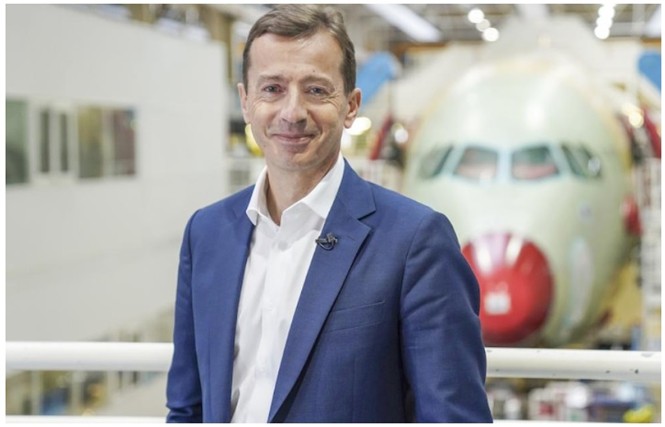
For working pilots and flight departments, the practical takeaway is less about buybacks and more about delivery timelines and engine supply, both of which directly affect fleet planning, crew hiring, and training pipelines. CEO Guillaume Faury's acknowledgment that Airbus wants more geared turbofan engines than Pratt & Whitney is currently willing to allocate underscores a supply chain constraint that has already forced A320neo operators into extended aircraft-on-ground situations due to the multi-year GTF recall. Faury's target of monthly production rates reaching 75 A320neo-family jets and 12 A350s, with engine issues fully resolved by 2028, gives operators a rough planning horizon — but the muted overall order total of 327 aircraft combined (against pre-show forecasts as high as 800) reflects a market where airlines increasingly understand that new orders today mean deliveries in the mid-2030s. That reality is already reshaping how airlines manage aging fleets, extend maintenance programs, and negotiate lease extensions rather than wait on backlogged production slots.
The article's most substantive analytical thread, however, concerns whether Airbus's newfound shareholder-friendliness echoes Boeing's post-McDonnell Douglas cultural shift of the late 1990s — a transition many aerospace historians, including LNA's Scott Hamilton, trace as the root cause of the engineering and quality erosion that culminated in the 737 MAX crisis and subsequent production crises. This comparison matters enormously to the pilot community, which has lived through the operational and safety consequences of a manufacturer prioritizing Wall Street returns over engineering rigor. The distinction the article draws — that Airbus is flush with free cash flow and still investing heavily in R&D, rather than cutting costs to fund buybacks — is an important nuance for crews and safety officers watching for early warning signs of a similar cultural drift. Still, the fact that this comparison is even being raised publicly speaks to how deeply the Boeing precedent has reshaped scrutiny of both airframers' governance decisions.
Looking at the broader industry trend, the consensus that Airbus is better positioned than Boeing to launch a clean-sheet aircraft program — potentially a next-generation single-aisle replacement — has significant implications for long-term fleet strategy across commercial and business aviation. Airlines and lessors will be watching closely for signals about when such a program might be formally launched, since a genuine clean-sheet jet would represent the first major narrowbody replacement effort in over a decade and would reset assumptions about fuel efficiency, maintenance economics, and pilot type-rating requirements for a generation of crews. For now, Farnborough 2026 suggests an industry settling into a holding pattern defined by long backlogs, engine supply bottlenecks, and manufacturers cautiously balancing shareholder expectations against the enormous capital demands of future aircraft development — a dynamic every corporate flight department and airline planning group will need to factor into decade-long equipment strategies.







 Read original article