Why Arming A Boeing Door Is Harder Than An Airbus One
The mechanical distinction between Boeing and Airbus door-arming procedures, while easily overlooked by passengers, represents a meaningful operational and training consideration for cabin crews and a subtle human-factors variable in evacuation performance. On Boeing narrowbodies like the 737, arming a door requires a flight attendant to physically manipulate a girt bar—detaching it from stowed brackets on the door and manually latching it to a fitting on the cabin floor—before engaging an arming lever that can be heavy and awkward to operate. This process is entirely dependent on correct manual execution; there is no mechanical safeguard against a missed step. Airbus, by contrast, uses a simplified "PIN–LEVER–PIN" sequence with no bar to lift, along with a critical safety redundancy: if an armed door is opened from outside, a mechanical linkage automatically disarms the slide, preventing inadvertent deployment that could injure ground crew. Airbus also incorporates a gas-charged power-assist actuator to reduce the physical effort needed to open doors during an evacuation, whereas Boeing's system leans more heavily on crew training and procedural discipline.
For working pilots and cabin crew, this is more than a trivia point—it speaks directly to fleet-transition training, crew resource management, and the recurring industry conversation about human factors in emergency egress. Flight attendants who cross-qualify or transfer between Boeing and Airbus fleets must internalize very different muscle memory for door arming, and any lapse—arming a door that should be disarmed at the gate, or failing to arm one before pushback—has produced real-world incidents, including inadvertent slide deployments that have caused injuries and significant aircraft-on-ground costs. The absence of an automatic disarm-on-external-opening safeguard on Boeing types places a heavier burden on procedural compliance, checklist discipline, and door-arming verification calls between crew members, reinforcing why door and slide arming remains one of the most scrutinized items in cabin safety training and line checks.
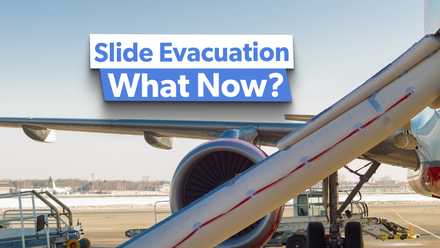
This topic also feeds into the broader industry debate about the adequacy of the 90-second evacuation standard, referenced in the article as a benchmark that manufacturers must demonstrate through certification testing but which critics argue no longer reflects real-world passenger behavior—particularly the now well-documented tendency of passengers to retrieve carry-on baggage during evacuations, a behavior that has repeatedly slowed egress and damaged slides in actual events. As regulators and manufacturers face pressure to revisit evacuation certification standards, the mechanical reliability and human-factors robustness of door-and-slide systems becomes increasingly relevant. Airbus's built-in mechanical redundancies represent a design philosophy of engineering out human error, while Boeing's more manual approach places greater weight on training standardization—both valid approaches, but ones that airlines, training departments, and regulators must continue to evaluate as fleets mix and evolve.
Ultimately, this piece underscores a theme familiar to career aviators: seemingly mundane procedural differences between airframes carry outsized safety implications. As airlines increasingly operate mixed fleets and as pilots and cabin crew move between types over a career, understanding these manufacturer-specific nuances—not just in flight deck systems but in cabin safety equipment—remains essential. It also serves as a reminder that evacuation readiness is a shared responsibility spanning flight deck, cabin crew, ground operations, and passengers, and that design philosophy differences between Boeing and Airbus extend well beyond flight control laws and cockpit automation into the less-discussed but equally critical domain of emergency egress systems.








 Read original article