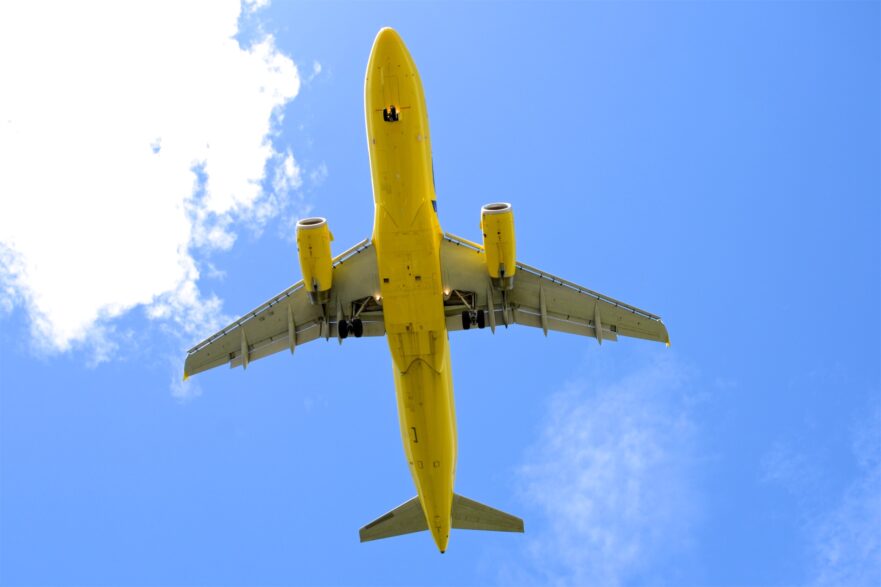
How the war in Ukraine transformed Finnair
Finnair's strategic collapse following Russia's February 2022 invasion of Ukraine represents one of the most acute single-event network disruptions suffered by any major carrier in the modern era. The Helsinki-based airline had, with unusual foresight, identified both a global pandemic and a Russia-related geopolitical event as its two greatest existential risks in a pre-2020 scenario analysis — and then watched both materialize within 24 months. When EU sanctions triggered mutual airspace closures, Finnair lost its defining competitive advantage: Finland's geographic position along Russia's 830-mile western border had allowed the carrier to operate the shortest practical routing between North Asia and Europe, shaving roughly two hours off Japan and South Korea flights compared to competitors flying from Frankfurt, Paris, or London. That routing efficiency was the backbone of Finnair's most profitable long-haul franchise, and it disappeared within days of the invasion.
The operational consequences cascaded quickly and severely. Routes to Osaka, Nagoya, Tokyo Haneda, Sapporo, and Fukuoka were suspended through summer 2022, and when reinstated, required rerouting either over the polar corridor or through Central Asian corridors that add up to 40 percent to block times. For flight crews and dispatchers, longer block times translate directly into increased fuel burn, crew rest complications under EU Flight Time Limitations, higher operational costs per departure, and compressed connection banks at Helsinki — the very product Finnair was selling to Asia-bound European travelers. The fuel cost environment of 2022 compounded the damage: carriers absorbing longer routings were doing so precisely when jet fuel prices spiked to multi-year highs. Cargo operations, which had become critical revenue during COVID passenger troughs, also suffered backlogs as capacity evaporated on high-demand transpacific and trans-Eurasian freight corridors.
Finnair's adaptation has required genuine structural transformation rather than temporary scheduling adjustments. By late 2022, the carrier had entered a long-term codeshare arrangement with Qatar Airways, a Oneworld partner, routing traffic through Doha as an alternative connectivity hub for passengers who previously connected through Helsinki on Asian itineraries. The airline systematically expanded its network toward Southeast Asia, India, the Middle East, and North America — markets that do not depend on Russian overflight and that offer Finnair some geographic edge over hub competitors in central and southern Europe. Four years after the invasion, Finnair's CEO characterized the network as "rebalanced and restructured," language that signals a permanent departure from the pre-2022 business model rather than a recovery trajectory back toward it. Unlike virtually every other major carrier, for which 2019 remains a relevant performance benchmark, Finnair has explicitly abandoned that reference point as operationally meaningless.
The broader aviation industry context amplifies why Finnair's situation merits attention from operators well beyond Scandinavia. Russian airspace closure has redistributed competitive dynamics across the entire Europe-Asia market, benefiting carriers with hubs in the Gulf — Emirates, Qatar Airways, Etihad — whose pre-existing southern routings became comparatively more efficient almost overnight. For operators flying charter or private missions between Europe and Asia, the closure has lengthened minimum fuel planning requirements and forced reconsideration of technical stop options; Iceland, the Faroes, and Greenland have seen increased interest as polar route alternates. GPS interference and spoofing incidents have also intensified in the Baltic and high-latitude regions since 2022, requiring heightened crew awareness and redundancy planning on routes Finnair and others now operate with greater frequency. The conflict-driven fragmentation of Eurasian airspace is, in this regard, not a Finnair-specific problem but a permanent feature of the operating environment for any crew or operator routing between Europe and points east.
As the International Air Transport Association convenes its annual general meeting in Istanbul, Finnair's transformation serves as the industry's most visible case study in geopolitical exposure and network fragility. Carriers and operators that had built scheduling, pricing, or partnership assumptions around stable overflight rights are now operating in a world where those rights can be revoked with no practical warning and no near-term resolution in sight. Russian airspace remains closed to EU carriers as of spring 2026, with no credible diplomatic pathway to reopening visible on current trajectories. For airline strategists, route planners, and the flight operations departments that execute daily across contested and restricted airspace, Finnair's experience is a working demonstration that overflight dependency constitutes a category of operational risk that demands the same rigorous scenario planning the airline itself — to its credit — had already performed before the crisis arrived.