The US Air Force Is Pouring 20 Acres Of Concrete At Guam's Andersen AFB But Refuses To Build Shelters
The U.S. Air Force's decision to pour 20 acres of new concrete apron at Andersen Air Force Base in Guam, while deliberately declining to build hardened aircraft shelters, marks a significant and deliberate shift in how the Pentagon plans to posture airpower for a potential Indo-Pacific conflict with China. The project, originally conceived as a joint facility with the Republic of Singapore Air Force before Singapore withdrew, is proceeding under U.S. funding alone. Rather than investing in fixed, hardened infrastructure that satellite imagery can precisely map and target with China's growing arsenal of long-range ballistic and cruise missiles, the Air Force is betting on massed, flexible parking that supports rapid dispersal and unpredictable basing patterns. This is the physical manifestation of Agile Combat Employment (ACE), the operational doctrine that has been reshaping USAF planning for nearly a decade and is now driving billions of dollars in Pacific infrastructure spending.
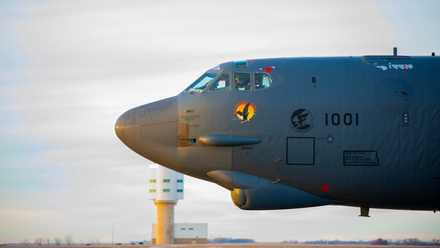
For working military and government pilots, as well as the contractors and logistics personnel who support Pacific operations, this represents a tangible change in how sortie generation, aircraft dispersal, and turnaround operations will be conducted at forward bases. Expanded apron space without the wingspan and taxi restrictions imposed by hardened shelters means aircrews flying B-52s, the forthcoming B-21 Raider, C-5M Super Galaxies, KC-135s, and the incoming KC-46A Pegasus will have far greater flexibility in parking, spacing, and turning aircraft without the shuffling delays that shelters typically create. The addition of new fuel storage and hot-pit refueling infrastructure directly targets faster turnaround times, a critical factor in generating higher sortie rates during a contested conflict where minimizing aircraft time-on-ground at any single location reduces vulnerability to strikes. Pilots and maintenance crews should expect Andersen to increasingly function less like a static permanent base and more like a high-capacity hub in a broader network of austere and semi-prepared airfields across the second island chain, consistent with how ACE is being exercised in recent Pacific Air Forces war games.
The strategic logic here connects to a broader realignment of U.S. combat airpower roles that pilots across platforms need to understand. Stealth assets like the F-22 and F-35 are increasingly cast as sensor and targeting nodes that penetrate contested airspace, rather than primary weapons trucks, given their limited internal payload. Non-stealth platforms like the F-15EX and the future B-21/B-52J "Hi-Lo" bomber pairing under Global Strike Command are positioned as the stand-off firepower that acts on the targeting data. This division of labor changes how strike packages are built, how tanker and ISR support is allocated, and how basing decisions cascade down to crew scheduling and airspace coordination. Naval aviators flying the P-8A Poseidon also benefit directly, as Andersen's expansion supports sustained maritime patrol coverage over the Philippine Sea at a time when undersea warfare and sea line security are becoming as critical as strike aviation.
More broadly, this Andersen project reflects a Pentagon-wide reassessment of vulnerability in the Pacific theater following years of analysis showing that a handful of hardened, well-mapped main operating bases like Kadena and Andersen represent an outsized risk in any near-peer conflict. The Air Force's parallel investment in a reported $8 billion integrated air and missile defense upgrade for Guam underscores that even with a dispersal-focused doctrine, the service recognizes some fixed assets remain indispensable and must be defended actively rather than passively hardened. For commercial and business aviation observers, this is a reminder that Guam and the wider Marianas corridor are undergoing sustained military-driven infrastructure growth that will affect civil-military airspace coordination, NOTAMs, and airfield capacity in a region already navigated by transpacific commercial traffic. As the Pentagon continues shifting resources toward the Pacific, expect similar apron-expansion, fuel-capacity, and ACE-related projects at other second-island-chain locations, reinforcing that flexibility, not fortification, is becoming the Air Force's primary survival strategy in a peer conflict scenario.








 Read original article