How Igor Sikorsky provided the template for eVTOL hype
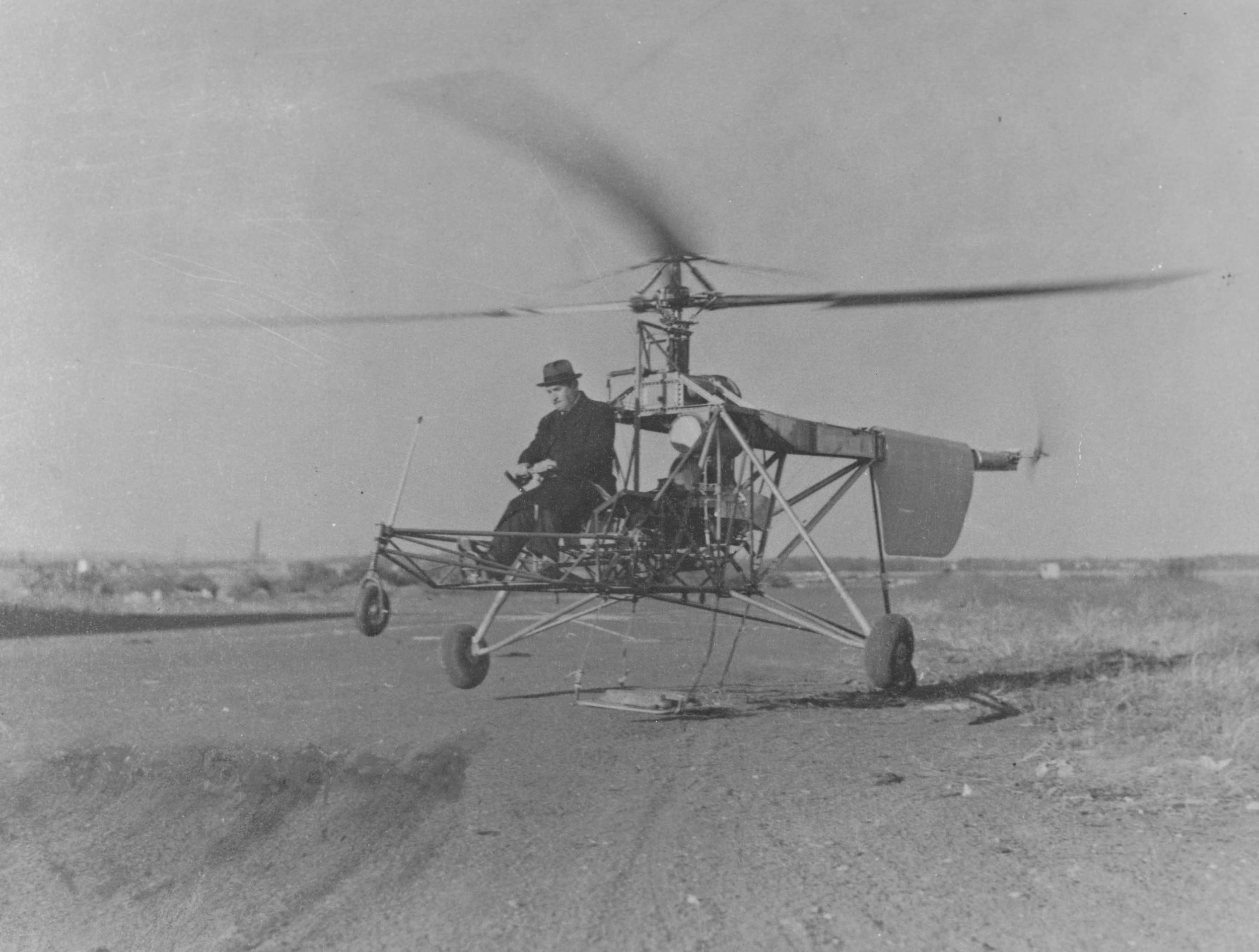
Igor Sikorsky's mid-twentieth-century vision of mass personal air mobility through affordable rotorcraft provides a remarkably precise historical template for the eVTOL hype cycle that crested in 2021 and has since deflated under the weight of regulatory friction, physics, and unmet revenue projections. In the early 1940s, Sikorsky promoted a future in which millions of personal helicopters would replace the automobile for urban commuting — rooftop landings as routine as elevator calls — at a time when his VS-300 had only just received CAA certification. The parallels to Uber Elevate's 2016 white paper are structural: both visions positioned the incumbent technology (horses and cars in Sikorsky's era, conventional helicopters in Uber's) as inadequate, both leveraged genuine engineering breakthroughs to extrapolate exponential market adoption curves, and both collided with infrastructure gaps, cost realities, and the compounding difficulty of certifying novel aircraft in the physical world. Uber Elevate was later absorbed by Joby Aviation, which along with Archer Aviation listed publicly via SPAC structures with revenue projections — Joby targeting over $2 billion in air taxi revenue by 2026, Archer projecting more than $12 billion annually by 2030 — that have not materialized. As of mid-2026, no certified electric air taxis carry commercial passengers in the markets those projections envisioned.
For working pilots and aviation operators, the significance of this historical framing extends well beyond academic curiosity. The eVTOL hype cycle produced concrete distortions in labor market forecasting — McKinsey projected a need for 60,000 new pilots by 2028 to staff urban air mobility services — that influenced hiring pipelines, training investment decisions, and career path planning at flight schools and regional carriers simultaneously managing their own post-pandemic staffing challenges. Morgan Stanley's $1.5 trillion market-by-2040 forecast shaped capital allocation at the OEM and MRO level. Pilots and operators who made decisions based on those projections now operate in a market where the promised UAM revenue base has not emerged, while the conventional helicopter industry — specifically maligned in the Uber white paper as too noisy, polluting, and expensive for scaled deployment — finds itself positioned as the durable incumbent against a field of eVTOL developers still years from Part 135 commercial certification in most cases. The historical Sikorsky analogy suggests this outcome was structurally predictable: the gap between demonstrable prototype performance and scalable commercial operations has consistently proven far wider than promotional materials acknowledge.
The broader pattern visible in both the Sikorsky era and the contemporary eVTOL cycle is that genuine technological progress and inflated market projections are not mutually exclusive — they routinely coexist, and the former is often used to launder the credibility of the latter. Sikorsky did invent a practical helicopter; eVTOL developers have produced certifiable aircraft with meaningful engineering advances in distributed electric propulsion and fly-by-wire automation. Sikorsky's own legacy company pursued the VERT concept, an autonomous hybrid-electric coaxial rotorcraft developed in partnership with Otis Elevator for integrated vertiport operations, demonstrating that the UAM vision persists even within organizations with direct institutional memory of how the last mass-personal-air-travel bubble resolved. The FAA certification pathway for novel eVTOL configurations under Part 21 Special Class remains genuinely difficult, and the infrastructure requirements for urban vertiport networks at the scale needed to generate the projected revenues have not been addressed in any major U.S. market. What the Sikorsky comparison illuminates is that the gap between a transformative technology and a transformed transportation system is routinely underestimated by its promoters, and that the hardening skepticism now dominant in the conventional rotorcraft industry reflects accumulated institutional learning rather than simple conservatism.
For professional pilots operating in Part 135, 91K, and airline environments, the practical takeaway from this cycle is that UAM's eventual commercial role — if it materializes — will almost certainly be narrower, slower to develop, and more expensive to operate than the SPAC-era projections suggested. The McKinsey pilot demand forecast has not driven a training infrastructure build-out calibrated to UAM; the more immediate pilot labor dynamics remain concentrated in regional and mainline airline pipelines and in business aviation, where demand has remained structurally elevated. Operators considering fleet diversification into eVTOL platforms face a certification landscape in which the most advanced developers — Joby, Archer, Wisk, Overair's successor programs — are still working through FAA type certification processes that have proven longer and more iterative than originally projected. The Sikorsky template does not predict failure; it predicts a long, humbling distance between the promise and the product, followed eventually by a mature, useful technology that looks considerably different from the one originally marketed.