New Zealand Startup Targets Regional Cargo Feeder Aircraft Market
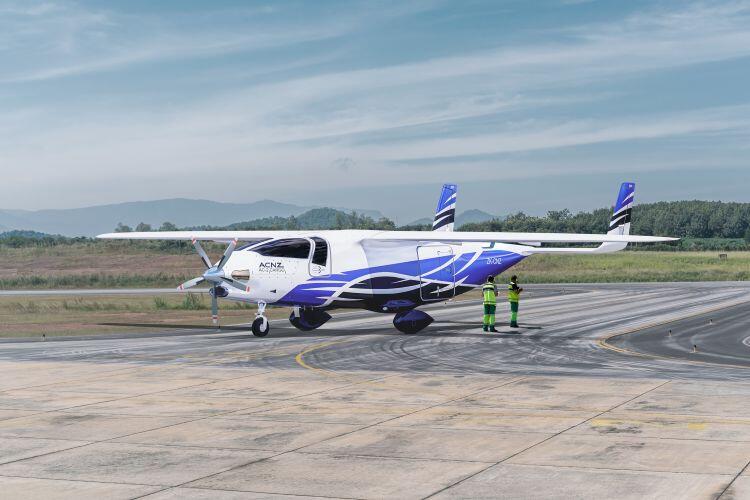
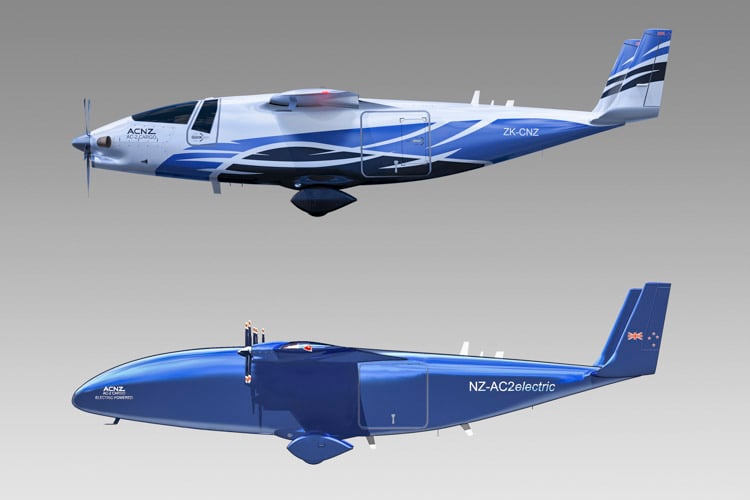
Aviation Composites New Zealand's (ACNZ) unveiling of the AC-2 AveniQ represents a notable new entrant into the regional cargo feeder aircraft market, a segment currently dominated by aging aircraft types and, more recently, by Cessna's twin-engine SkyCourier. Founded by yacht-industry veteran Lapo Ancillotti, ACNZ is applying composite manufacturing techniques honed in New Zealand's world-leading America's Cup racing yacht sector to aerospace, targeting a single-engine, all-composite competitor capable of carrying a 6,000 lb payload 400 nm at 200 kt on either a Pratt & Whitney Canada PT6 or GE Aerospace Catalyst turboprop. The claim that a single-engine composite airframe can match or exceed the payload-range performance of a twin-engine metal aircraft is significant, and if validated through certification testing, would represent a meaningful efficiency gain for feeder cargo operators who are highly sensitive to operating costs, maintenance burden, and dispatch reliability.
For working pilots and operators in the regional cargo and feeder segment, this development matters on several levels. The regional freight fleet—much of it composed of decades-old Caravans, Metroliners, and similar types—is aging out, and ACNZ's forecast of 500-800 aircraft demand in the U.S. alone over the next decade reflects a widely recognized replacement cycle that manufacturers like Textron (with the SkyCourier) have already begun addressing. Pilots flying single-pilot Part 135 cargo operations will be watching handling characteristics, single-engine performance margins, and systems complexity closely, since a single-turbine design changes the risk calculus compared to twin-engine feeders, even with modern engine reliability. The company's emphasis on field-repairable composite structures—touting overnight, autoclave-free repairs using techniques borrowed from race-boat maintenance—also speaks directly to operators running aircraft into rough, unimproved strips where local impact damage from cargo handling and marginal runways is a persistent maintenance headache. If ACNZ can deliver genuinely simplified repair procedures without sacrificing structural integrity, that could reduce aircraft-on-ground time meaningfully for feeder operators running tight overnight cargo schedules.
The program also sits at the intersection of several broader industry trends. First, it reflects the growing willingness of composite specialists and non-traditional aerospace entrants to challenge established OEMs in niche but lucrative segments, following a pattern seen in eVTOL and advanced air mobility ventures, though ACNZ is notably starting with a conventional turboprop configuration rather than jumping straight to electric propulsion. Second, the "future-proof" design philosophy—built for eventual electrification or autonomous operation—echoes an industry-wide hedge strategy, allowing manufacturers to certify a conventionally piloted, turbine-powered baseline now while preserving a technology roadmap toward reduced-crew or uncrewed cargo operations later, which is increasingly attractive to logistics customers like e-commerce carriers seeking lower operating costs. Third, ACNZ's ambition to leverage New Zealand's aerospace ecosystem, buoyed by Rocket Lab's success, signals the country's aspiration to become a more serious player in aerospace manufacturing beyond its traditional agricultural aviation niche.
That said, pilots and fleet planners should temper enthusiasm with the realities of aircraft certification timelines and funding risk. ACNZ's targets—a flying prototype in 12-14 months and Part 23 type certification within three years—are aggressive by industry standards, particularly for a company still raising the $10 million needed just to build the prototype and $33 million total to reach certification. New composite airframes, especially those pursuing novel manufacturing methodologies for fiber orientation and weight distribution, typically face extended certification timelines with regulators, and single-engine cargo aircraft face additional scrutiny given the operational environments they're intended to serve. Operators evaluating the AC-2 as a future fleet option should watch for prototype flight test data, confirmed engine selection, and progress on the NZCAA certification basis before making procurement commitments, while recognizing that a successful, cost-competitive composite feeder aircraft would represent a meaningful evolution for a regional cargo segment that has seen limited fresh competition in decades.




 Read original article