After Rare London - LA Flight, Qantas’ A380 Fleet To Soon Return To Full Strength
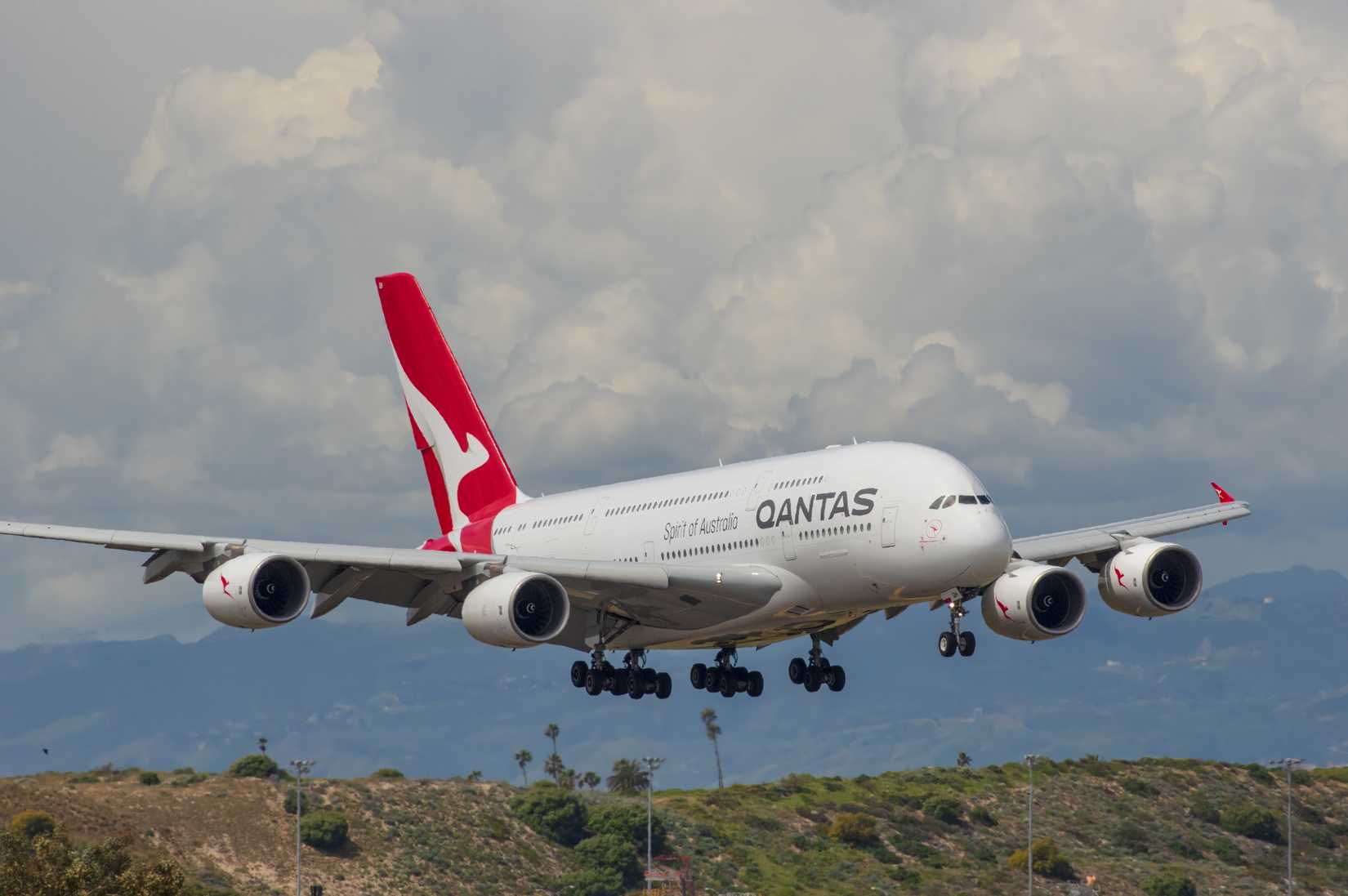
Qantas' Airbus A380 fleet is set to return to full ten-aircraft strength following an unusual maintenance saga that saw one superjumbo, VH-OQG, complete a rare direct London Heathrow to Los Angeles ferry flight after an unscheduled engine change. The disruption began the week of July 3 when engineers discovered an engine problem while the aircraft sat at Heathrow, prompting Qantas to fly in a spare engine from Los Angeles and forcing cancellations of A380 services from Sydney and Melbourne that were tied to LAX connections. With a second A380, VH-OQI, already out of the active fleet for scheduled heavy maintenance in Dresden since March, Qantas found itself operating on a thin margin, given that the carrier typically needs eight or nine of its ten A380s in service on any given day. A brief, separate air-conditioning issue on a third aircraft, VH-OQH, added further strain before resolving within 24 hours, illustrating how quickly a fleet of just ten high-capacity widebodies can become schedule-constrained when even one or two airframes are pulled for maintenance.
The routing choice for VH-OQG's return—flying direct from Heathrow to LAX rather than via the carrier's customary Singapore stopover—is the most operationally interesting detail for pilots and dispatchers. A380 crews on the Qantas network are accustomed to multi-sector routings through Asian hubs, so a transatlantic-into-transcontinental single hop represents a meaningful deviation from standard line operations. The decision appears driven by simple logistics: the replacement engine originated in Los Angeles, and positioning the aircraft there directly shaved roughly 1,300 miles off the alternative Singapore routing while getting the jet back within range of Sydney faster. For flight planning and crew scheduling purposes, this kind of ferry flight requires coordination across ETOPS considerations, fuel planning for a long-range sector outside the aircraft's typical city-pair rotation, and crew qualification on a less-familiar routing—reminders that even mature fleet types can demand ad hoc operational creativity when maintenance events intersect with network realities.
For working pilots and aviation operators, this episode underscores the persistent maintenance-capacity bottleneck facing the global A380 fleet more broadly. With production long ended and only a handful of facilities worldwide—Dresden's Elbe Flugzeugwerke among the most prominent—equipped to perform heavy checks on the type, operators like Qantas have limited flexibility when unscheduled repairs collide with planned maintenance cycles. This mirrors challenges seen across the industry with aging or niche widebody types, where OEM support networks and spare parts pools are thinner than for current-production aircraft. The reliance on flying spare engines across continents, as happened here, also highlights the logistics burden carriers assume to keep specialized fleets airworthy, a cost and complexity factor that has pushed many operators away from four-engine widebodies entirely.
More broadly, Qantas' commitment to restoring and sustaining its full A380 fleet—including pulling its tenth airframe out of nearly six years of storage in December 2025—signals confidence in the type's role through at least the early 2030s, even as the airline prepares to introduce Airbus A350-1000s from 2027 for ultra-long-haul routes like Project Sunrise. This dual-track strategy, maintaining a legacy flagship alongside next-generation long-haul capacity, reflects a broader industry pattern where carriers are extending high-capacity widebody life to meet demand on premium trunk routes while newer, more efficient types handle range-extending missions. For pilots training or type-rated on the A380, Qantas' continued investment offers some assurance of career longevity on the type, even as the broader commercial fleet gradually consolidates around twin-engine widebodies. The episode also serves as a useful case study in operational resilience: a single engine issue rippled through multiple cancelled flights and schedule adjustments, illustrating how tightly utilized low-frequency fleet types can be to disruption, and how creative repositioning flights remain a necessary tool for carriers managing constrained maintenance networks.





 Read original article