Why No US Ally Could Replicate The B-21 Raider's Hardened Network Of Stealth Bomber Bases
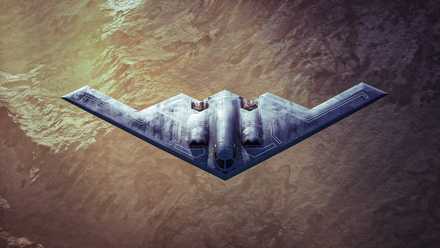
The Air Force's B-21 Raider infrastructure program reveals a dimension of the stealth bomber acquisition that rarely surfaces in unit-cost debates: the roughly $1.5-2 billion per-base construction campaign required simply to make the aircraft operationally viable. Ellsworth AFB in South Dakota, Dyess AFB in Texas, and Whiteman AFB in Missouri are each absorbing purpose-built campuses of Low Observable Restoration facilities, radio-frequency test chambers, environmental protection shelters, and classified mission-planning vaults that have no equivalent in conventional fighter or bomber basing. Whiteman benefits from three decades of B-2 Spirit legacy infrastructure, but Ellsworth and Dyess are building nearly all of this from bare ground, with Ellsworth alone running almost three dozen individual construction projects, including a $129.5 million runway rebuild using more than 106,000 tons of concrete and a $135.5 million Phase Maintenance Hangar. The scale of this spend, layered atop the aircraft's roughly $692 million flyaway cost, underscores that the B-21 program's real strategic barrier is not the airframe price tag but the specialized basing ecosystem required to sustain low-observable performance over the aircraft's service life.
For working pilots and operators, this story is a reminder that stealth aircraft impose a maintenance and infrastructure burden fundamentally different from legacy platforms, one that shapes deployment planning, basing decisions, and readiness postures well beyond the cockpit. Radar-absorbing coatings degrade with every flight cycle through abrasion, moisture, UV exposure, and thermal cycling, meaning the aircraft cannot simply operate from any ramp with a long enough runway. Facilities like the LOR hangar function as a hybrid of clean room, paint booth, and diagnostic lab, and RF test chambers are needed to re-verify radar cross-section after every coating repair. For military aviators and maintenance officers, this translates into tightly scripted turnaround cycles and basing dependencies that dictate where the aircraft can realistically surge, deploy, or forward-stage without compromising its signature. Civil and business aviation professionals should note the parallel logic playing out in miniature across other low-observable and highly classified platforms: the airframe is only part of the cost equation, and specialized ground infrastructure increasingly determines true operational availability and dispatch reliability, a principle equally relevant to advanced avionics suites, ballistic-resistant composite repairs, and classified mission systems on business jets flying government or defense-adjacent contracts.
The broader strategic implication, that no US ally can replicate this basing network, matters for aviation professionals tracking defense procurement trends and the industrial base that underpins both military and dual-use aerospace manufacturing. The $850 million in flexible FY2025 continuing-resolution funding directed specifically at B-21 and Sentinel ICBM construction across Ellsworth, Whiteman, Dyess, and Tinker signals that Congress views this infrastructure as inseparable from the weapons system itself, not an afterthought. This has downstream effects on defense contractors, airfield construction firms, and the broader aerospace supply chain that services military aviation, sectors that often overlap with business and general aviation infrastructure providers, FBOs, and MRO facilities competing for skilled labor and specialized materials. It also reinforces a trend visible across the defense aerospace sector: platforms are increasingly evaluated not just on acquisition cost but on total lifecycle infrastructure burden, a framework that mirrors how airlines and fractional operators now assess aircraft not merely by purchase price but by maintenance footprint, parts availability, and facility requirements.
Finally, this basing buildout offers a cautionary data point for any nation, or even any private operator, contemplating acquisition of exquisite low-observable technology without the accompanying ground infrastructure investment. The B-21's operational readiness is inseparable from a network of climate-controlled hangars, weapons generation vaults, and secured mission-planning facilities that took the wealthiest defense budget on earth years and billions of dollars to construct before a single production aircraft arrived. For military and defense-adjacent aviation professionals, the lesson extends beyond stealth bombers: sophisticated aircraft capability is only as useful as the infrastructure ecosystem built to sustain it, and that ecosystem is often the more durable competitive advantage, and the harder one to replicate, than the aircraft itself.





 Read original article