London Cranfield Airport joins Weston Aviation’s FBO network | Corporate Jet Investor | CJI news
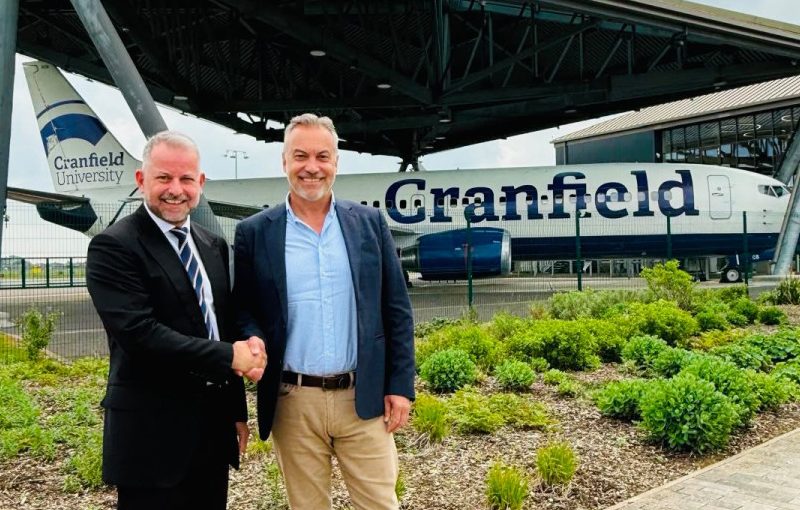
London Cranfield Airport has entered into a strategic partnership with Weston Aviation, joining "The Collection," the company's growing network of business aviation-focused airports across the UK and Ireland. Under the terms of the deal, Weston Aviation becomes the Bedfordshire airfield's exclusive business aviation partner, handling business development, charter sales support, and marketing representation. The agreement also includes a rebranding effort, with the airport formally adopting the "London Cranfield Airport" identity—a move clearly designed to position the field within the competitive London-area business aviation market despite its location roughly 50 miles north of the capital. Owned by Cranfield University, the airport brings a 1,799-meter runway, uncongested operations, and no slot restrictions to the partnership, along with remote customs and immigration processing that allows international passengers to clear border formalities before landing.
For corporate and charter operators, this development is significant primarily because it adds another viable alternative to London's notoriously congested and expensive primary business aviation airports—Luton, Farnborough, and Biggin Hill. Slot constraints, high landing fees, and scheduling friction at these established fields have long pushed operators to consider secondary options, and Cranfield's combination of a long runway, absence of slot requirements, and priority access for business aircraft makes it an attractive diversion airport or primary destination for operators serving the Oxford-Cambridge corridor. The proximity to the planned Universal UK Resort theme park is also a notable long-term demand driver; large-scale entertainment developments historically generate substantial business aviation traffic during construction phases and, later, from high-net-worth visitors and corporate stakeholders once operational. Pilots and flight departments planning trips into the London area, particularly those serving clients or projects tied to the Cambridge tech and life sciences corridor, should take note of Cranfield's expanding commercial profile and improved handling capabilities.
The rebranding and network affiliation also reflect a broader trend among independent and university-owned airports seeking to monetize underutilized infrastructure through commercial aviation partnerships rather than relying solely on flight training, testing, or general aviation traffic—Cranfield has historically been known for its aerospace research and training heritage tied to Cranfield University. By outsourcing commercial development and marketing to a specialist like Weston Aviation, the airport gains access to established charter broker relationships and market intelligence without having to build that expertise internally. This mirrors similar consolidation and partnership strategies seen across the FBO and airport management sector globally, where operators like Signature Aviation, Jetex, and regional airport authorities increasingly rely on branded networks and franchise-style models to standardize service quality and expand commercial reach.
More broadly, the Weston Aviation "Collection" concept illustrates how secondary and regional airports are positioning themselves within the business aviation ecosystem as primary fields reach capacity constraints. As slot availability tightens at major European business aviation gateways and environmental and noise restrictions increasingly limit operations at congested hubs, operators and flight planners will likely continue to see growth in alternative airport options offering streamlined customs processes, priority handling, and competitive fee structures. For flight departments and charter operators building out UK routing strategies, Cranfield's entry into this network signals another data point worth tracking as the airport works to convert its "enormous commercial potential," as CEO Nick Weston put it, into measurable increases in aircraft movements and charter activity.