Gulfstream completes first high-altitude 100% SAF emissions test | Corporate Jet Investor | CJI news
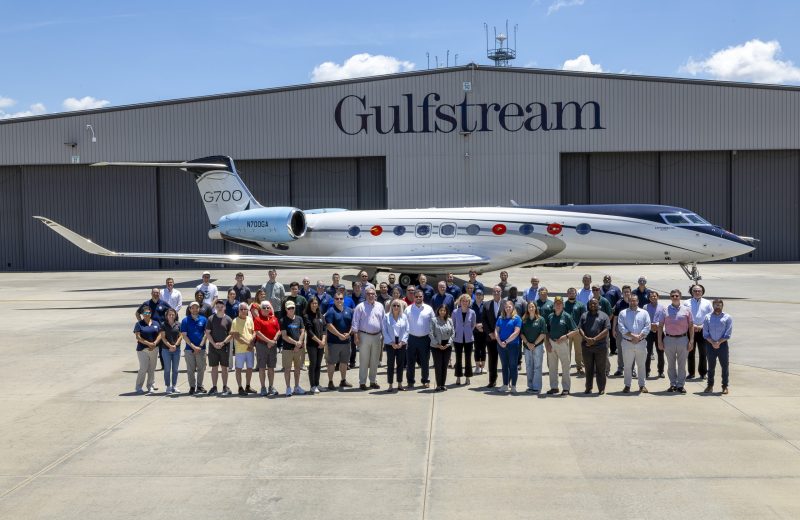
Gulfstream Aerospace has notched another sustainability milestone with the completion of the first high-altitude flight test campaign to measure how 100% sustainable aviation fuel affects contrail-forming particulate emissions at altitudes up to 50,000 feet. The test also served as the inaugural 100% SAF flight for the G800 and its Rolls-Royce Pearl 700 engine, conducted in close formation with a modified G700 that functioned as an airborne emissions laboratory. By flying in formation, researchers captured precise, real-time measurements of particulate matter and atmospheric conditions at altitudes representative of business jet operations—well above the cruise levels typical of commercial airliners. Preliminary findings point to a significant reduction in contrail-forming particulates when operating on neat SAF, which contains no sulphur or aromatics, compared to conventional Jet A.
The scope of collaboration behind this campaign underscores how seriously the industry is treating non-CO2 aviation emissions as a climate concern. Gulfstream partnered with the FAA's Center of Excellence ASCENT, NASA, the German Aerospace Center, Missouri University of Science and Technology, Aerodyne Research, Rolls-Royce, Montana Renewables and World Fuel Services to compare conventional Jet A, low-sulphur Jet A and neat HEFA SAF. This multi-stakeholder approach—spanning government research agencies, engine manufacturers, fuel producers and academic institutions—reflects a broader recognition that contrails and their associated radiative forcing effects may represent a larger share of aviation's climate impact than previously assumed, and that altitude-specific data has been a critical gap in the science.
For working pilots, particularly those flying business jets at flight levels above airline traffic, this research carries direct operational relevance. Contrail avoidance strategies, whether through altitude selection, routing adjustments, or fuel choice, could eventually become part of standard flight planning as regulators and airlines look for near-term, high-leverage ways to reduce aviation's atmospheric footprint. Business aviation's unique operating envelope—cruising at 45,000 to 51,000 feet, above the commercial traffic layer—means the sector has been an underrepresented data source in contrail science until now. This campaign helps close that gap and positions Gulfstream and its research partners to influence how future fuel standards and operational best practices are developed, potentially shaping requirements that affect flight departments across the industry, not just OEMs.
More broadly, this test extends Gulfstream's decade-plus track record of SAF leadership, building on the 2011 transatlantic flight using SAF in one engine and the 2023 transatlantic flight on 100% SAF, with the company's fleet now having logged more than 3.5 million nautical miles on SAF blends. As SAF production scales and supply chains mature, data like this strengthens the business case for neat SAF adoption beyond simple CO2 lifecycle accounting, adding contrail mitigation as another selling point for operators and corporate flight departments under pressure to demonstrate environmental stewardship. It also signals to engine manufacturers like Rolls-Royce that emissions performance on 100% SAF will be an increasingly important certification and marketing consideration. As commercial aviation grapples with similar contrail research through programs like NASA's contrail avoidance studies, business aviation's willingness to fund and fly dedicated high-altitude test campaigns may accelerate the pace at which actionable atmospheric science translates into operational and regulatory change across all segments of the industry.