Under 17 Hours: Gulfstream G800's Melbourne-Illinois Flight Is Fastest, Farthest In Business Jet History
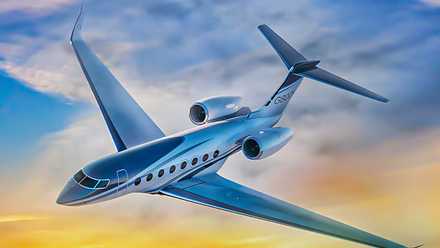
Gulfstream's demonstration flight from Melbourne to Moline, Illinois represents a significant technical milestone in the ultra-long-range business jet segment, with the G800 covering 8,303 nautical miles in 16 hours and 56 minutes gate-to-gate at an average cruise speed of roughly Mach 0.85. What makes this flight particularly notable to operators and manufacturers alike is that it exceeded the aircraft's advertised long-range cruise figure of 8,200 nm, suggesting real-world performance margins beyond published range charts under favorable conditions. Paired with the G800's 800th city-pair speed record set in June between Reykjavik and Savannah, Gulfstream is clearly using these back-to-back achievements to reinforce its market position against Bombardier's Global 8000 and Dassault's Falcon 6X/10X, both of which are chasing similar ultra-long-range, high-speed benchmarks.
For flight departments and charter operators evaluating ultra-long-range aircraft, these records translate into tangible operational value beyond marketing bragging rights. The ability to connect city pairs like Melbourne and the US Midwest without a fuel stop eliminates the scheduling friction, crew duty time complications, and diplomatic clearance headaches associated with technical stops in places like Hawaii or the West Coast. For flight crews operating these missions, the extended range capability directly affects fatigue risk management planning, crew augmentation requirements, and rest facility utilization on ultra-long-haul legs approaching 17 hours in the air—well into territory that demands careful FRMS (Fatigue Risk Management System) protocols even in a business aviation context where crews aren't bound by the same prescriptive rest rules as Part 121 carriers.
The cabin performance details are equally relevant to pilots and cabin crew supporting these missions. A cabin altitude of roughly 2,840 feet at FL410, combined with a plasma ionization air purification system refreshing cabin air every two to three minutes, addresses the physiological toll of ultra-long-haul flying on passengers and crew alike—a factor that increasingly influences aircraft selection for principals and flight departments that prioritize crew and passenger wellness on missions exceeding 14-15 hours. As more manufacturers push into this segment, cabin pressurization and air quality specs are becoming as much a competitive differentiator as raw range and speed, particularly as ultra-high-net-worth clients and corporate flight departments weigh long-haul comfort against the alternative of scheduled airline connections.
Broadly, this flight fits into an industry trend where business jet manufacturers are racing to eliminate the last geographic barriers to nonstop global connectivity, mirroring similar developments in the airline world with ultra-long-haul routes like Singapore Airlines' Singapore-New York service. Gulfstream's cumulative total of 815 speed records, with 15 attributed to the G800 alone since its August 2025 entry into service, signals sustained investment in performance validation as a sales and credibility tool. For working pilots transitioning into or currently flying large-cabin ultra-long-range aircraft, this competitive dynamic among Gulfstream, Bombardier, and Dassault will likely continue driving improvements in range, cruise speed, and cabin systems—developments that directly shape training requirements, operational specifications, and mission planning capabilities for the business aviation sector's most capable airframes.








 Read original article