Business Aviation & AAM Briefs: EHang, Gulfstream, SkyDrive
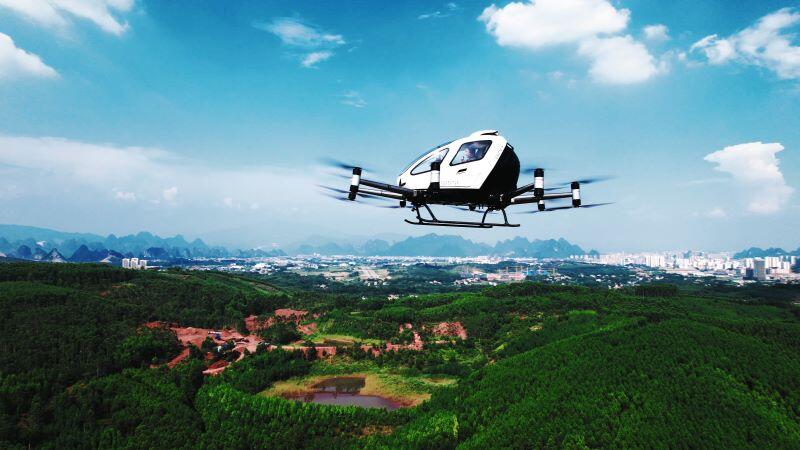
EHang's latest flight campaign in Switzerland marks another incremental but important step in the Chinese eVTOL manufacturer's strategy of accumulating international flight experience ahead of broader commercial rollout. The EH216-S, a pilotless, autonomous two-seat eVTOL designed primarily for tourism and short-hop passenger transport, conducted its first flights in the Alpine municipality of Quinto in cooperation with the Swiss Federal Office of Civil Aviation (FOCA) and local project partner DroneVia. This follows earlier EH216 demonstration flights in Austria, reinforcing a pattern in which EHang uses European test campaigns—often in partnership with national civil aviation authorities and regional tourism or infrastructure partners—to build a regulatory and public-acceptance track record outside its home market. For pilots and operators watching the AAM space, these flights matter less for their immediate commercial impact and more as a signal of how autonomous eVTOL certification pathways are being tested in parallel across multiple jurisdictions with differing regulatory philosophies.
The significance for working pilots lies in the continued divergence between China's certification approach to autonomous, pilotless eVTOL aircraft and the more conservative, pilot-in-the-loop frameworks favored by EASA and the FAA. EHang received type certification from the Civil Aviation Administration of China (CAAC) in 2023 for the EH216-S, making it one of the first eVTOL designs certified for passenger-carrying pilotless operations anywhere in the world. Its subsequent push into Europe—flying under experimental or trial permissions rather than full type certificates—illustrates the practical friction that exists when Chinese-certified autonomous aircraft attempt to operate in airspace governed by EASA's more incremental, human-oversight-centric special condition for VTOL (SC-VTOL) framework. For flight departments, charter operators, and business aviation executives evaluating the eventual role of eVTOL in short-haul and last-mile transport, EHang's approach represents a competing philosophy to that of Joby, Archer, Vertical Aerospace and other Western developers, most of which are pursuing piloted configurations at least for initial entry into service.
Grouped alongside brief items on Gulfstream and SkyDrive, this roundup reflects the broader bifurcation now visible across the AAM and business aviation sectors: established business jet OEMs continuing incremental product and market developments on one track, while eVTOL developers pursue parallel, sometimes divergent certification and market-entry strategies on another. SkyDrive, Japan's leading eVTOL developer, has been pursuing its own certification timeline with Japan's Civil Aviation Bureau, targeting demonstration flights around the Osaka Expo and eventual commercial service—another data point in the increasingly crowded, multi-national race toward urban and regional air mobility. For flight departments and corporate aviation planners, these developments underscore that AAM integration will not arrive as a single global standard but as a patchwork of national certification regimes, each with different tolerances for autonomy, each requiring separate operational approvals, and each potentially reshaping short-haul feeder markets that currently rely on helicopters or ground transport.
For business aviation operators specifically, the practical takeaway is timing and market-entry uncertainty rather than immediate operational relevance. Tourist and sightseeing eVTOL operations, such as those EHang is testing in Alpine terrain, represent a low-risk proving ground distinct from the point-to-point urban air taxi missions that would more directly compete with helicopter charter and short business jet hops. Nonetheless, flight departments and charter brokers should track these developments closely, since the regulatory precedents being set now—particularly around autonomous operation without a pilot in command—will shape future integration of eVTOL aircraft into controlled airspace, heliports, and business aviation FBO infrastructure. As EHang, SkyDrive, and Gulfstream each advance their respective programs, the coming months will likely bring further clarity on how autonomous aircraft, hybrid-electric designs, and traditional business jets will coexist within the same operational ecosystem.








 Read original article