Farnborough Airport names Marine Eugène as new group CEO | Corporate Jet Investor | CJI news
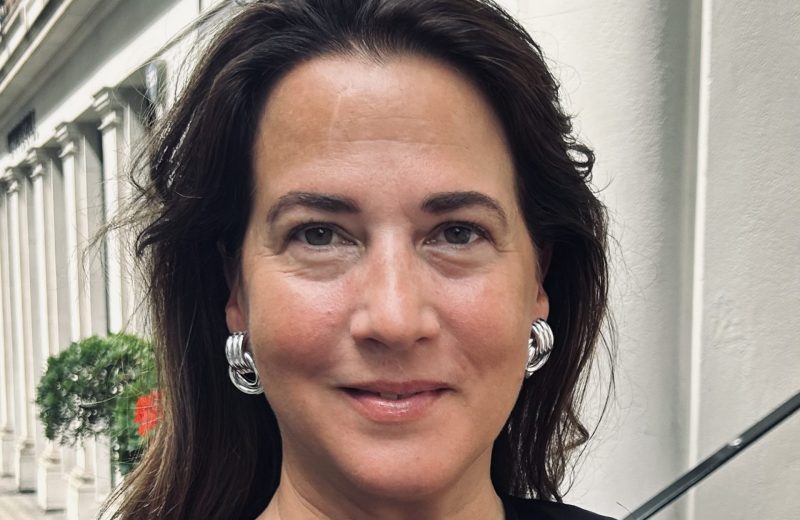
Farnborough Airport's leadership transition marks a notable moment for the UK's premier business aviation gateway, with Marine Eugène set to assume the Group CEO role on 1 September 2026, succeeding Simon Geere, who moves into a group executive Chairman position after guiding the airport for more than six years. The handover comes at a point of institutional strength rather than crisis, with both Geere and Macquarie Asset Management—the airport's owning entity—characterizing the period as one of significant capital investment and financial growth. Eugène's appointment is particularly notable given her operator-side pedigree: nearly two decades in business aviation, including senior positions at NetJets and Flexjet, the two fractional-ownership giants that also rank among Farnborough's largest customers. That background gives her direct insight into the operational priorities, slot economics, and service expectations that drive demand at an airport built almost exclusively around business and VIP traffic rather than scheduled commercial service.
For pilots and flight departments that route through Farnborough, leadership continuity paired with operator-fluent management typically signals stability in the areas that matter most day to day: slot availability, ground handling quality, FBO service levels, and customs/security processing efficiency. Farnborough has built its reputation on being a "best-in-class" alternative to London's congested commercial airports, and its CEO's job is fundamentally about protecting that value proposition while managing capacity growth. An incoming chief executive who has sat on the other side of the counter—negotiating fleet access, managing charter and fractional operations at NetJets and Flexjet—arrives with a working knowledge of what crews, schedulers, and flight departments actually need from an FBO-model airport. That matters for corporate flight departments and charter operators who treat airport choice as a competitive and efficiency decision, not merely a geographic one.
The move also fits into a broader pattern of business aviation infrastructure attracting executives with cross-industry finance and client-services experience rather than purely airport-operations backgrounds. Eugène's most recent role at Moonfare, a digital investment platform, overseeing investor relations and client services, echoes a trend seen across premium aviation infrastructure: owners like Macquarie are increasingly prioritizing commercial sophistication, investor-relations acumen, and service-brand management alongside traditional aviation operations expertise. This mirrors similar hires across FBO chains, fractional providers, and airport operators globally, where growth capital and institutional ownership (private equity, infrastructure funds, sovereign wealth) demand CEOs fluent in both aviation operations and investment-grade financial reporting.
Finally, the leadership change arrives against a backdrop of sustained demand pressure on UK and European business aviation infrastructure. Slot constraints at London-area airports, growing ultra-long-range and large-cabin traffic, and the biennial Farnborough International Airshow's role as a global industry showcase all keep pressure on the airport to expand capacity intelligently while preserving service quality. Geere's move to executive Chairman rather than a clean exit suggests Macquarie wants institutional knowledge retained through the transition, a governance pattern increasingly common at infrastructure assets where operational continuity is treated as a de-risking mechanism for investors. For operators and flight crews, the practical takeaway is that Farnborough's strategic direction—continued investment, operator-informed management, and institutional backing—is unlikely to shift materially in the near term, reinforcing its position as the default London-area alternative for business jet traffic.