Indian Startup Sarla Hover-Tests eVTOL Prototype
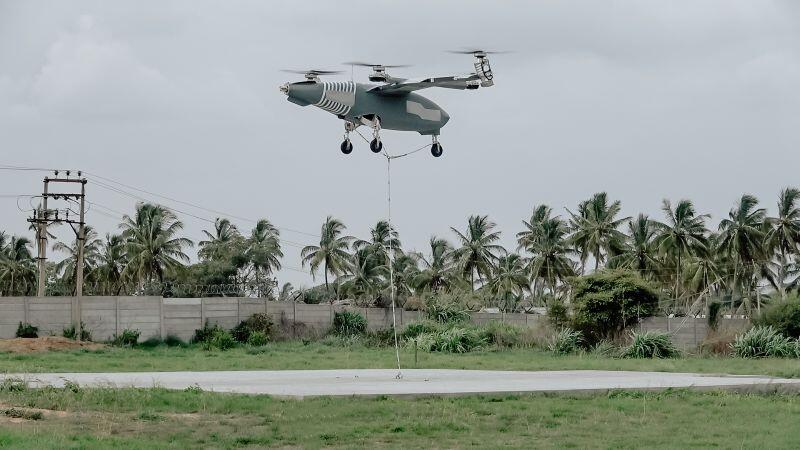
Sarla Aviation, a Bengaluru-based startup, has reached a notable milestone in India's nascent advanced air mobility (AAM) sector by completing hover flight tests of Sylla 1.0, a half-scale, uncrewed technology demonstrator for its planned six-passenger eVTOL air taxi, Shunya. The 700 kg-class (roughly 1,500 lb.) demonstrator represents an interim engineering step toward validating the flight control systems, propulsion architecture, and structural design that will eventually inform a full-scale, piloted production aircraft. Hover testing is a foundational proof point in eVTOL development, confirming that distributed electric propulsion, motor redundancy, and control software can maintain stable vertical flight before progressing to transition testing, forward flight, and eventually crewed operations.
For working pilots and aviation operators, Sarla's progress is another data point in the rapidly globalizing eVTOL race, which until recently has been dominated by U.S., European, and Chinese entrants such as Joby Aviation, Archer Aviation, Vertical Aerospace, Lilium, and EHang. India's entry into this space signals that AAM development is no longer confined to a handful of established aerospace markets—emerging economies with dense urban centers, chronic ground congestion, and growing high-net-worth populations are increasingly viewed as viable launch markets for air taxi services. Bengaluru itself, a major tech and aerospace hub, is emblematic of the kind of metro area eVTOL developers target: heavy traffic, business travel demand, and proximity to engineering talent. For business aviation operators and charter providers, this expands the long-term competitive and partnership landscape, as regional players may eventually seek certification pathways, infrastructure partnerships, or operational tie-ups with established rotorcraft or business jet operators familiar with vertiport-adjacent operations.
More broadly, Sarla's half-scale demonstrator approach reflects a maturing industry pattern where startups de-risk capital-intensive full-scale development by first validating core flight dynamics on smaller, uncrewed platforms—a strategy also employed by other global eVTOL developers to manage cash burn and regulatory engagement timelines. This matters to pilots and operators tracking the AAM sector because certification frameworks, pilot type-rating requirements, and airspace integration rules remain unsettled across most jurisdictions, including India's own regulatory authority, the DGCA, which has yet to establish a dedicated eVTOL certification pathway comparable to the FAA's powered-lift category or EASA's SC-VTOL standard. Sarla's progress will likely prompt closer coordination with Indian regulators as the program advances toward crewed testing.
For the broader aviation industry, this development reinforces that AAM remains a global, multi-front competition rather than a contest limited to a few well-funded Western and Chinese firms. Business jet operators, helicopter EMS providers, and regional carriers should watch India's eVTOL trajectory closely, as successful indigenous development could reshape last-mile connectivity, airport-to-city transfers, and intra-metro business travel in one of the world's largest and fastest-growing aviation markets. As with all early-stage eVTOL programs, the transition from hover testing to certified passenger-carrying operations remains a multi-year process involving extensive flight testing, powerplant certification, battery safety validation, and vertiport infrastructure buildout—milestones that will determine whether Sarla's Shunya program can compete on a global stage or primarily serve as a proving ground for India's domestic AAM ambitions.








 Read original article