Vertical Says Flight Test Campaign Has Cleared Path To Valo Certification
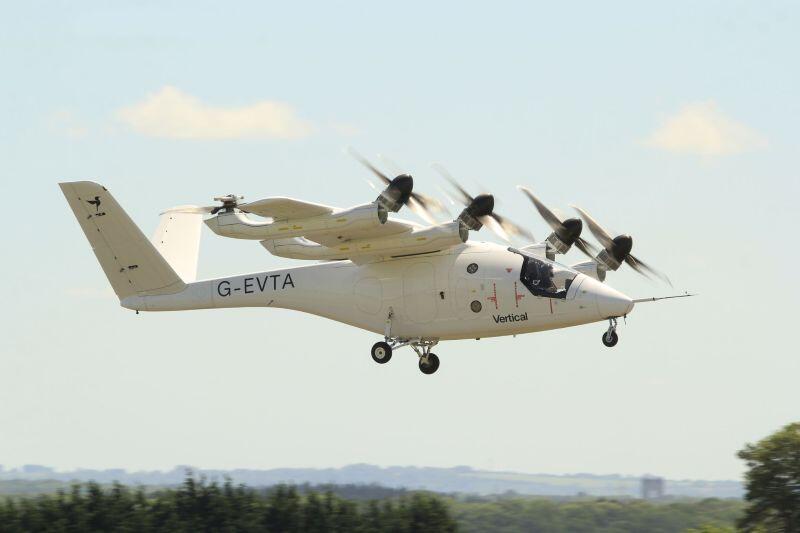
Vertical Aerospace has reached what its leadership describes as a pivotal inflection point in the development of its VX4 eVTOL aircraft (marketed under the Valo brand), with Chief Engineer David King telling Aviation Week that two years of piloted flight testing have de-risked the program's most significant technical unknowns and established a clear trajectory toward type certification. The company recently expanded its flight test fleet by adding a second aircraft, a move that signals growing confidence in the design's maturity and allows Vertical to parallelize test points across propulsion, flight control, and structural validation campaigns rather than bottlenecking everything through a single airframe. For a company that has weathered significant financial turbulence, cash constraints, and skepticism about its ability to reach certification on a comparable timeline to rivals like Joby Aviation and Archer Aviation, this represents a meaningful proof point that the underlying engineering is sound.
For working pilots and operators, the eVTOL certification race matters less as a near-term operational reality and more as a bellwether for how regulators, particularly the UK's Civil Aviation Authority and, by extension, EASA and the FAA through bilateral agreements, will handle a genuinely new category of powered-lift aircraft. Vertical is pursuing certification through the UK CAA, a divergence from the FAA-centric path that Joby and Archer have prioritized, and any friction or acceleration in that process will inform how quickly multiple certification basis frameworks converge internationally. Pilots currently flying rotorcraft, particularly in EMS, corporate, and urban charter operations, should watch this space closely because eVTOL aircraft are being positioned as direct competitors for short-haul, low-altitude missions currently served by helicopters. The type ratings, training pathways, and operational specifications ultimately established for aircraft like the VX4 will shape a new segment of the pilot labor market, and companies like Vertical have consistently emphasized that their aircraft are being designed for conventionally trained pilots initially, with autonomous operation as a longer-term aspiration.
Beyond the immediate technical milestone, this development fits into a broader pattern across the advanced air mobility sector in which the distinction between "flying" and "certifying" has proven to be the industry's most persistent challenge. Multiple eVTOL developers have demonstrated flightworthy prototypes years before achieving the sustained, statistically robust reliability data and conforming production processes that type certification demands. Vertical's claim that the biggest unknowns are now resolved should be read against the backdrop of an industry where certification timelines have slipped repeatedly, funding rounds have dried up for weaker competitors, and only a handful of well-capitalized players are likely to reach commercial service by the end of the decade. The addition of a second test aircraft and the framing of this as a turning point suggests Vertical is trying to reassure investors, partners, and potential launch customers, including airlines and business aviation operators who have placed conditional orders, that the program remains viable and on a credible glide path rather than joining the list of AAM ventures that stalled short of certification.
For business aviation operators and fractional/charter providers evaluating eVTOL as a future fleet addition, this news adds incremental confidence but not certainty. The gap between flight test progress and commercial entry into service remains wide, encompassing production certification, infrastructure buildout for vertiports, and the establishment of maintenance and training ecosystems that don't yet exist at scale. Operators should treat this as evidence that Vertical remains a serious contender in the consolidating eVTOL field rather than as a signal that Valo aircraft will be entering revenue service imminently. The broader trend remains one of cautious, capital-intensive progress toward a market that most industry observers now expect to materialize gradually through the early-to-mid 2030s rather than through a single dramatic breakthrough.









 Read original article