Technology Archives - The Air Current
The Air Current's Technology Archives, spanning 2024 through mid-2026, reveal a publication increasingly focused on the collision between emergent aviation technologies and the regulatory frameworks that have governed certified flight for decades. The breadth of coverage—from Garmin's Autoland system to eVTOL thermal management to AI-driven airline scheduling—reflects an industry wrestling simultaneously with autonomy, artificial intelligence, and entirely new categories of aircraft, all while the FAA and EASA struggle to produce certification standards that keep pace. The archive functions less as a catalog of product announcements and more as a running record of institutional friction: between innovation velocity and regulatory process, between pilot authority and automated decision-making, and between the economics of advanced air mobility and its operational realities.
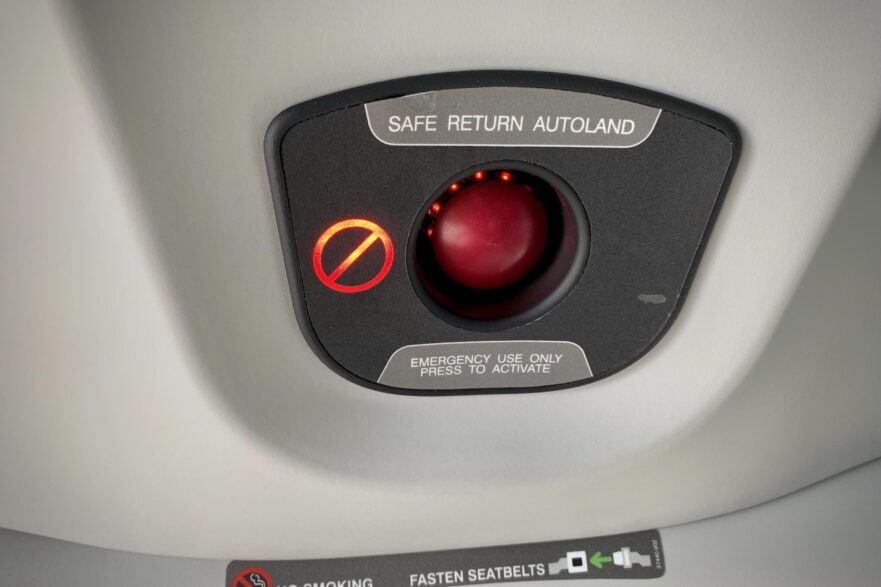
The accountability questions raised by Garmin's first real-world Autoland deployment represent perhaps the most operationally consequential thread in the archive for working flight crews. Autoland, certified on the G3000 in 2020, was designed as a last-resort incapacitation response—a system that, in theory, resolves a well-defined human failure mode. Its first emergency activation in 2025 immediately surfaced liability ambiguities that neither the FAA nor NTSB had fully anticipated: when an autonomous system makes control inputs leading to a survivable but imperfect outcome, the chain of accountability that governs every other aviation incident investigation does not map cleanly onto a machine acting without crew input. For Part 91 and Part 135 operators flying Garmin-equipped turboprops and light jets, this is not an abstract legal question—it has direct implications for insurance underwriting, operator certificates, and the institutional memory embedded in NTSB probable cause determinations. The G3000 Prime coverage, which examines how Garmin is pushing crews beyond reflexive "direct, enter, enter" interaction patterns, adds a parallel concern: as avionics systems become more capable and more assertive, the cognitive interface between pilot and machine requires active, trained management rather than passive familiarity.
The AI certification gridlock documented across multiple TAC reports represents a structural challenge with long timelines but near-term relevance for operators evaluating fleet modernization. The FAA's Advisory Circular 20-193A provides updated guidance on machine learning assurance, but the deeper problem—how to certify nondeterministic systems whose behavior cannot be exhaustively pre-validated under 14 CFR Part 25 deterministic software standards—remains unresolved between the FAA, EASA, and major OEMs. Applications like Alaska Airlines' Odysee scheduling tool, which uses reinforcement learning to reduce delays on the 737 NG fleet, operate downstream of the certification boundary and thus avoid this problem. But ML systems that touch flight-critical functions, trajectory prediction, or ATC separation assurance face a different standard entirely. The FAA's parallel development of AI-enabled predictive traffic management tools, undertaken amid acute ATC staffing shortages, suggests the agency is advancing operational AI use cases even as it debates the certification framework—a sequencing that will create pressure to retroactively formalize standards around deployed systems.
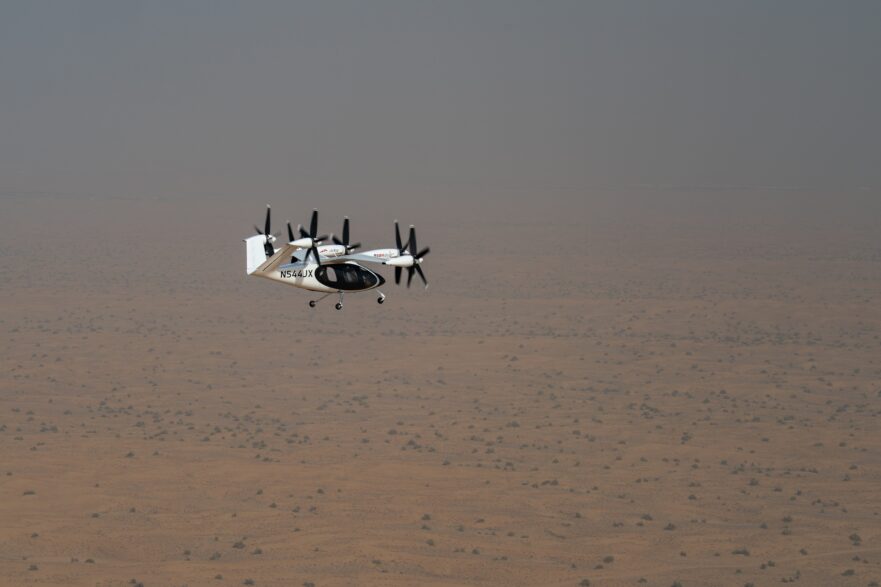
The eVTOL coverage collectively illustrates how far advanced air mobility remains from routine commercial operations, even as individual technical milestones accumulate. Joby's thermal management work for Dubai operations, Vertical Aerospace's hover-to-wingborne transition at 80 knots, and the ongoing Wisk-Archer litigation each represent distinct layers of the development stack—propulsion engineering, flight envelope validation, and intellectual property infrastructure respectively. The proposed FAA NPRM mandating 100-plus hours of powered-lift simulator training for Part 135 operations would add a meaningful pilot supply constraint on top of already-challenging type certification timelines for Joby, Archer, and their competitors. For corporate flight departments and charter operators evaluating whether eVTOL will meaningfully affect their operations within a five-year planning horizon, the honest read of the TAC archive is that the answer remains no—not because the aircraft cannot fly, but because the regulatory, training, and accountability infrastructure required to operate them commercially is still being invented. The defense pivot visible in both the Reliable Robotics and Archer-Anduril coverage suggests that government contracts may provide the financial bridge that keeps several of these programs alive long enough to reach the civilian market.