“Crashed Into The Ceiling”: Delta Air Lines Sued After Severe Turbulence Sent 25 To Hospital
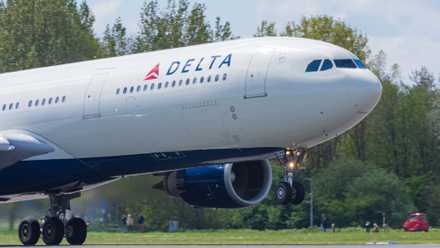
Delta Air Lines is facing civil litigation stemming from a severe turbulence encounter aboard Flight DL56 on July 30, 2025, during a scheduled Salt Lake City–Amsterdam transatlantic operation. The event, which occurred over the upper Midwest shortly after the aircraft climbed through 37,000 feet, sent 25 of the 288 people on board — passengers and crew combined — to area hospitals following an emergency diversion to Minneapolis–Saint Paul International Airport. The aircraft involved, an Airbus A330-941 registered N422DZ, is a relatively new-delivery widebody that entered Delta's fleet in 2023, equipped with Rolls-Royce Trent 7000 engines. The NTSB has an active investigation underway, and Delta has declined to comment on specifics of the litigation while that review continues.
The lawsuit's central allegation carries significant operational implications for professional crews and airline operators broadly. Plaintiffs' counsel from the Aviation Law Group contends that Delta possessed weather avoidance tools sufficient to circumvent the hazard and chose not to act on available warnings — a framing that, if it gains traction in discovery, would put dispatch meteorology, cockpit weather radar interpretation, and route deviation decision-making directly under legal scrutiny. The 2.5-minute duration described by attorneys is consistent with a severe or extreme turbulence encounter rather than a brief moderate event, and the altitude band involved — 35,000 to 38,000 feet — is characteristic of clear-air turbulence or mountain wave activity that can be difficult to detect with onboard radar. The diversion to MSP and the scope of injuries, including reported head trauma and orthopedic injuries, indicate significant vertical and lateral accelerations were experienced in the cabin.
For working airline and corporate pilots, this case underscores the growing legal exposure attached to turbulence avoidance decision-making. Historically, turbulence litigation has focused on seatbelt sign status and passenger behavior, but the plaintiff attorneys here are advancing an argument rooted in weather product utilization and route planning — terrain more typically associated with regulatory violations than tort liability. Tools such as PIREPs, graphical turbulence guidance products from NOAA, and third-party weather integration now available in dispatch and Electronic Flight Bag systems have meaningfully raised the bar on what constitutes a "reasonably avoidable" turbulence encounter from a legal standpoint. Crews operating long-haul routes, particularly transatlantic and transpacific stages where extended exposure to upper-level meteorological hazards is routine, should expect that their weather deviation decisions will be documentable and reviewable in litigation contexts.
The incident also fits within a documented broader trend. Turbulence-related injuries have been rising across commercial aviation for over a decade, a pattern that the FAA and NTSB have linked to increased atmospheric instability consistent with long-term climate shifts, particularly at cruising altitudes in mid-latitude jet stream regions. The NTSB has repeatedly flagged turbulence as the leading cause of non-fatal injuries in commercial aviation, and DL56 is not an isolated data point — high-profile severe turbulence encounters on Singapore Airlines Flight SQ321 in May 2024, and several other long-haul operations in that period, generated comparable litigation and regulatory attention. The cumulative effect is an operational environment in which airline standard operating procedures around seatbelt signs, crew positioning during cruise, and weather product review are likely to face increased standardization pressure from regulators and heightened scrutiny from plaintiff attorneys. Corporate and charter operators under Parts 91K and 135 face the same exposure on a smaller scale, with less institutional infrastructure to absorb it.









 Read original article