The 65-Year-Old KC-135 Will Refuel America's B-21 Stealth Bomber Into The 2040s
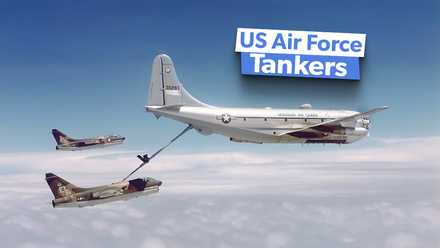
The Boeing KC-135 Stratotanker, a platform whose oldest airframes were manufactured in 1957, remains the backbone of the United States Air Force's aerial refueling capability and is now projected to serve in that role into the 2040s and potentially the 2050s. Of the original 732 aircraft delivered to the Air Force by 1965, approximately 370 remain in inventory today, with individual airframes ranging from 61 to 69 years old. The Air Force's Fiscal Year 2027 budget proposal includes funding for 15 additional KC-46A Pegasus tankers while simultaneously requesting the divestment of 20 KC-135s — a deliberate shift away from the previous one-for-one retirement swap intended to help the service grow its overall tanker fleet from 466 to 502 aircraft by the October 2028 congressional mandate deadline. That the Air Force's newest operational combat aircraft, the B-21 Raider stealth bomber, will depend on Cold War-era tanking infrastructure for the foreseeable future illustrates just how constrained the service's modernization timeline has become.
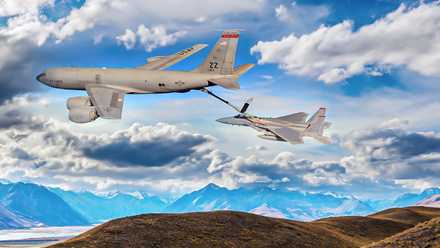
The KC-46 Pegasus was originally conceived as a bridging solution between the aging KC-135 and KC-10 fleets and a future stealthy Next-Generation Aerial Refueling System tanker. However, the NGAS program has encountered significant budgetary headwinds, with no firm timeline for delivery, while the KC-46 itself has experienced well-documented development problems — most notably with its Remote Vision System used for boom operations — that are not expected to be fully resolved before 2030. The Air Force initially planned to procure 179 KC-46s, a number that has now grown to a planned 259, with consideration of expanding further to 319. Even at 319 aircraft, the fleet would still fall short of the 502-tanker congressional requirement, and full delivery of that order would not occur until deep into the 2030s. Boeing has been asked to increase annual KC-46 production to 18 aircraft per year from 2028 through 2031 to accelerate that timeline.
For professional aviators who operate in airspace routinely supported by tanker assets — including military contract operators, special mission crews, and operators whose routes and airspace interact with military refueling tracks — the sustained reliance on KC-135 infrastructure has direct operational implications. The KC-135 lacks the survivability features built into the KC-46, including armored cockpits and limited self-defense systems, making it unsuitable for contested airspace environments. This distinction was underscored by the losses of KC-135s during the 2026 Iran air campaign, where aircraft were lost on the ground and in midair collisions rather than to direct adversary action — losses that nonetheless highlight the platform's vulnerability profile in high-threat operational contexts. The KC-46, while more capable in contested environments, remains limited by its unresolved boom operator system issues, which affect the precision and reliability of contact-point refueling for probe-and-drogue and boom-receptacle equipped receivers alike.
The broader context for this tanker situation reflects a tension affecting virtually every corner of American military aviation: platforms and infrastructure are aging faster than procurement budgets can replace them, while next-generation programs face cost, schedule, and technical risk that pushes delivery timelines further into the future. JetZero's blended-wing-body demonstrator, expected to make its first flight in 2027, represents a potential long-term path toward a more fuel-efficient and arguably more survivable tanker architecture, but that technology remains years away from operational deployment. Meanwhile, the Air Force's June 2026 identification of a KC-135 fitted with a new Starshield satellite communications antenna signals that the service intends to invest in modernizing the networking and data-link capabilities of its legacy tanker fleet even as it incrementally retires airframes — a strategy that maximizes utility from a sunk-cost asset base while acknowledging that wholesale replacement is not financially feasible in the near term. For the commercial and business aviation community, this situation serves as a broader reminder that aging fleet economics are not unique to military operators; the challenges of sustaining aging airframes, managing regulatory and budgetary constraints, and bridging capability gaps with interim solutions are pressures shared across every sector of the industry.







 Read original article