Air Canada Will Deploy Its New Airbus A321XLR On 3 Routes To The US
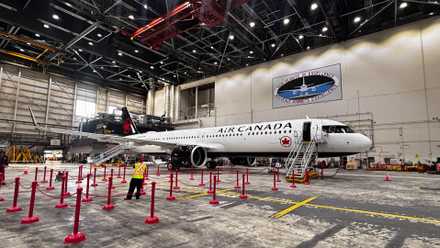
Air Canada is deploying its newly delivered Airbus A321XLR on three transborder routes to the United States beginning this fall, marking the narrowbody's first sustained commercial use on North American domestic and transborder markets by the carrier. Flights from Montréal–Trudeau International (YUL) to Los Angeles International (LAX) will begin October 25, with up to 12 weekly frequencies, followed by a daily Toronto Pearson (YYZ) to LAX service launching December 15. Two additional flights from Montreal to Miami International (MIA) are scheduled for December 18 and 25, supplementing Air Canada Rouge leisure operations already serving that market. The aircraft configuration seats 182 passengers across two cabins — 14 lie-flat Signature business class seats and 168 economy seats — a notably premium-forward ratio for a narrowbody operating routes that typically run three to five hours in block time.
The operational significance of this deployment lies in what the A321XLR enables that its A320-family predecessors cannot. The XLR variant carries an additional center fuel tank and a redesigned rear fuselage attachment that extends range to approximately 4,700 nautical miles, well beyond what a standard A321neo can sustain. While the YUL–LAX pairing at roughly 2,400 nautical miles does not approach the aircraft's theoretical limits, the routing demonstrates Air Canada's intent to use a single narrowbody type across both short-haul transborder flying and long-haul European operations — reducing crew training complexity and enabling flexible fleet redeployment. Air Canada already holds up to 30 aircraft on order and has confirmed European routes to Toulouse, Berlin, and Nantes this summer, meaning ground crews, gate infrastructure, and line maintenance stations in Montreal and Toronto must now accommodate an aircraft that will appear in both domestic-equivalent and transatlantic contexts within the same daily rotation schedule.
For professional flight crews and aviation operators, the aircraft's cabin architecture introduces considerations relevant to scheduling, dispatch, and passenger handling on what have traditionally been mid-haul routes. The lie-flat Signature product in a 14-seat, single-aisle configuration creates a premium-dense layout more commonly associated with widebody operations. Catering, boarding sequencing, and passenger service workflows on these routes will differ meaningfully from the A320-family operations they replace. Additionally, the aircraft's ETOPS certification and extended-range fuel systems require specific maintenance checks and dispatch standards that ground operations teams at YUL and YYZ will need to integrate into existing line maintenance programs. For competing operators and charter providers serving similar city pairs, Air Canada's introduction of a lie-flat narrowbody product at mainline frequency on the LAX corridor represents a meaningful competitive escalation in the transborder premium segment.
The broader aviation trend here is the gradual erosion of the traditional equipment hierarchy in which lie-flat and premium hard products were exclusively the domain of widebody long-haul flying. Airlines including Norse Atlantic, Iberia, and Aer Lingus have been evaluating or deploying the A321XLR across thin transatlantic routes where widebody utilization is difficult to justify, and Air Canada's transborder deployment extends that logic inward to routes that were previously served with standard recline seating. For business aviation operators and corporate flight departments tracking commercial airline product investments, this signals increasing pressure on the middle-market value proposition of private and charter travel on sub-five-hour segments: when lie-flat seating becomes available on a scheduled narrowbody at commercial fares between Montreal, Toronto, and Los Angeles, the comparative comfort argument for Part 91 or charter operations on the same city pairs becomes harder to sustain without emphasizing schedule flexibility, ground time efficiency, and access advantages that commercial service cannot replicate.








 Read original article