The Striking Features Of Singapore Airlines’ & Cathay Pacific’s Premium Economy Products
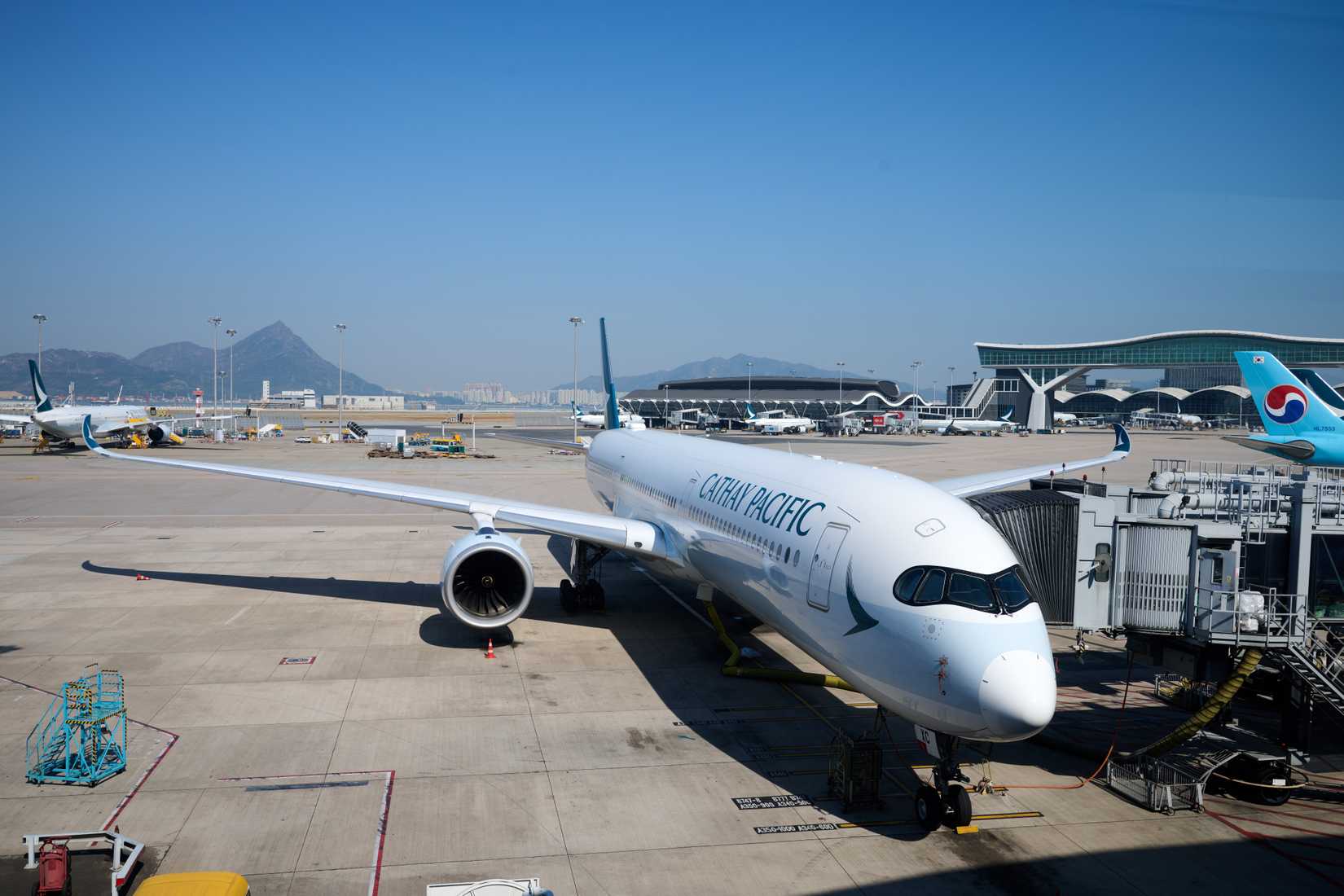
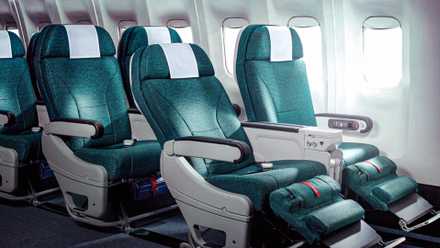
Singapore Airlines and Cathay Pacific have each developed premium economy products that rank among the most refined in the segment globally, with both carriers appearing in the Skytrax World Airline Awards 2025 top ten for best premium economy class. Singapore Airlines secured fourth place in that ranking, with Cathay Pacific following at sixth. The distinction matters commercially: premium economy has matured from a transitional cabin into a dedicated revenue category, and both carriers have invested meaningfully in hardware and service differentiation to capture the growing segment of long-haul travelers unwilling to pay business-class fares but demanding measurably better comfort than standard economy. Cathay Pacific deploys its product across Airbus A350 and Boeing 777-300ER fleets, featuring Collins Aerospace MiQ seats on A350 aircraft and Recaro R5 units on 777s, both in a 2-4-2 configuration with up to 40 inches of seat pitch and 15.6-inch 4K IFE screens with Bluetooth audio capability. Singapore Airlines counters with Safran Z535 seating across its A350, A380, and 777 fleets, offering 38 inches of pitch, 19.5 inches of width, and a 13.3-inch KrisWorld IFE system with approximately 1,800 entertainment options.
For airline pilots and cabin crew operating these aircraft, the seat hardware specifications carry operational significance beyond passenger comfort. The introduction of the Recaro R5 on Cathay's 777-300ER fleet and the Safran Z535 on Singapore's widebodies reflects each carrier's fleet reconfiguration strategy, as both airlines continue to optimize cabin density and revenue per available seat mile on their core long-haul trunk routes. Seat pitch and configuration decisions directly influence aircraft weight, center of gravity calculations, and load factors that crews must account for on extended international operations. The integration of Bluetooth IFE systems, high-draw USB and AC power outlets at every seat, and increased personal electronics storage also represents a meaningful increase in cabin electrical load management that aircraft maintenance and operations teams must plan for as these configurations become standard.
The competitive pressure between these two carriers in premium economy mirrors a broader structural shift in long-haul airline economics. As business-class yields have softened on certain routes due to corporate travel policy tightening and the rise of hybrid work reducing some high-frequency international business travel, premium economy has absorbed a growing share of premium revenue. Both Singapore Airlines and Cathay Pacific operate hub-and-spoke networks in Asia that feed significant connecting traffic onto their long-haul widebody operations, and premium economy is particularly effective at capturing the aspirational traveler segment on routes where the full business-class price differential is hardest to justify. The dining enhancements both carriers have incorporated — three-course service on Singapore, Hong Kong-inspired menus on Cathay with metal cutlery and proper tableware — signal that competitive differentiation in the cabin is no longer limited to seat hardware but extends to the full onboard service model.
For corporate flight departments and Part 91 operators benchmarking passenger experience standards, the evolution of airline premium economy products provides a useful reference point for what high-net-worth and senior executive travelers increasingly expect in terms of personal space, connectivity, entertainment, and service presentation. Business aviation operators who position their offering against commercial first-class or business-class products now find that premium economy at carriers like Singapore and Cathay Pacific sets a meaningful baseline for seat ergonomics and IFE sophistication. The Cathay and Singapore products also reflect a growing industry emphasis on modular seat designs from established aerospace suppliers — Collins Aerospace, Recaro, and Safran — whose products appear across multiple carrier configurations, indicating continued consolidation in the premium seating supply chain and potential for broader standardization as airlines refresh aging fleets over the next decade.










 Read original article