The Modern Engines Rewriting The Rules Of What A Narrowbody Engine Can Do
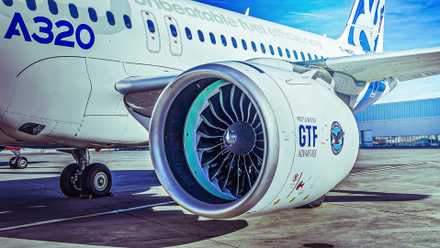
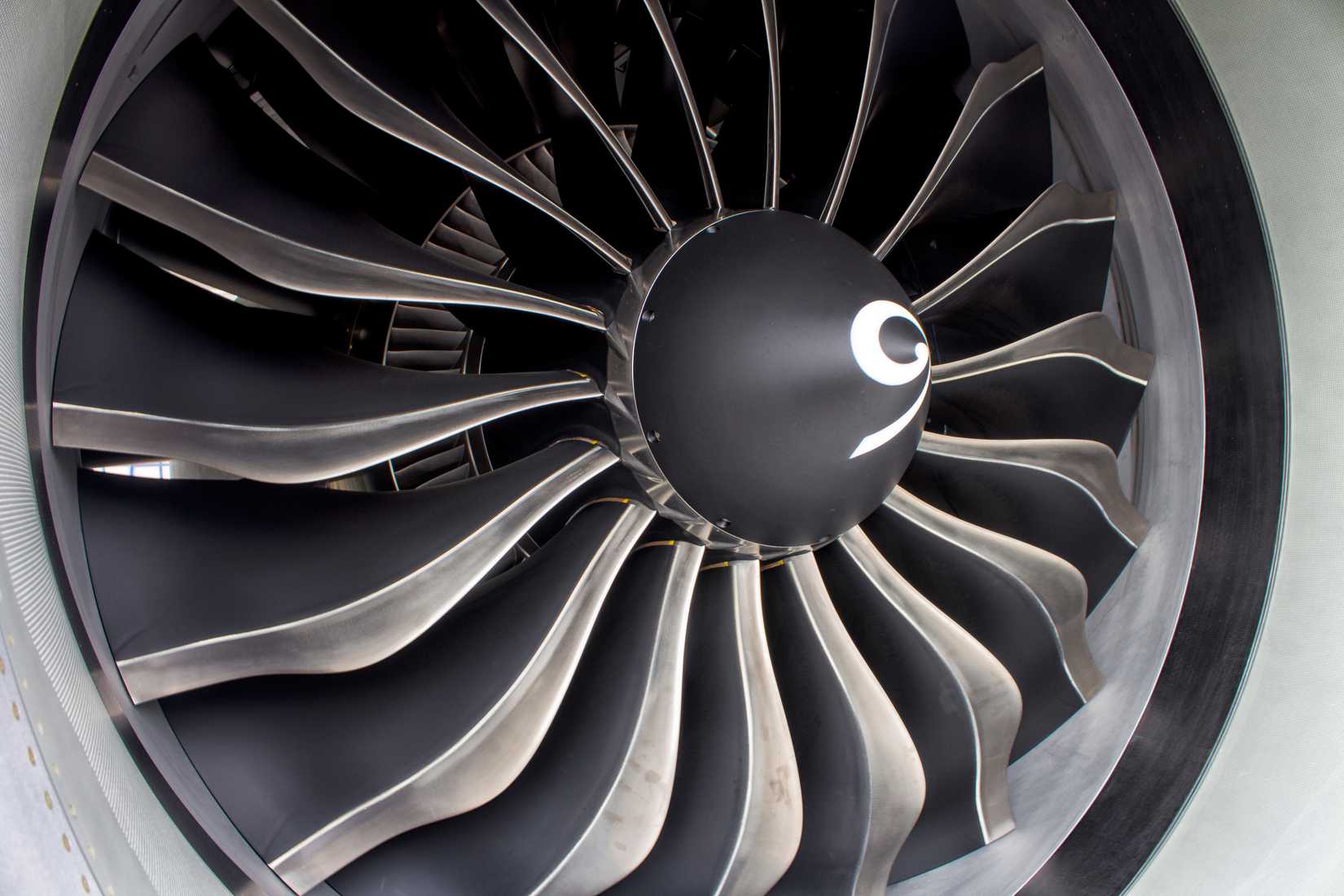
Pratt & Whitney's Geared Turbofan and CFM International's LEAP engine represent the two dominant propulsion architectures reshaping the narrowbody segment, with implications that extend well beyond the engineering departments of Airbus and Boeing and directly into the operational and financial calculus of every airline, lessor, and charter operator flying single-aisle equipment. Both programs emerged from a shared industry imperative — to replace the workhorse CFM56 and the IAE V2500 with powerplants capable of delivering meaningful reductions in fuel burn and emissions — but they pursued that goal through fundamentally different mechanical philosophies. CFM's LEAP retained conventional direct-drive architecture while incorporating advanced materials such as carbon fiber composite fan blades and ceramic matrix composite turbine components, pushing thermal efficiency to new levels without the mechanical complexity of a gearbox. Pratt & Whitney's GTF, by contrast, introduced a reduction gearbox between the fan and the low-pressure turbine, decoupling their rotational speeds and allowing each to operate at its aerodynamic optimum — a departure so significant it effectively challenged a design assumption that had governed commercial turbofan development for roughly six decades.
For working pilots and fleet operators, the performance figures attached to these engines are not abstractions. The GTF's claimed 16–20% fuel burn improvement over previous-generation powerplants translates directly into trip cost reductions on routes where fuel represents 25–35% of direct operating costs, and the engine's bypass ratio of 12:1 to 13:1 produces a noise footprint reduction of up to 75%, which carries concrete value for operators serving noise-restricted airports across Europe, Asia-Pacific, and the northeastern United States. The LEAP similarly delivers roughly 15–20% fuel efficiency gains over the CFM56 it replaces, and both engines have enabled aircraft manufacturers to extend the range and payload capability of their narrowbody families in ways that would have been impossible with legacy powerplants. The A321XLR, for instance, depends critically on the fuel efficiency of the GTF or LEAP to make its transatlantic-adjacent mission economics viable. Pilots flying the 737 MAX or A320neo family will recognize these gains in reduced fuel loads for equivalent sectors, extended alternate options, and altered climb profiles driven by the engines' substantially improved specific fuel consumption.
The GTF program's durability challenges, however, represent a critical operational and commercial reality that operators cannot afford to treat as a footnote. The contaminated powdered metal issue affecting certain high-pressure compressor and turbine disk components forced inspections and accelerated removals across multiple operators worldwide, grounding hundreds of aircraft and creating acute capacity shortfalls particularly severe in 2023 and 2024 as the commercial aviation recovery ran headlong into a constrained MRO supply chain. Pratt & Whitney's $3 billion remediation program addressed the manufacturing defect at its source, but the episode exposed vulnerabilities in the narrowbody supply ecosystem — specifically the degree to which single-aisle airline capacity depends on a duopoly of engine manufacturers whose production and support pipelines have limited redundancy. Operators running GTF-powered fleets were forced to negotiate lease extensions on older CFM56-powered aircraft, accelerate wet-lease arrangements, and in some cases defer network expansion plans, demonstrating how engine serviceability cascades into route planning, crew scheduling, and commercial commitments.
Viewed against the broader trajectory of commercial aviation, the GTF-versus-LEAP competition reflects a wider industry pattern in which incremental refinement of existing architectures is approaching its practical ceiling, forcing manufacturers toward more radical engineering choices. CFM's response to the next generation of narrowbody propulsion — the Revolutionary Innovation for Sustainable Engines, or RISE, open-fan program being developed with GE Aerospace — signals that even the successful LEAP architecture has a defined service horizon, with open-rotor concepts promising efficiency gains in the 20% range beyond current LEAP performance. Pratt & Whitney, for its part, continues to develop GTF Advantage variants with enhanced core aerodynamics and materials targeting incremental efficiency improvements on the A320neo family. For corporate and business aviation operators, the relevance of these developments extends beyond the airline world: derivative technologies from these programs, including ceramic matrix composites, advanced additive manufacturing, and digital engine monitoring systems, are migrating into business jet powerplants, compressing the time between aerospace-grade innovation and cabin-class application in ways that will affect MRO planning, pilot type rating considerations, and aircraft acquisition decisions across the Part 91 and Part 135 communities for the remainder of the decade.










 Read original article