6 Things The B-21 Raider Can Do That The B-2 Spirit Never Could
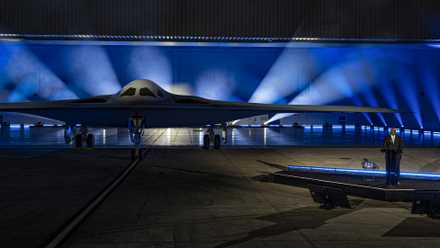
The Northrop Grumman B-21 Raider represents a fundamental rethinking of what a strategic bomber must be in an era of contested airspace and peer-adversary competition, with its advantages over the legacy B-2 Spirit concentrated in areas that are largely invisible to casual observation: stealth coating durability, maintainability, sortie generation capacity, and unit cost economics. The B-2, introduced to operational service in 1997, was engineered around a narrow strategic mission set — primarily nuclear deterrence and first-day conventional strikes against heavily defended targets — and its design reflected that narrow aperture. Its first-generation radar-absorbent materials proved acutely sensitive to temperature and humidity, requiring expensive climate-controlled hangars even during forward deployments, a logistical burden that directly constrained operational flexibility and imposed enormous sustainment costs estimated at approximately $163,000 per flight hour. The B-21's RAM technology, built on lessons absorbed from the F-22 and F-35 programs across roughly four decades of materials science advancement, is expected to be substantially more robust, tolerating adverse environmental conditions including the salt-air corrosion environment associated with maritime operations — a shift that will meaningfully expand the aircraft's forward basing options and reduce its ground logistics footprint.
The sortie rate question is strategically decisive and reflects a broader transformation in how the Air Force conceptualizes the penetrating bomber mission. The B-2 was designed as a precision instrument for opening a conflict — a small fleet of 21 aircraft intended to suppress and destroy the highest-value targets in the opening hours, enabling less survivable platforms like the B-1 Lancer and B-52 Stratofortress to operate in subsequently degraded threat environments. Operation Epic Fury in 2026 demonstrated this sequential laydown model in practice, with B-2s striking on day one before B-1s and B-52s entered the fight. However, Air Force planners have grown increasingly skeptical that this model is replicable against a sophisticated peer adversary such as China, whose integrated air defense systems and anti-access/area-denial infrastructure are specifically engineered to attrit and deny exactly this kind of sequential operational logic. The B-21, planned at 100 or more airframes compared to the B-2's surviving fleet of 19, is therefore being designed not merely as the tip of the spear but as the spear itself — a high-sortie-rate penetrating force capable of repeatedly striking defended targets across a sustained campaign rather than clearing the way for others.
The economics of the B-21 program carry implications that extend well beyond defense procurement circles. The B-2's extraordinary per-unit cost — a direct consequence of a production run slashed from 132 planned aircraft to 21, obliterating any economies of scale — made it operationally fragile in a portfolio sense; losing even a single aircraft to accident or combat damage represented an outsized strategic and financial loss. At approximately $750 million per unit in fiscal year 2010 dollars (roughly $1 billion in 2026 dollars), the B-21 remains an extraordinarily expensive aircraft by any civilian measure, but its larger planned production volume, lower maintenance burden, and deliberate affordability engineering represent a conscious effort to build a fleet that can absorb attrition and sustain high operational tempo. As of mid-2026, the program is reported to be largely on schedule and on budget, a notable achievement in major defense acquisition given the historical tendency of advanced aircraft programs to experience significant cost and schedule growth during development.
For professional aviators in the commercial and business aviation sectors, the B-21's development trajectory illustrates broader material and systems integration principles with direct civilian relevance. The progression from the B-2's environmentally sensitive RAM to the B-21's operationally robust coatings mirrors the commercial aviation industry's own decades-long evolution in composite materials and protective coatings — from early-generation composites requiring careful environmental management to the far more durable, maintenance-friendly structures found in the Boeing 787 and Airbus A350. The emphasis on sortie generation and dispatch reliability as primary design objectives reflects a philosophy increasingly shared between military aviation program offices and commercial operators: an aircraft that cannot be reliably turned around and returned to service at high rates is operationally deficient regardless of its performance envelope. The B-21's architecture, emphasizing open systems, software-defined capabilities, and reduced maintenance touchpoints, represents a sixth-generation approach to lifecycle cost management that commercial aviation has been pursuing through predictive maintenance, digital twin technologies, and condition-based servicing programs for the better part of two decades.








 Read original article