Spirit Airlines’ Collapse May Mark The End Of Cheap Flying In America, Report Finds
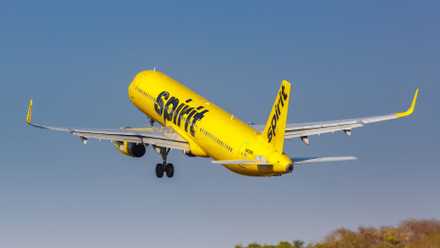
Spirit Airlines' permanent shutdown in May 2026 has removed one of the most consequential pricing forces in the US domestic market, with effects that extend well beyond the carrier's own routes. Despite holding only approximately 4% of domestic market share in 2025 and ranking seventh by passenger volume, Spirit functioned as what economists describe as a "capacity discipline" disruptor — its mere presence on a route routinely compelled legacy and hybrid carriers to suppress fares to remain competitive. The airline's decline was steep and documented: passenger volume fell from 44.2 million in 2024 to roughly 32 million in 2025, revenue contracted from $4.8 billion to $3.7 billion, and the fleet shrank well below 200 aircraft before operations ceased entirely. The CNBC-cited assessment from Thrifty Traveler editor Kyle Potter — that Spirit's collapse may signal a return to a pre-deregulation "Golden Age" of travel economics, one historically less favorable to budget-conscious passengers — reflects a structural concern now circulating across the industry.
For airline pilots and aviation operators, the removal of Spirit's capacity has measurable near-term implications. Industry analysts estimate that the carrier's exit could subtract several percentage points of domestic seat availability depending on how quickly competitors absorb former Spirit routes. In revenue management terms, reduced seat supply on leisure-heavy corridors tends to produce higher yield environments, which benefits network carrier profitability in the short run but compresses load-factor pressure that historically kept fares anchored. Pilots employed by legacy carriers may observe shifting schedule priorities as airlines evaluate whether to expand into formerly Spirit-dominated markets such as Fort Lauderdale, Orlando, and Las Vegas — routes where ultra-low-cost carriers had concentrated their networks. Gate access and slot holdings, including Spirit's LaGuardia positions valued at approximately $87 million, represent secondary competitive dynamics that regulators have flagged as needing low-cost replacements to preserve fare competition.
The fuel cost environment compounds the structural problem for remaining low-cost carriers attempting to fill the Spirit void. DOT data cited in the reporting shows US carriers collectively spent approximately $5.06 billion on jet fuel in March 2026 alone — a 56.4% increase from February's $3.23 billion and roughly 30% higher than the comparable period in 2025. For carriers such as Frontier and JetBlue, which lack the premium cabin revenue, international network diversification, and corporate contract bases that insulate larger competitors from cost volatility, these increases represent an existential margin threat. The ultra-low-cost model depends on maximizing seat utilization at minimal per-unit cost; sharp fuel escalation collapses that equation rapidly. Both carriers face a difficult choice between passing costs to consumers through higher base fares or expanding ancillary fee structures — neither of which sustains the competitive pricing pressure Spirit once generated across the market.
For Part 135 charter operators, fractional providers, and corporate flight departments, the shifting economics of commercial aviation carry indirect but meaningful implications. Historically, suppressed commercial fares created a wide value gap between scheduled airline travel and on-demand private aviation, limiting the addressable market for charter and fractional operators to travelers who prioritized schedule flexibility and privacy above cost. As commercial fares rise on point-to-point leisure routes — particularly in the short-haul domestic segments Spirit dominated — the relative cost differential narrows, potentially expanding the population of travelers evaluating charter options for time-sensitive trips. Business aviation operators who monitor commercial pricing trends as a proxy for demand signals may find an increasingly receptive audience among mid-market corporate travelers currently flying commercial on routes where Spirit formerly anchored low fares. The longer-term trajectory of US aviation economics — consolidating toward fewer, larger carriers with reduced discount capacity — arguably strengthens the structural case for the on-demand model across all segments of business flying.










 Read original article