The Cold War Operation That Kept Nuclear-Armed B-52s Minutes From Soviet Airspace At All Times
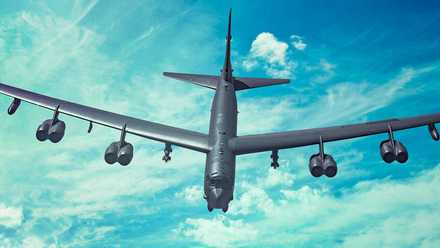
Operation Chrome Dome stands as one of the most operationally demanding and strategically consequential continuous airborne missions ever executed by a military aviation force. Launched in 1958 under Strategic Air Command (SAC) and running through 1968, the program maintained nuclear-armed Boeing B-52 Stratofortress bombers in the air around the clock, positioned near Soviet airspace so that any incoming first strike would be met with an immediate, airborne retaliatory force already on station. The program emerged directly from Eisenhower's concern that land-based bombers parked on SAC airfields were dangerously vulnerable to a Soviet missile strike that could eliminate the US retaliatory capability before a single aircraft could get airborne. By keeping a rotating fleet of B-52s perpetually airborne — some estimates put peak sortie rates at a dozen or more aircraft aloft simultaneously — SAC denied Soviet planners any scenario in which a first strike could neutralize the American nuclear deterrent entirely.
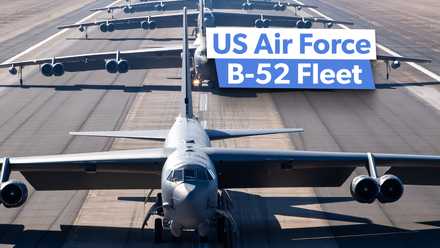
The operational demands placed on B-52 crews during Chrome Dome were extraordinary by any measure. Missions routinely lasted 24 hours or more, requiring multiple aerial refuelings from KC-135 Stratotankers and crew rest rotations conducted inside the aircraft. Crews operated under strict communications protocols, holding assigned orbit tracks just outside Soviet airspace and awaiting execution messages that, barring authenticated orders, were never to be acted upon. The Ground Alert Program ran in parallel, requiring non-airborne crews to be at their aircraft and ready to start engines within minutes of a klaxon alert — a discipline that shaped an entire generation of SAC culture around instantaneous readiness. General Curtis LeMay's expansion of SAC from a modest post-war command to an organization of more than 280,000 personnel by 1962, with a fleet including 750-plus B-52s, reflected the scale of infrastructure required to sustain this posture without interruption.
For professional aviators, Chrome Dome offers a case study in the institutional and physiological costs of sustained high-stakes flight operations. The program was not without catastrophic failures: a series of accidents involving nuclear-armed B-52s — including the 1966 Palomares, Spain incident and the 1968 Thule Air Base, Greenland crash — ultimately contributed to the program's termination. These accidents demonstrated that continuous airborne alert, however strategically sound in concept, introduced compounding human factors and mechanical risks that grew unacceptable over time. The incidents also forced a reckoning within the US military and among NATO allies about the permissible conditions under which nuclear weapons could be carried over sovereign foreign territory, a tension that remains embedded in overflight diplomacy to this day.
Chrome Dome also illuminates the broader evolution of deterrence theory as it intersected with airpower doctrine. The program existed because ballistic missile technology in the late 1950s had not yet matured to the point where submarine-launched or ICBM-based second-strike capability alone could provide credible deterrence. The manned bomber remained the most survivable and flexible leg of what would eventually become the nuclear triad precisely because it could be airborne and dispersed before an incoming strike arrived. As ICBMs and the Polaris submarine fleet matured through the 1960s, the strategic rationale for continuous airborne alert diminished — the triad itself provided the layered survivability that Chrome Dome had been designed to guarantee through human endurance alone. The program's arc, from urgent necessity to managed obsolescence, tracks almost exactly with the maturation of American strategic nuclear forces.
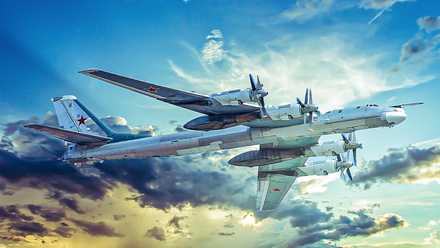
The legacy of Operation Chrome Dome remains relevant to contemporary military aviators and defense planners as great power competition between the United States and both Russia and China has renewed interest in long-range bomber operations and nuclear modernization. The B-52, remarkably, remains in active service with the US Air Force more than seven decades after its introduction, with a re-engining program underway to extend its operational life into the 2050s. Russia's continued operation of the Tupolev Tu-95 "Bear" — the same platform that prompted much of SAC's urgency in the Chrome Dome era — further underscores how the strategic bomber's role as a signal-sending, deterrence-projecting instrument has proven more durable than many analysts predicted. For working aviators across the professional spectrum, Chrome Dome represents a foundational chapter in understanding how airpower, human performance, and strategic risk management intersect under the most consequential operational pressures imaginable.







 Read original article