The US Air Force Spent $10 Billion On A Tanker That Still Can't Do Its Most Basic Job
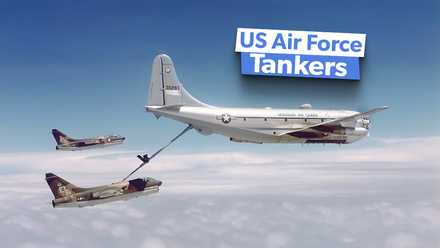
The KC-46A Pegasus tanker program represents one of the most costly and prolonged capability failures in recent U.S. military aviation history, with the Air Force having spent approximately $10 billion on an aircraft that still cannot reliably perform its primary mission of aerial refueling. Boeing, operating under a fixed-price development contract, has absorbed more than $7 billion in program losses — a figure that underscores how badly initial cost and complexity assumptions missed the mark. The aircraft was designed to replace both the venerable KC-135 Stratotanker and the KC-10 Extender, platforms that together have formed the backbone of American global airpower projection for decades. Those older aircraft are now retiring on schedule regardless of whether their replacement is operationally mature, leaving the Air Force in the uncomfortable position of continuing to accept delivery of an aircraft that carries formal operational restrictions on its most critical system.
The core of the program's troubles lies in the Remote Vision System, the design feature that most distinguished the KC-46 from its predecessors. Where the KC-135 and KC-10 positioned boom operators in a prone, rear-facing station with direct optical visibility of receiver aircraft, Boeing replaced that proven arrangement with a camera-and-display architecture in which operators manage boom contact through multiple high-resolution screens located behind the cockpit. The concept offered genuine ergonomic and safety advantages on paper, but the system proved incapable of maintaining consistent image fidelity across real-world lighting conditions. Sunlight angle, cloud transitions, reflective surfaces, and glare all degraded the visual picture in ways that impaired boom operators' depth perception during active refueling contacts. The Air Force ultimately classified the deficiency at Category 1 — the designation reserved for flaws capable of causing death, severe injury, or major equipment damage — and the 2025 boom detachment incident during an active refueling operation illustrated that these were not theoretical risks. Reports of operators relying on estimation rather than reliable visual cues during boom contact represent a serious operational gap in an aircraft type where contact precision is non-negotiable.
For working military aviators and operators in the aerial refueling community, the KC-46's restrictions carry immediate mission consequences. Receiver aircraft crews — fighter, bomber, and airlift pilots alike — cannot always count on the tanker to service them in all lighting or atmospheric conditions, which forces mission planners to build contingencies around a platform they should be able to treat as fully capable. The restrictions also impose workload and judgment burdens on boom operators who must compensate for degraded visual information with experience-based inference, precisely the scenario that automated, high-fidelity sensor systems were supposed to eliminate. Boeing's RVS 2.0 redesign, featuring six cameras, upgraded sensors, and a full-color 3D 4K display, has been presented as the definitive solution, but the program has already accumulated a pattern of missed schedules and overpromised delivery dates that makes unqualified confidence in any announced timeline difficult to sustain.
The KC-46 situation reflects broader structural tensions that have emerged across major defense aviation procurement programs — tensions between aggressive fixed-price contracting, ambitious technology insertion, and the compressed development timelines that were meant to hold costs down but have often produced the opposite result. The program shares notable parallels with other complex military aviation procurements, including the F-35, in that developmental optimism during the contract award phase gave way to expensive, years-long problem remediation once aircraft entered operational testing. For the commercial aviation world, the KC-46's airframe heritage — derived from the Boeing 767 platform — also serves as a reminder that even mature, well-understood base designs cannot insulate a military variant from failure when the mission-specific systems layered on top of that airframe are insufficiently tested before fielding. The Air Force's continued acceptance of new aircraft deliveries despite unresolved deficiencies reflects a strategic calculation that an imperfect tanker is preferable to an accelerating shortfall in total tanker capacity as KC-135s age out of the inventory — a calculus that leaves operational commanders managing around gaps that a $10 billion program was supposed to have closed years ago.











 Read original article