Riyadh Air Clears Major Hurdle With DOT Approval For US-Saudi 787-9 Flights
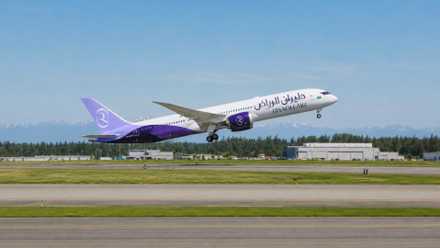
Riyadh Air has received formal authorization from the US Department of Transportation to operate passenger and cargo services between Saudi Arabia and the United States, clearing one of the most consequential regulatory hurdles any foreign carrier must navigate before entering the American market. The approval, issued in June 2026, does not establish an immediate launch date for scheduled US services, but it grants the airline the legal standing to negotiate codeshares, sell tickets to American consumers, and coordinate slot and gate arrangements at US airports. The timing is notable: Boeing delivered Riyadh Air's first two custom 787-9 Dreamliners earlier in June, with fleet expansion to eight aircraft projected by the end of July. The airline, which launched in 2023 under CEO Tony Douglas as a flagship instrument of Saudi Arabia's Vision 2030 agenda, has committed to orders for up to 72 Boeing 787s alongside Airbus A321neo and A350 aircraft, signaling a dual-OEM fleet strategy common among carriers planning both long-haul and dense short-to-medium-haul networks.
For professional pilots and aviation operators, the development reflects a meaningful shift in the competitive topology of transatlantic and US-Middle East long-haul routes. Riyadh Air's entry into the US market would add a third Saudi-flag competitor alongside Saudi Arabian Airlines and flyadeal, while also intersecting with the growing Gulf carrier presence that includes Emirates, Etihad, and Qatar Airways. The carrier's codeshare relationship with Delta Air Lines — which has separately announced nonstop Atlanta-Riyadh service — introduces a further layer of complexity for yield management and schedule coordination on those corridors. Pilots employed by legacy US carriers with transatlantic operations, particularly those flying 787s and A350s on routes through the Gulf region, should anticipate increased frequency competition as Riyadh Air scales toward its stated goal of 22 destinations by March 2027 and 100 international destinations by 2030.
The DOT authorization process itself carries relevance for operators in the Part 135 charter and business aviation space who work with foreign dignitaries, corporate delegations, or high-net-worth travelers moving between the US and Saudi Arabia. As scheduled lift increases on the corridor, demand patterns for supplemental and on-demand charter services may evolve, particularly for ultra-high-net-worth travel that remains insulated from scheduled capacity but is influenced by the overall market maturation of a route. The expansion of Riyadh as a hub also affects positioning logic for transatlantic ferry legs and international trip planning, since a more developed Riyadh airport infrastructure — King Salman International Airport is itself under massive expansion — will improve handling, FBO-equivalent services, and crew rest options for business jet operators transiting the Gulf.
Riyadh Air's trajectory is emblematic of a broader trend in which sovereign wealth-backed carriers are being deployed not merely as commercial enterprises but as instruments of national economic strategy, with timelines and capital commitments that differ fundamentally from commercially self-sustaining airline startups. The scale of the aircraft order, combined with aggressive route expansion targets and government backing, positions Riyadh Air similarly to how Qatar Airways was built in the late 1990s and early 2000s — with state resources absorbing startup losses while the network matures. For US carriers and their pilot workforces, this pattern has historically translated into sustained yield pressure on competitive routes over a multi-year horizon rather than an immediate disruption, but the DOT approval marks the point at which that horizon becomes measurably shorter.








 Read original article