The US Air Force Retired Its Last A-10 Warthog – Here's What Fills The Gap
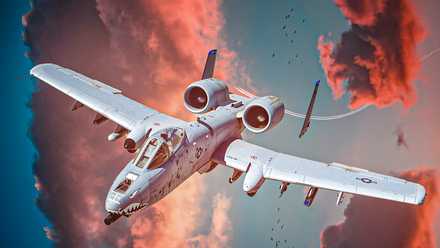
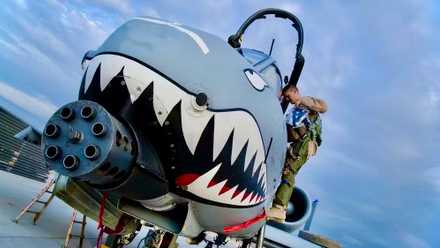
The A-10 Thunderbolt II, one of the most politically contentious aircraft in United States military aviation history, is entering its final chapter with a phased retirement now targeting Fiscal Year 2030. At the start of FY2026, the Air Force carried 162 Warthogs on its books and received Congressional authorization to reduce that number to no fewer than 103 — a 36% drawdown in a single budget year. The aircraft's operational relevance was underscored during 2026's Operation Epic Fury, where dozens of A-10s flew offensive sorties against Iraqi militia forces, Iranian naval vessels, and participated in a high-profile combat rescue of a downed F-15E Weapon Systems Officer. One Warthog was lost during the operation — going down over friendly territory with the pilot safely ejecting — a reminder that even in permissive threat environments, attrition remains real. The aircraft's anti-maritime utility during that operation drew particular attention, as it is a mission set often overlooked in public discussions that tend to focus on the Warthog's Cold War-era anti-armor role.
The historical politics behind the A-10 are essential context for understanding why its retirement has been so prolonged and contentious. The aircraft emerged from the 1960s and 70s "Fighter Jet Mafia," a loose coalition of defense reformers who pushed back against expensive, complex platforms in favor of affordable, purpose-built designs. The 1948 Key West Agreement effectively restricted the Army to rotary-wing aviation, forcing the Air Force to accept responsibility for Close Air Support — a mission it never prioritized. When the Air Force successfully lobbied for the cancellation of the Army's highly capable Lockheed AH-56 Cheyenne attack helicopter, it found itself obligated to field a dedicated CAS aircraft to fill the void. The A-10 was the result — an aircraft the Air Force so little wanted that it asked Congress to retire the entire fleet as early as 1984, the same year the last airframe was delivered. That institutional ambivalence has defined the platform's entire service life and explains why replacement planning has been inconsistent and perpetually deferred.
The central operational question for military aviation planners is what actually fills the gap. The Air Force's withdrawal of A-10s from South Korea in 2025, replaced by F-16s, signals the doctrinal direction: multirole fighters absorbing the CAS mission rather than any new dedicated platform. In parallel, the Army's ongoing shifts in AH-64 Apache doctrine are reshaping how rotary-wing assets integrate with ground forces — a dynamic that traces directly back to the same inter-service rivalry that produced the Warthog in the first place. The broader strategic pivot from counterinsurgency operations to high-end peer-on-peer deterrence against China changes the CAS calculus significantly. In a low-threat, permissive environment like Operation Epic Fury, the A-10's survivability profile is acceptable. In a contested, high-density air defense environment against a near-peer adversary, slow, low-altitude CAS platforms face an existential vulnerability problem that no titanium bathtub can fully solve.
For operators in the business aviation and commercial sectors, the A-10's retirement carries practical downstream significance. Large-scale military flight operations — particularly combat search and rescue missions like the one conducted during Epic Fury — generate temporary flight restrictions, airspace coordination requirements, and en route filing complexity in affected regions. More broadly, the industrial and procurement decisions surrounding the A-10's replacement will shape the defense aviation manufacturing landscape for the next decade. The emergence of precision-guided munitions like the APKWS II laser-guided 70mm rocket, which was integrated onto the A-10 in 2025 as a counter-drone weapon, reflects an industry-wide push toward modular, software-defined weapons compatibility — a trend relevant to any turbine operator navigating airspace alongside increasingly sophisticated unmanned systems. The Warthog's retirement is not simply the end of a beloved icon; it is a forcing function for a broader renegotiation of how fixed-wing and rotary-wing assets divide the close air support mission in an era defined by drone proliferation and great-power competition.







 Read original article