How Porter Airlines Is Building Montreal's 2nd Airport Without Repeating A $30 Billion Disaster
Montreal's YHU officially enters commercial service on June 15, 2026, with the opening of a new $450 million terminal at the former Saint-Hubert Airport, now rebranded as Montreal Metropolitan Airport. The project is backed by Porter Airlines, Macquarie Asset Management, and the Canada Infrastructure Bank, and is designed to absorb up to four million passengers annually from an overtaxed Montreal-Trudeau International Airport (YUL). The new terminal covers 226,000 square feet, features nine boarding bridges, a 900-seat passenger lounge, and is built to process 15,000 passengers per day at peak operations. Crucially, YHU sits approximately nine miles from downtown Montreal on the South Shore — a deliberate contrast to the geography that undermined every ambition planners once placed on Mirabel.
The shadow of Mirabel Airport looms over every design choice at YHU. Opened in 1975 some 34 miles northwest of the city, Mirabel was intended to become the dominant gateway for Canadian aviation, but its remote location and absence of rapid transit connections caused travelers and airlines to resist it from the start. Forced split operations between Mirabel and Dorval Airport — now YUL — created scheduling and operational complexity that carriers could not sustain. Passenger service at Mirabel collapsed entirely in the early 2000s, leaving behind one of the most expensive object lessons in airport planning history and a $30 billion cautionary figure that still frames Canadian aviation infrastructure debate. YHU's developers have studied that failure explicitly, choosing proximity and domestic utility over architectural ambition, and opting to build on an already-operational airfield rather than greenfield land assembled for a future that never materialized.
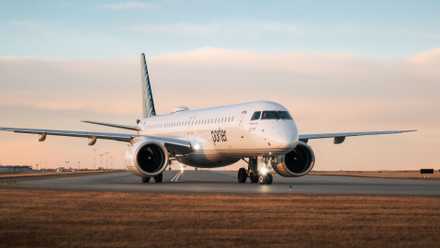
For working pilots and operators, the YHU opening carries meaningful practical implications. Porter Airlines, already operating a fleet of De Havilland Canada Dash 8-400 turboprops from its Toronto Island base, positions YHU as a natural extension of its point-to-point domestic network strategy. Pilots flying scheduled domestic routes into the Montreal region should expect YHU to emerge as an alternative destination distinct from YUL's heavier international traffic, with a terminal environment intentionally sized for faster turns and simpler gate management. Part 135 and corporate operators may also find YHU attractive as congestion at YUL continues to intensify; a secondary Montreal field with modern infrastructure, close-in location, and dedicated domestic focus is precisely the kind of reliever capacity that business aviation frequently benefits from when it appears at major Canadian metros.
The broader trend YHU represents is significant. Across North America, legacy hub airports are straining under passenger volumes, labor constraints, and infrastructure backlogs that were baked in decades ago. Secondary airport development — London's model with Gatwick and Stansted, New York's structure across JFK, EWR, and LGA, and Chicago's division between O'Hare and Midway — has historically proven that distributed capacity works when geographic convenience is preserved. YHU's test will be whether domestic demand in the Montreal market, paired with Porter's network connectivity, generates the consistent passenger volumes needed to make private infrastructure investment financially viable. Macquarie's involvement signals that institutional capital sees that case as credible, and Canada Infrastructure Bank participation adds a public backstop that Mirabel's purely governmental model lacked in discipline and accountability. If YHU succeeds, it will offer a replicable template for secondary-airport development across other congested Canadian and North American markets where a single dominant hub is becoming a chokepoint.







 Read original article