Here's How The Boeing 787 Dreamliner Permanently Rewrote Long-Haul Economics
The Boeing 787 Dreamliner fundamentally restructured the economics of long-haul aviation by making point-to-point ultra-long-range flying commercially viable at a scale previously impossible with the legacy widebody fleet. Before the 787 entered service, airlines were operationally dependent on hub-and-spoke networks built around high-capacity aircraft like the 747 and A380 — jets that required large gateway airports and aggregated passenger demand to justify their operating costs. The 787's capacity range of 240 to 330 passengers, combined with a maximum range of 7,565 nautical miles on the 787-9 variant, threaded the needle between range capability and route economics in a way no prior twin-engine widebody had achieved. Since entering service, the type has enabled 523 previously nonexistent nonstop routes across 85 countries and now serves more than 2,000 city pairs, a metric that reflects a structural realignment of international route networks rather than incremental growth.
The efficiency gains driving those economics are anchored in the 787's materials architecture. Boeing's decision to build approximately 50 percent of the airframe by weight from carbon-fiber reinforced polymer composites reduced structural weight significantly and enabled aerodynamic geometries — particularly the high-aspect-ratio, raked-wingtip wing — that would have been impractical in aluminum construction. Boeing's own engineering documentation credits the composite-intensive design with a 25 percent reduction in fuel burn compared to similarly sized legacy jets. The two powerplant options, the Rolls-Royce Trent 1000 and General Electric GEnx-1B, both brought high-bypass turbofan technology to the widebody sector at a level not previously seen in production, with bypass ratios exceeding 9:1 and overall pressure ratios approaching 58:1 on the GEnx. For operators, these figures translate directly into per-seat fuel costs that make thin long-haul routes — city pairs with insufficient passenger volume to fill a 747 — not merely survivable but profitable.
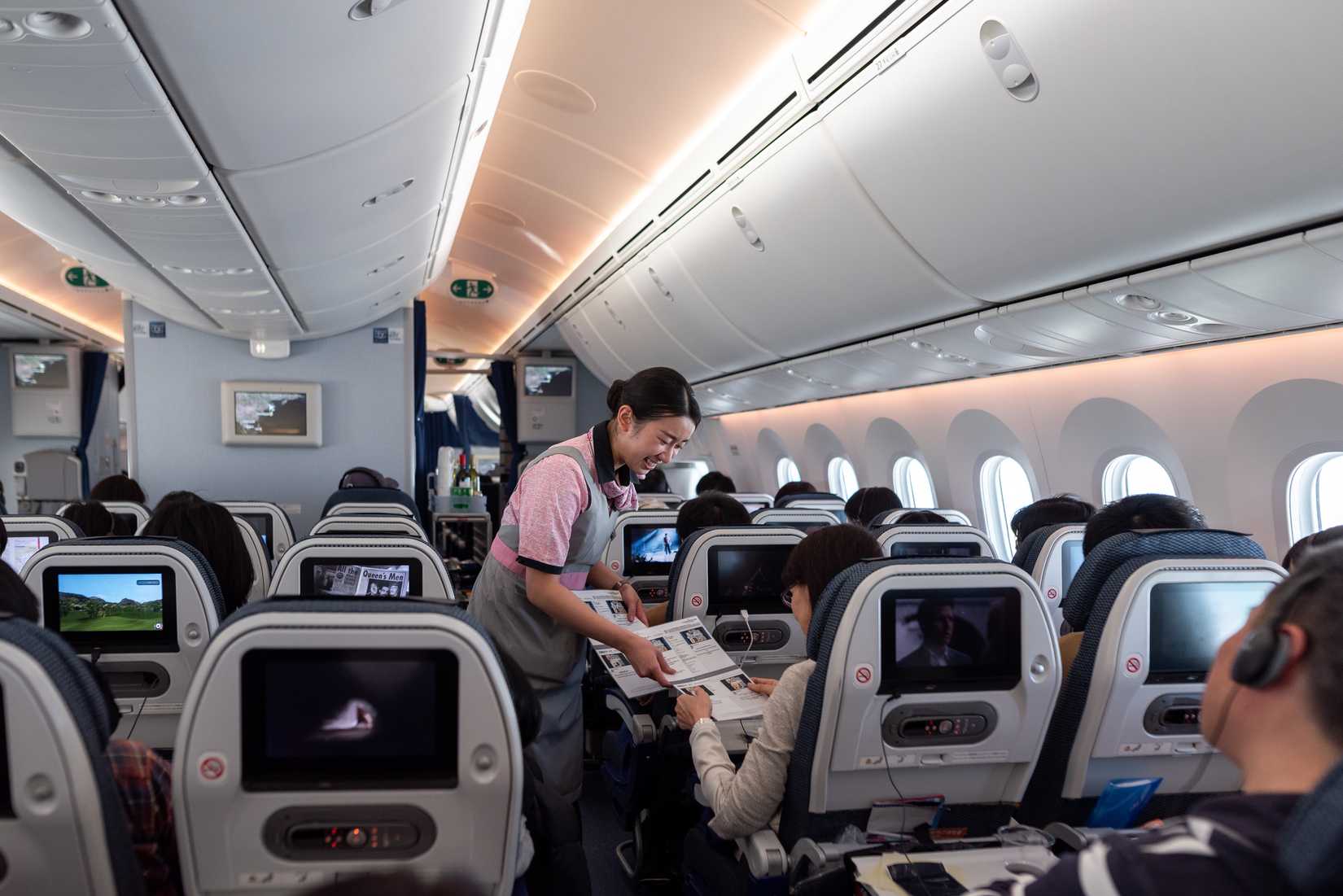
The cabin pressurization advancement carries particular operational significance for flight crews as well as passengers. Legacy widebody aircraft held cabin altitude at the equivalent of 8,000 feet MSL, a certification standard long considered adequate but physiologically taxing over 10- to 16-hour sectors. The 787's composite fuselage, which tolerates higher differential pressure loads than aluminum structures without the associated fatigue accumulation, allows cabin altitude to be held at the equivalent of 6,000 feet. The practical effect — reduced dehydration, lower fatigue, better oxygenation — matters not just as a passenger comfort metric but as a crew welfare issue on ultra-long-range operations. For flight crews flying 16-plus-hour sectors to destinations like Singapore, Sydney, or São Paulo, the physiological load reduction has measurable implications for alertness and recovery time, an increasingly scrutinized area as regulators globally revisit fatigue rules for extended operations.
The broader industry trajectory the 787 catalyzed is now self-reinforcing. Airbus accelerated development of the A350 in direct response, and both manufacturers have since pursued even longer-range derivatives — the 787-9 Ultra Long Range concept and Airbus's A350-900ULR, which opened routes like Singapore to New York nonstop. For Part 91K and Part 135 operators in the ultra-long-range business jet segment, the 787's influence is visible in customer expectations around cabin environment, range flexibility, and direct routing. The competitive pressure the Dreamliner placed on traditional hub-dominated international schedules also opened secondary and tertiary airports to widebody international service, reshaping FBO infrastructure planning and customs/immigration resource allocation at airports that previously had no role in international operations. The 787 did not merely improve on its predecessors — it redefined the operational assumptions underlying how long-haul aviation networks are built.








 Read original article