The New Inflight Addition Hawaiian Airlines Passengers Are Raving About
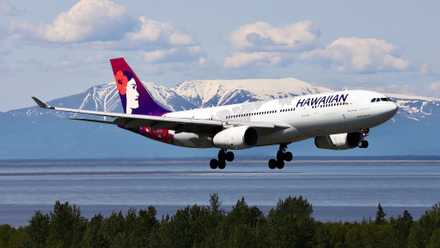
Hawaiian Airlines is undertaking a comprehensive overhaul of its 24-aircraft Airbus A330-200 fleet beginning in 2028, a transformation driven by the airline's integration into Alaska Air Group following the two carriers' merger. The centerpiece changes include the introduction of Hawaiian's first-ever true premium economy cabin and a fully redesigned front cabin product replacing the current 18-seat, 2-2-2 lie-flat configuration that leaves window-seat passengers without direct aisle access. Alaska Air Group Chief Commercial Officer Andrew Harrison has framed the investment in explicitly commercial terms, projecting that the reconfigured cabins will generate significantly more revenue than the current product. The retrofit program covers all 24 A330-200s and is slated for completion within a multi-year window. On the connectivity side, Hawaiian has already completed the rollout of Starlink-powered free WiFi across its A330 and A321neo fleets, a notable milestone for a carrier that previously offered no inflight internet access even on a paid basis.
For airline and charter operators watching competitive dynamics in the Pacific and transoceanic premium markets, the Hawaiian retrofit represents a meaningful recalibration. The carrier's existing A330 first class — 18 seats in a dated 2-2-2 arrangement — has functioned more as a legacy domestic first class product than a true international business class competitor, limiting Hawaiian's ability to capture high-yield premium traffic on routes to Japan, South Korea, and Australia. The planned replacement is expected to mirror the suite configuration found on Hawaiian's 787-9 Dreamliners, which feature 34 direct-aisle-access lie-flat suites, though the A330-200's shorter fuselage and slightly narrower cabin cross-section will require design compromises. The addition of a premium economy cabin, likely in a 2-3-2 configuration with domestic first class-equivalent recline and amenities, positions Hawaiian to capture the increasingly lucrative mid-tier segment that carriers such as Delta, United, and nearly all major Asian carriers have monetized aggressively for years.
The operational context of this retrofit is inseparable from the Alaska-Hawaiian merger. As Hawaiian's 787-9 fleet migrates to Alaska operations, the A330 becomes the cornerstone of Hawaiian's long-haul network, making the cabin investment a structural necessity rather than an optional upgrade. Alaska Air Group's decision to expand the J-cabin on the A330 — rather than simply transferring the 787 routes entirely — signals a long-term commitment to Hawaiian's international route authority and brand equity in the Pacific. For corporate flight departments and Part 135 operators who frequently position clients on Hawaiian metal for transpacific segments, the upgraded product meaningfully changes the conversation around when a business jet or charter alternative is warranted versus when a commercial premium cabin becomes a reasonable substitute.
The Starlink WiFi deployment, already complete across the A330 and A321neo fleets, carries particular relevance for operators and travel managers coordinating mixed-fleet itineraries. Starlink's low-earth-orbit architecture delivers materially better throughput and latency than legacy Ku-band or Ka-band systems, enabling real-time video conferencing and large-file transfers that were previously impractical in flight. This brings Hawaiian's connectivity offering in line with what business aviation passengers increasingly expect as a baseline, narrowing the productivity gap between commercial and private travel on Pacific routes. The broader industry trend is clear: carriers that have historically competed primarily on hospitality and network geography — Hawaiian being a textbook example — are being forced by rising premium travel expectations and post-merger corporate mandates to invest in hard and soft product simultaneously, or cede high-yield traffic to competitors who already have.










 Read original article