6 Airbus Aircraft That Quietly Changed The Economics Of Air Travel
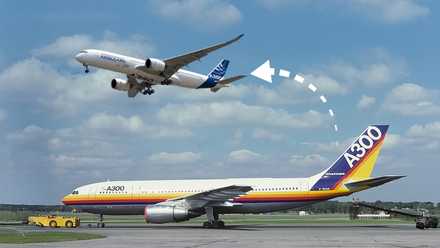
Airbus's commercial aircraft portfolio represents one of the most consequential industrial stories in modern aviation, built on a series of incremental but compounding engineering and economic decisions that reshaped how airlines plan networks, manage costs, and compete for passengers. The A300, which entered service in 1974, established the core principle that would define Airbus's competitive identity: that two high-bypass turbofan engines could power a widebody airliner more economically than three or four, eliminating the flight engineer position and reducing operating costs in ways that trickled directly into ticket pricing. That aircraft's two-crew glass cockpit was not merely a technology showcase — it reset labor cost expectations for widebody operations industry-wide, forcing Boeing and others to follow with designs like the 767. The A300's commercial viability, achieved despite significant early European government support, validated the entire pan-European aerospace consortium model and gave Airbus the revenue base to develop successive generations.
The A320 family's rise to become the most delivered commercial aircraft type in history — surpassing the Boeing 737 in cumulative deliveries sometime in 2025 — carries direct operational implications for professional pilots and training departments worldwide. The A320's fly-by-wire architecture, wider cabin cross-section, and higher landing gear clearance gave it structural advantages that became decisive when the transition to high-bypass ratio LEAP and GTF engines arrived with the neo variants. For Part 135 operators and corporate flight departments that contract lift or wet-lease narrowbody capacity, the A320 family's dominance in low-cost carrier fleets means that the economics of thin-route air service have been permanently compressed. The A321neo and A321XLR variants in particular are now enabling transatlantic point-to-point services that previously required widebody equipment, a shift with meaningful implications for how charter and business aviation competes on certain city pairs.
The A330's commercial trajectory illustrates how range economics and ETOPS maturation intersected to open route structures that had previously required large quadjet equipment. By efficiently covering the 4,000 to 8,000 nautical mile band, the A330 allowed airlines to profitably serve city pairs with insufficient traffic density for 747-class aircraft, effectively democratizing long-haul route development. For corporate and business aviation operators, this pattern is instructive: the same logic of right-sizing aircraft to route demand that the A330 proved in commercial service underlies the fleet planning decisions of Part 91K fractional operators and Part 135 charter companies when evaluating large-cabin versus ultra-long-range business jets. The A330neo's 14% fuel efficiency improvement over the baseline, introduced in 2018, also demonstrates that airframe longevity through re-engining remains a commercially viable strategy — a lesson that carries forward into the business aviation market's own re-engine programs.
The broader arc of Airbus's development history reflects a consistent pattern of evolutionary refinement over revolutionary reinvention, and that pattern has had durable consequences for the global pilot workforce. Common type ratings across the A320 family, and cross-qualification pathways within the A330/A350 family under EASA and FAA rules, reduce airline training costs and give pilots greater fleet mobility — factors that have influenced how major carriers structure their pilot career pipelines. The consolidation of aircraft types around these families also means that simulator capacity, approved training organizations, and recurrent training infrastructure have concentrated around Airbus platforms in ways that shape hiring demand. As the A321XLR enters commercial service and the A220 family expands Airbus's presence in the 100-150 seat market, the footprint of Airbus type ratings in the global pilot community will continue to grow, making familiarity with fly-by-wire philosophy and Airbus-specific automation logic increasingly foundational for commercial aviators at all experience levels.










 Read original article