United Airlines Edges Ahead In Long-Haul Wi-Fi Race With First 777 Starlink Retrofit
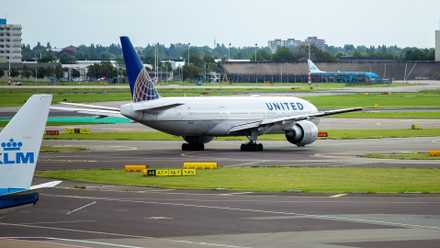
United Airlines has completed the prototype Starlink installation on its first widebody aircraft, a Boeing 777-200ER bearing tail number N37018, at Galeão International Airport in Rio de Janeiro — a milestone that CEO Scott Kirby publicly confirmed on June 8, 2026. The aircraft is slated for certification and validation test flights through the end of June before entering revenue service. This single airframe serves as the pathfinder for 21 additional 777-200ERs in the first conversion batch, all powered by GE90 engines, and was deliberately chosen ahead of the older PW4000-powered 777-200 variants, which are being phased out and are not expected to receive the upgrade. The broader rollout sequence will progress logically through shared systems commonality: the 777-300ER fleet is next, followed eventually by the 83-strong 787 Dreamliner fleet. United has publicly stated a goal of two aircraft per week at full installation tempo, a pace that would require roughly 63 weeks to equip the approximately 127 widebody aircraft expected to receive Starlink — excluding legacy 777-200 and 767 types slated for retirement.
For working pilots and aviation operators, the significance of this development extends beyond passenger amenity. Starlink's low-earth orbit architecture delivers substantially lower latency and higher throughput than legacy Ku- or Ka-band geostationary systems, and its performance over oceanic tracks — historically the weakest link in in-flight connectivity — is particularly relevant to crews operating ETOPS routes across the Atlantic and Pacific. Reliable high-speed connectivity on long-haul flights increasingly affects crew welfare, operational communications, and electronic flight bag synchronization in real time. Operators flying international routes on United metal, whether under codeshare agreements or as corporate customers, should anticipate a staged rollout that prioritizes flagship widebody types and high-frequency international routes first, meaning the passenger and crew experience improvement will be uneven across the fleet for at least the next 18 to 24 months.
The competitive landscape among U.S. carriers reveals a divergence in both technology choice and execution timeline that will have lasting implications for route competition and premium product positioning. United's Starlink deployment is currently the most advanced among legacy carriers on widebody, international-capable aircraft. American Airlines has announced Starlink for 500-plus single-aisle jets but not until early 2027, and has made no widebody announcements. Delta Air Lines has elected Amazon's Project Kuiper technology for 500 aircraft but won't begin until 2028, a decision attributed to compatibility concerns with Delta's proprietary sync ecosystem rather than purely technical grounds. JetBlue is positioning as the global launch customer for Amazon's LEO constellation on its narrowbody fleet starting in 2027. Alaska Airlines and Hawaiian Airlines — now merged — represent the only domestic carrier group with Starlink already fully deployed across their A321neo and A330 fleets, and they are aggressively targeting full fleet coverage by 2027.
The strategic decision to field-test the technology on widebody aircraft through a Rio de Janeiro maintenance facility reflects both the global scope of United's international operations and the logistical complexity of executing a retrofit program at scale across a 1,113-aircraft fleet — the largest commercial fleet in the world. Whether new 787s rolling off Boeing's backlog will be delivered with Starlink pre-installed or will require post-delivery retrofits remains unresolved, a question with significant implications for delivery scheduling, aircraft availability, and unit cost of the upgrade. For charter operators, ACMI providers, and corporate flight departments that rely on United's widebody lift for fractional or interline connectivity, the rollout timeline suggests that consistent Starlink-grade service on transatlantic and transpacific itineraries will not be universally available on United aircraft until late 2027 at the earliest, and only if the two-aircraft-per-week installation pace is sustained without disruption.





 Read original article