2 Dead After Private Gulfstream Jet Bursts Into Flames During Emergency Landing Attempt
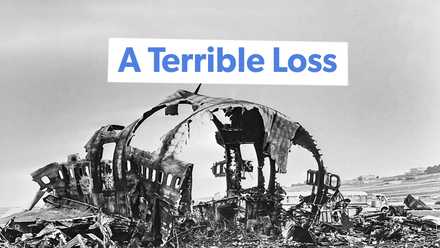
A Gulfstream G200 Galaxy business jet operated by Aibonito Aviation LLC crashed and burned during an emergency landing attempt at La Romana International Airport (LRM) in the Dominican Republic on June 7, 2026, killing both American pilots aboard. The aircraft, registered N318JF, had departed runway 11 at approximately 19:30 UTC on a repositioning leg to Austin, Texas, before the crew declared an emergency roughly 16 nautical miles southwest of the field and initiated a return. ADS-B tracking data reviewed by the Aviation Safety Network shows the jet executing a right-hand turn after departure, followed by a series of left turns that initially aligned the aircraft for runway 11. A four-minute gap in tracking data then preceded the aircraft's reappearance northwest of the airport, after which the crew completed several additional left-hand turns and configured for a runway 29 approach. The aircraft was engulfed in flames upon impact; no ground injuries were reported, and the airframe was classified a hull-loss. Dominican authorities have not publicly identified the nature of the emergency, and the Dominican Institute of Civil Aviation has opened a formal investigation.
The sequence of events visible in the ADS-B record raises operationally significant questions that will be central to the investigation. The crew's initial apparent alignment for runway 11 followed by a reorientation to runway 29 suggests either a deliberate tactical decision — possibly related to aircraft performance, wind conditions, or obstacle clearance — or a deteriorating situation that forced a change of plan during an already compressed timeline. The four-minute data gap is notable and may reflect a low-altitude segment, transponder anomaly, or rapid maneuvering. For professional crews flying business jets in the Caribbean and other remote operating environments, the accident underscores the compounding difficulty of managing an in-flight emergency while also executing an immediate return to an airport with a single runway and limited alternate options. La Romana's runway 11/29 is nearly 9,700 feet long and capable of supporting large business jets, but any emergency approach to a single-runway field requires precise decision-making under time pressure, particularly if the emergency involves degraded aircraft performance.
The Gulfstream G200 Galaxy, a mid-size twin-engine business jet originally developed by Israel Aerospace Industries and later marketed through Gulfstream, typically operates with a two-pilot crew and has a well-documented service history in the Part 135 charter and corporate aviation markets throughout the Americas and Caribbean. MSN 093 places this specific airframe in an early production batch. The aircraft was on a repositioning flight — a ferry leg with no revenue passengers — a phase of operation that, while routine, carries the same systemic risks as any other flight leg and is frequently cited in accident statistics as underappreciated from a risk-management standpoint. Notably, the flight's purpose was to collect former MLB catcher Yadier Molina and his party for a return to Puerto Rico; the absence of passengers at the time of the accident was entirely coincidental to the flight's scheduling.
The accident adds to a persistent pattern of fatal business aviation accidents occurring during emergency return procedures, a scenario that demands practiced crew coordination and clearly established decision criteria. Operators flying under Part 91, 91K, and 135 in Caribbean corridors — where overwater departures, single-runway fields, and limited divert options are common — routinely encounter the situational geometry present in this accident. The critical decision window for any immediate-return scenario is narrow: crews must quickly assess whether the emergency permits a standard circuit, demands a straight-in, or requires a precautionary landing before the airport environment. The shifting runway selection visible in this accident's ADS-B trace suggests that window may have been further constrained by whatever system failure or degradation the crew was managing. Investigation of maintenance records, flight data, and ATC communications will be essential to reconstructing the crew's available options and the point at which survivable outcomes became foreclosed.









 Read original article