Spitfires, F-16s & Red Arrows: Inside The Hellenic Air Force’s 95th Anniversary Flypast
The Hellenic Air Force marked its 95th anniversary on May 10, 2026, with a major aerial display over the Athens waterfront at Flisvos Marina, drawing thousands of spectators to witness a carefully curated progression from wartime piston aircraft to fourth-generation fighters and aerobatic teams. The event featured airworthy historic examples including the sole flying Greek Spitfire, MJ755, operated by the Hellenic Air Force Museum and restored in the United Kingdom with funding from the Ikaros Foundation, alongside a T-6G Texan that only returned to flight status in 2024. Contemporary assets included F-16s in multiple variants, Mirage 2000-5s, and the recently acquired Dassault Rafale, with the Red Arrows and NATO Tiger Meet participants adding an allied dimension to the formation sequences. The HAF traces its formal independence as a separate service branch to 1931, making 2026 the penultimate year before its centennial, though its operational history reaches back to Balkan Wars-era biplanes in 1912.
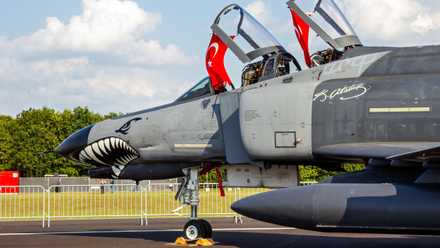
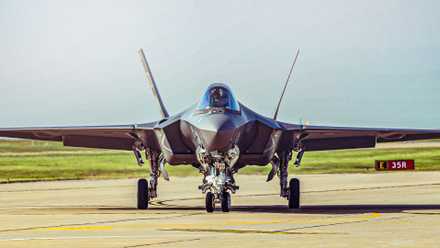
For military and defense aviation observers, the display functioned as a compressed visual timeline of one of NATO's southern flank air forces at a decisive inflection point. Greece currently operates approximately 560 aircraft across eight types with around 42,500 personnel, a force structure that has drawn scrutiny for its breadth and associated maintenance complexity. The simultaneous operation of multiple fighter generations — legacy F-4 Phantoms, several F-16 variants, Mirage 2000-5s, and the incoming Rafale — represents exactly the kind of mixed-fleet challenge that drives lifecycle and sustainment costs in any large operator context, whether military or commercial. Defense Minister Nikos Dendias has publicly framed the pending F-35A acquisition as a "force multiplier" and generational turning point, signaling that Greek defense leadership views fleet consolidation around fifth-generation capability as both a strategic and an operational efficiency imperative.
The trajectory of the HAF carries direct relevance for professionals operating in the broader European and Mediterranean aviation environment, particularly those engaged in defense contracting, government aviation, or airspace management across NATO member states. Greece's progression toward the F-35A will alter airspace utilization patterns in one of the more contested and tactically active regions of European airspace, with implications for coordination between civil and military air traffic management authorities. The Hellenic FIRs — Athens and Macedonia — already manage complex interactions between commercial traffic and active military operations given Greece's geographic position and ongoing sovereignty considerations over the Aegean. Operators routinely encountering NOTAMs and temporary restricted areas associated with HAF exercises should anticipate increased activity in the medium term as new airframes are introduced, crews are trained, and operational tempo adjusts to fifth-generation platforms.
The presence of the Red Arrows above Athens, described in the article as a rarer occurrence outside the United Kingdom, also underscores the continued role of elite military aerobatic teams as instruments of alliance diplomacy and public engagement with aviation. For operators and pilots tracking the health of aviation culture more broadly, events of this scale — drawing thousands to a waterfront to watch everything from a 1940s Spitfire to a Rafale pass overhead — reflect a persistent and powerful public appetite for aviation that cross-cuts civil and military contexts. The restoration and return to flight of historically significant military aircraft, supported by private foundations like Ikaros, represents a growing international model for preserving airworthy heritage assets, a trend visible across European warbird communities and increasingly in North America as well. The HAF's 95th anniversary display thus served simultaneously as a commemoration, a capability demonstration, and a statement of institutional confidence in an air force navigating a consequential generational transition.







 Read original article