Helios Horizon Makes First Piloted Flight On Solid-State Batteries
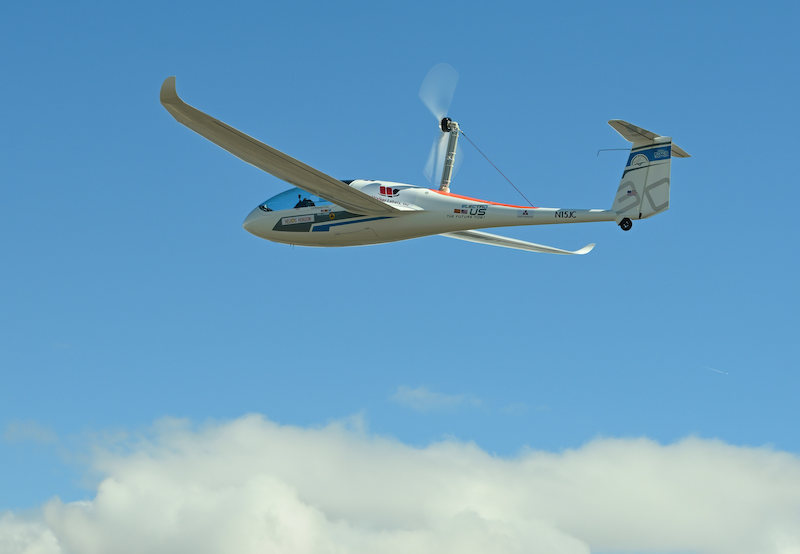
Helios Horizon has achieved what is believed to be the first piloted flight powered by solid-state battery technology, marking a significant milestone in the development of advanced electric propulsion for aviation. The flight was conducted on June 5, 2026, by founder and chief test pilot Miguel Iturmendi aboard a modified Pipistrel Taurus motorglider — a platform chosen for its aerodynamic efficiency and established motorglider heritage — adapted to serve as a demonstrator for stratospheric electric flight operations. While the article's full technical details remain behind a subscription barrier, the core achievement represents a meaningful transition from laboratory-scale solid-state battery development to actual airborne application under piloted conditions.
Solid-state batteries differ fundamentally from conventional lithium-ion cells in that they replace the liquid or gel electrolyte with a solid material, yielding several performance characteristics directly relevant to aviation. Energy density improvements — potentially 50 to 100 percent above current lithium-ion chemistries — translate directly into extended range or endurance for electric aircraft, which has been the defining constraint on electric propulsion adoption across commercial, regional, and business aviation segments. Equally significant for flight operations is the improved thermal stability of solid-state cells: the elimination of flammable liquid electrolyte reduces the risk of thermal runaway, a battery failure mode that has drawn intense regulatory scrutiny from the FAA and EASA as eVTOL and hybrid-electric aircraft have moved toward certification. Demonstrating these cells under real flight loads and thermal cycling conditions aboard a piloted aircraft provides data that bench testing simply cannot replicate.
The choice of a stratospheric mission profile adds a layer of technical complexity that distinguishes the Helios Horizon program from lower-altitude electric demonstrators. At stratospheric altitudes — generally above 36,000 feet and extending well above typical commercial cruising levels — ambient temperatures drop dramatically, battery thermal management becomes more demanding, and available solar irradiance increases, a combination that is central to long-endurance unmanned platforms like the legacy NASA Helios and more recent Airbus Zephyr programs. Applying solid-state chemistry in this environment tests battery performance under conditions that are genuinely stressing, and success at those altitudes would carry credibility for a wide range of operational use cases, from high-altitude ISR and communications relay to long-range business and regional electric aircraft where cruise altitude performance matters.
For working pilots and aviation operators, the near-term operational implications of this specific flight are limited — solid-state batteries remain in early production scaling phases, and certificated aircraft powered by the technology are years away from commercial service. However, the milestone has direct relevance to how quickly the electric propulsion landscape may shift. Current electric and hybrid-electric aircraft programs, including those targeting Part 135 regional operations and business aviation connectivity missions, have structured their range and payload assumptions around the energy density ceilings of lithium-ion chemistry. A validated, flight-proven solid-state cell that delivers meaningfully higher energy density and a better safety profile could accelerate the certification timelines and economic viability of aircraft types that are already in advanced development, compressing the window between current demonstrators and operational platforms.
The broader aviation industry has been tracking solid-state battery progress with a mixture of cautious optimism and skepticism, given the long history of premature announcements in battery technology development. That context makes a piloted flight milestone — even one performed on a relatively modest motorglider platform — notable precisely because it moves the conversation from projected specifications to demonstrated performance. Regulatory bodies including the FAA and EASA will eventually need to develop certification frameworks specifically addressing solid-state cell behavior in airborne environments, covering failure mode analysis, containment requirements, and maintenance inspection protocols distinct from those developed for lithium-ion systems. The Helios Horizon flights, and the data they generate, contribute directly to building the empirical foundation that those frameworks will require.







 Read original article