WestJet Launches 8 New Nonstop Routes To Europe [List & Map]
WestJet is aggressively expanding its transatlantic footprint in summer 2026, adding eight new nonstop European routes across four Canadian gateways — Toronto Pearson (YYZ), Halifax Stanfield (YHZ), Edmonton (YEG), and Winnipeg (YWG) — with all new services operated exclusively by the Boeing 737 MAX 8. The new corridors include Toronto to Ponta Delgada in the Azores, Glasgow, and Cardiff; Halifax to Lisbon, Madrid, and Copenhagen; and weekly Reykjavík service from both Edmonton and Winnipeg. Frequencies range from three times weekly on select thinner routes up to five times weekly on the Halifax–Lisbon corridor. The Cardiff route is notable for restoring Canadian service to Wales for the first time in nearly two decades, and Halifax's three new additions are framed by the airline as its largest-ever European network from that airport.
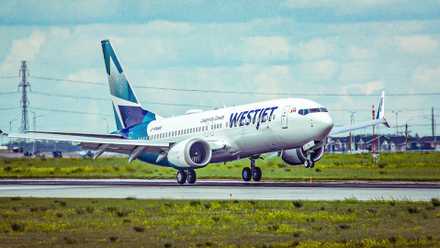
The operational centerpiece of this expansion is the continued use of the 737 MAX 8 on transatlantic segments that many legacy carriers would traditionally assign to widebody equipment. WestJet's 737 MAX 8 configured for transatlantic service carries 174 passengers in a two-cabin layout — 12 business class seats and 162 in economy, with no premium economy — contrasting sharply with the airline's 787-9 Dreamliner configuration of 320 seats across three cabins. This narrowbody-led international strategy mirrors approaches used by carriers like Norse Atlantic, Icelandair, and formerly WOW Air, all of which exploited the ETOPS capabilities and fuel efficiency of modern narrowbodies to open thinner transatlantic city pairs that cannot support widebody economics. Pilots transitioning to or operating these routes should note that ETOPS authorization, North Atlantic Track system procedures, and high-latitude oceanic contingency planning remain essential operational considerations regardless of aircraft size.
The network data cited in the article illustrates just how dramatically WestJet has repositioned itself in the transatlantic market. Starting from 35,904 two-way transatlantic seats in 2014, the carrier surpassed its own pre-pandemic peak of 695,990 seats in 2019 within just three years of recovery, reaching 1,323,254 seats in 2026 — nearly doubling the pre-COVID high. This trajectory reflects a deliberate strategic shift rather than simple organic recovery, suggesting sustained fleet commitment and route authority investment. For aviation operators and schedulers, the expansion of WestJet from secondary Canadian hubs like Halifax and Winnipeg also signals a broader decentralization of transatlantic traffic away from Toronto and Vancouver, creating new competitive pressure on legacy hubs and potentially redistributing IROPS diversion planning considerations across eastern Canada.
For business aviation and corporate flight departments operating across the North Atlantic, WestJet's expansion has practical implications beyond competitive airfare benchmarks. The introduction of nonstop service on city pairs like Halifax–Copenhagen and Winnipeg–Reykjavík creates new commercially viable alternatives for employee travel on routes that previously required connections through major hubs, which can directly influence company travel policy and the calculus of whether a fractional or charter option remains cost-justified for certain city pairs. Additionally, WestJet's continued reliance on the 737 MAX 8 for oceanic routes is a data point of interest for operators evaluating the type's reliability envelope in long-over-water operations, particularly given Boeing's ongoing reputational rehabilitation following the MAX certification crisis. The MAX 8's performance on routes now routinely exceeding seven to eight hours of block time provides real-world validation that airline flight operations departments and type-rating pilots will be tracking closely.








 Read original article