Exclusive: Turkish Airlines Targets Nonstop Istanbul-Sydney With Airbus A350-1000s In 2027
Turkish Airlines is pursuing what would become one of the longest commercial routes in aviation history, announcing plans to operate nonstop service between Istanbul Airport (IST) and Sydney Kingsford Smith Airport (SYD) using the Airbus A350-1000ULR, with a target launch date by the end of 2027. The route spans approximately 9,300 miles and would require flight times of up to 19 hours, placing it in the same category as existing ultra-long-haul operations such as Singapore Airlines' Newark and New York JFK routes. Turkish Airlines Chairman Prof. Dr. Murat Şeker disclosed the plans during the IATA Annual General Meeting in Rio de Janeiro, noting that while operational feasibility is within reach, economic viability — particularly around the aircraft's weight, fuel burn, and payload balance between passengers and cargo — remains under active negotiation with Airbus. The carrier placed an order for 15 A350-1000s in 2023, with eight designated as ULR-configured airframes, and expects the first delivery in July 2027, contingent on certification of an increased maximum takeoff weight (MTOW).
The MTOW certification process is a critical path item that deserves attention from operators tracking ultra-long-haul aircraft development. The A350-1000ULR variant being pursued by Turkish Airlines requires a higher certified gross weight than the standard -1000 to carry the fuel load necessary for 19-hour sectors. This mirrors the development process Airbus undertook for Singapore Airlines' A350-900ULR, which required its own MTOW certification before revenue service. The delay affecting Qantas' Project Sunrise — which also relies on the A350-1000ULR platform — is directly relevant here, as Turkish Airlines is essentially riding the same certification and production timeline. Any further slippage in Airbus delivering certified ULR airframes will compress Turkish Airlines' own 2027 launch window. For operators and schedulers at airlines contemplating ultra-long-haul fleet planning, the interdependency between launch customers and subsequent operators on shared certification programs represents a meaningful schedule risk.
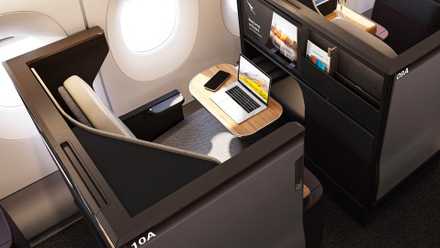
The cabin configuration strategy Turkish Airlines has outlined reflects a broader industry pattern in ultra-long-haul economics: maximizing premium revenue per flight to offset the disproportionately high fuel and operating costs of very-long sectors. The ULR-configured A350-1000s will carry 66 business class suites versus 48 on standard -1000 variants, a significant premium-forward shift that parallels how Singapore Airlines and Qantas have approached their own ultra-long routes. Turkish Airlines is also developing a new proprietary business class suite with a closing door through its TCI Aircraft Interiors subsidiary, a move that signals the airline's intent to compete directly with top-tier international products rather than rely on existing seat programs. Retrofit of the 777-300ER fleet with the new seat is also planned, which will affect operational considerations across a much larger portion of the airline's widebody network beginning around 2028.
Beyond the Sydney route, Şeker's comments on US network expansion are directly relevant to business aviation and corporate travel communities. Turkish Airlines is actively evaluating new North American destinations including Orlando, Minneapolis, and Philadelphia, in addition to frequency increases at existing gateways in Miami, Los Angeles, and Chicago. For business aviation operators and Part 135 charter providers serving corporate clients who currently position or reposition through existing Turkish gateways, expanded nonstop options from the US to Istanbul — itself a major hub connecting onward to Central Asia, the Middle East, and Africa — could meaningfully shift routing logic and positioning costs. The carrier's growth plans are contingent on aircraft delivery schedules, but the directional intent is clear, and operators routing international business travel through Istanbul should monitor frequency additions at existing US stations as the new widebodies begin arriving.
The broader context for working pilots is the acceleration of ultra-long-haul operations as a competitive strategy among legacy network carriers. Turkish Airlines joins Singapore Airlines, Qantas, and potentially others in building operational frameworks around 18-to-20-hour sectors, which carry distinct crew rest, augmented crew scheduling, and physiological considerations that are increasingly relevant to type-rated pilots on the A350 and 777 fleets. Regulatory frameworks governing extended operations (ETOPS and augmented crew rest requirements) continue to evolve alongside these route announcements, and carriers launching new ultra-long routes will face close regulatory scrutiny of crew scheduling, rest facilities, and fatigue risk management systems. For professional pilots flying or transitioning to the A350 platform, Turkish Airlines' investment in the -1000ULR variant adds another major operator to the global pool, expanding type-rated career opportunities as this segment of the market matures.








 Read original article