"Metal Debris": Southwest Airlines Boeing 737 Diverts Back To Austin With Damaged Engine
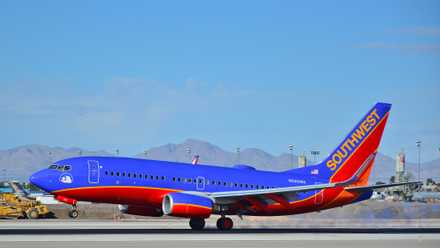
Southwest Airlines Flight WN-375 diverted back to Austin Bergstrom International Airport on June 6, 2026, after the crew of a Boeing 737-700 detected an abnormality during climb through 13,000 feet en route to Phoenix Sky Harbor. No engine fire alert triggered, and no emergency was declared, but the pilots elected to return, coordinated vectors around weather, and requested emergency services standby upon landing — a textbook application of conservative aeronautical decision-making. Post-flight inspection of the right engine on N7855A, a 737-700 originally delivered to China Eastern Airlines and operating with Southwest for the past nine years, confirmed the presence of metal debris and associated engine damage. A replacement aircraft, N920WN, was substituted, and the flight completed to Phoenix with a 3.5-hour delay. The FAA has acknowledged the occurrence, and the root cause remains under investigation.
The crew's decision to return without a fire warning underscores a critical principle for line pilots: abnormal indications and anomalous cues — including unusual vibration, instrument fluctuation, or ambiguous EICAS/ECAM messages — do not require a worst-case alert to justify a precautionary return. On a 737-700 with CFM56 engines, metal debris propagating through the engine core represents a potential cascading failure scenario, including uncontained damage or thrust asymmetry. The checklist discipline exhibited here, working the appropriate QRH procedures during descent, and the crew's request for inspection upon landing reflect proper crew resource management and threat mitigation. For Part 121 crews and Part 135 operators alike, this event reinforces that the absence of a warning light does not equal the absence of a problem.
The article identifies several plausible causal pathways for metal contamination in turbofan engines: foreign object debris ingestion from runway or taxiway surfaces, bearing steel roller release from component fatigue, fan blade tip delamination driven by heat cycling, and accessory gearbox wear-generated metal shavings. For operators of aging narrowbody and business jet turbofan aircraft, these mechanisms are not theoretical — they represent documented failure modes that increase in probability with airframe age and cycle count. N7855A is more than 20 years old, and while the article notes no prior incidents, high-cycle airframes accumulate fatigue in rotating components even absent any recorded event. Operators of aging fleets, including high-utilization Part 135 charter and fractional operators, should note that engine health monitoring programs — including borescope inspections, oil filter debris analysis, and vibration trend monitoring — are the primary early-warning tools for detecting internal engine degradation before it produces an in-flight diversion.
The broader context here connects to ongoing scrutiny of aging Boeing 737 variants across the commercial and charter sectors. Southwest operates one of the largest single-type fleets in the world, with significant exposure to high-cycle 737-700 and -800 airframes, and engine reliability on these assets is a persistent operational and maintenance planning concern. The CFM56 series powering these aircraft is among the most thoroughly understood turbofan engines in commercial service, with well-established maintenance intervals and borescope inspection windows — yet metal debris events still occur, reinforcing that even mature, well-documented powerplants require vigilant trending and inspection discipline. For corporate flight departments and charter operators running similarly aged turbofan equipment, this incident is a useful reminder that engine health monitoring is not a compliance checkbox but an active risk management tool, and that conservative flight crew judgment remains the final safeguard when that monitoring produces an ambiguous signal at altitude.





 Read original article