Weight Issue? British Airways Boeing 787 Suffered Similar Nose Gear Collapse 5 Years Ago
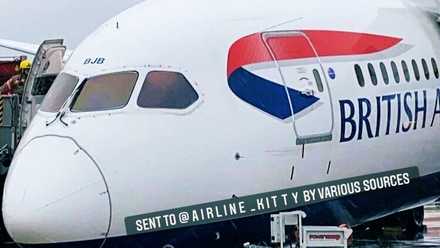
A Lufthansa Boeing 787-9 Dreamliner, registered D-ABPQ and operating as flight LH450, suffered a nose landing gear collapse at Frankfurt Airport on June 4, 2026, while ground crews were preparing the aircraft for a nonstop service to Los Angeles International Airport. The aircraft, delivered to Lufthansa just four months prior in January 2026 and named "Herne," sustained damage to its lower forward fuselage when the nose gear unexpectedly retracted while the jet was parked at the gate. Several airline crew members and ground staff sustained injuries requiring medical attention, though passengers had not yet boarded and were reaccommodated onto alternate services. Recovery operations called for the use of inflatable pneumatic mats to raise the nose section — the same method employed in a nearly identical incident five years prior involving British Airways 787-8 G-ZBJB at London Heathrow in January 2021.
The British Airways event provides critical investigative context. Following a thorough probe by the UK Air Accidents Investigation Branch, investigators determined that a maintenance technician had inserted the nose landing gear downlock pin into the link assembly apex pin bore rather than the correct pin hole — two adjacent openings in close enough proximity to create a high-probability error trap. When line engineers subsequently performed pre-dispatch checks and actuated the gear system, the nose gear retracted under the aircraft, causing the characteristic forward collapse. Crucially, the AAIB found that a Service Bulletin and an associated Airworthiness Directive existed that would have addressed the design ambiguity in the NLG downlock assembly, but neither had been applied to G-ZBJB at the time of the incident. The aircraft spent five months undergoing structural and mechanical repair before returning to service in November 2021.
For working pilots and maintenance personnel, the recurrence of this failure mode on a second 787 variant raises immediate procedural and oversight concerns. The central issue documented in the Heathrow investigation — two physically similar holes in close spatial proximity creating a maintenance error trap in the NLG downlock assembly — represents a latent design vulnerability that standard task-card compliance alone may not adequately mitigate if crews are not specifically briefed on the hazard. Pilots operating 787 variants under Part 121, 91K, or international carrier certificates should verify with their maintenance organizations that relevant ADs and service bulletins pertaining to the NLG downlock pin installation have been complied with across their fleets. The fact that D-ABPQ was only four months old at the time of the Frankfurt event underscores that this is not a fatigue or aging-aircraft issue — it is a procedural and design ambiguity concern applicable to any 787 regardless of airframe age.
The broader implication for aviation operations involves the relationship between human factors in maintenance and aircraft design. The AAIB's 2021 finding that the 787's NLG design created a "major opportunity for error" placed responsibility not solely on the technician but on the system design itself — a framework consistent with modern safety management principles under which error-inducing conditions are considered systemic vulnerabilities rather than individual failures. If early investigation of the Frankfurt incident reveals a similar mechanism, it will intensify pressure on Boeing and regulatory authorities, including the FAA and EASA, to reassess whether existing corrective actions have been sufficiently promulgated and enforced across the global 787 fleet of more than 1,100 aircraft in service. Airlines operating Dreamliners at scale — including carriers operating transoceanic schedules where airframe availability is tightly managed — will be watching the investigation closely given the potential for renewed airworthiness directives or mandatory service bulletin compliance timelines.









 Read original article