Airhart, Draco Collaborate On GA Avionics System
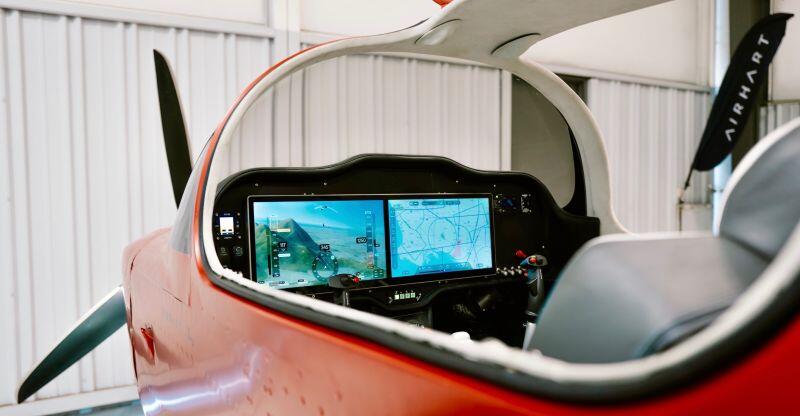
Airhart Aeronautics and Polish startup Draco Aircraft announced on June 1, 2026, a collaboration to explore integrating Airhart's avionics and flight control system into Draco's future general aviation aircraft platforms. Airhart, headquartered at Long Beach Airport in California, is developing a two-screen integrated avionics suite designed specifically for the general aviation segment. The announcement marks an early-stage partnership between a California-based avionics innovator and a European airframer, with the specific terms of integration and timeline remaining undefined at this stage of the relationship.
The significance of the collaboration lies primarily in what Airhart is building: an integrated avionics and flight control system rather than a standalone display or navigation product. This distinction matters to working pilots and aircraft operators because fully integrated systems — where flight controls, automation, and displays share a common architecture — reduce cognitive load, streamline certification pathways for manufacturers, and can offer more coherent failure mode management than bolt-on avionics upgrades. For Part 91 and light GA operators who fly aircraft with legacy glass or steam-gauge panels, purpose-built integrated systems in new-production aircraft represent a meaningful capability jump without the cost and complexity of aftermarket retrofits.
For Draco Aircraft, aligning with a technology partner early in platform development follows a model increasingly common among new-entrant airframers who lack the internal resources to develop proprietary avionics stacks. Rather than sourcing off-the-shelf solutions from established suppliers like Garmin or Avidyne, smaller manufacturers are exploring partnerships with avionics startups whose architectures may be more adaptable and potentially less expensive to integrate at the design stage. This approach carries risk — both companies are in early development phases — but it allows each party to shape the system around the aircraft's specific mission profile rather than adapting an aircraft around an existing avionics product.
The announcement reflects a broader consolidation of avionics innovation activity in the general aviation space, where the boundaries between flight control systems, autopilot functions, and primary flight displays have continued to blur. Established players have driven this trend at the high end — Garmin's Autoland system being a prominent example — and startup developers are now pursuing analogous integration philosophies for the light GA and new-entrant airframer market. For professional pilots transitioning into or out of GA aircraft, familiarity with integrated flight decks from Part 135 or corporate operations increasingly translates to lighter training burdens when manufacturers build cockpit logic around unified system architectures rather than layered avionics from multiple vendors. Whether the Airhart-Draco collaboration advances to a certified, production-ready system will depend heavily on each company's capitalization and the pace of FAA and EASA certification engagement in the coming years.








 Read original article